Get AI Briefings, Transcripts & Alerts on Local & National Government Meetings — Forever.
Burke County opioid-response team reports reduced ED overdoses, expanded BEAR team and program outcomes
Summary
County opioid-response staff told the advisory group the BEAR team is fully staffed and operating 24/7, ED overdose visits have declined, and settlement funds (about $25 million total) have supported treatment, naloxone distribution and recovery services; leaders discussed bringing recovery court in-house and pursuing grants to sustain programs.
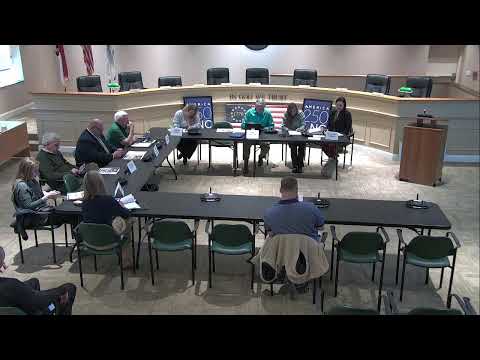
Burke County opioid-response staff gave the advisory group a comprehensive update on programs funded by the county's opioid settlement, reporting declines in emergency-department overdose visits, expanded outreach services and plans to move some programs to county management.
Katie, who led the presentation for the county opioid-response team, said the team has grown to nine staff and the BEAR (post-overdose response) team is fully staffed and operating 24/7. "We have naloxone in every school now," Katie said, and described BEAR's work on naloxone distribution, field inductions and coordinated non-emergency response with dispatch to connect high utilizers to treatment.
The advisory presentation included the county's interim overdose statistics for 2025: 370 EMS calls for overdose, 25 certified overdose deaths and 28 death certificates still pending toxicology review, which Katie said could change the final fatality count. Katie also reported 118 children in foster care where parental substance use was a contributing factor.
Katie outlined program performance figures for locally funded providers: family-centered treatment (managed by Spark) has engaged 37 family members and reports that 67% of participants now have negative drug screens; High Country Community Health is serving about 50'0 participants in low-barrier medication-for-opioid-use-disorder care with retention rates of 46 participants at 30 days and 37 at 90 days, and 58% remaining on medication beyond three months.
On funding, Katie summarized the opioid-settlement disbursement schedule as roughly $25,000,000 over 2022'038, with about $9,500,000 received to date and about $3,300,000 allocated so far. She said many initiatives remain funded by settlement dollars while programs pursue Medicaid billing and federal grant matches.
The group discussed recovery court operations and an upcoming contract transition. Katie said Burke Recovery Court has 23 active participants and that the county's contract with Cognitive Connection runs through Dec. 31. "That total amount was for 18 months. It was for $212,000, and it it was, a monthly stipend of $12,000 a month," Katie said. She described a county-led model under consideration (mirroring Caldwell and Henderson counties) that would employ a coordinator in county government to improve local referrals and reduce transportation and provider-linked costs; Katie said Judges Keener and Brooks have been briefed and are amenable to a transition plan.
Advisory members asked about billing and sustainability: Katie said family-centered treatment and other services are pursuing service definitions to become reimbursable by Medicaid, which would reduce long-term reliance on settlement funds. She also described efforts to use settlement investments as match to pursue larger federal grants (BJA, SAMHSA and others).
Public comment at the meeting included an announcement of a reentry-simulation event hosted with the North Carolina Department of Adult Corrections and an invitation for county leaders to attend.
The advisory group confirmed May 19 as the next regular meeting date and discussed plans for the required annual opioid-settlement public meeting (to be held by June 30). The meeting concluded after the chair moved to adjourn and the committee voted to adjourn.
What happens next: staff will continue grant applications and planning for a potential in-house recovery-court transition pending grant outcomes and the December contract expiration.