Lifetime Citizen Portal Access — AI Briefings, Alerts & Unlimited Follows
Cave Creek details $5.8M–$6.2M town hall expansion; residents press design, outreach and phasing concerns
Loading...
Summary
Town staff presented plans to add about 5,000 sq ft to the Cave Creek town hall and fully remodel the existing 7,750 sq ft building, with a preliminary estimate of about $5.8 million and a planning contingency of $6.2 million; residents applauded increased meeting space but raised concerns about architectural style, early public engagement and sequencing to control costs.
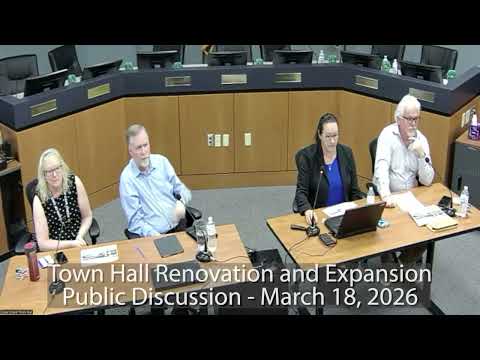
Town Manager Grady Miller and town staff presented a proposed expansion and remodel of the Cave Creek town hall at a public meeting, describing a roughly 5,000‑square‑foot addition to the existing 7,750‑square‑foot building, site improvements and an initial construction estimate from a consultant of about $5.8 million.
"I think this is a project that is important to the council and the community, potentially," Miller said as he introduced Deputy Town Manager Teresa Riza, architect Greg Zimmerman and Chief Financial Officer Sherry White.
Riza said the town identified a town hall redesign in the 2023 strategic plan, contracted with architect Greg Zimmerman in 2024 for space planning, purchased an adjacent parcel in 2025 and programmed design work in the FY26 budget. She said the town contracted Wilmington to prepare a construction estimate and that Wilmington "estimated our project at about 5,800,000.0." Staff later presented a planning contingency figure of about $6.2 million for budgeting and bid‑package development.
Why it matters: Town officials said the project is aimed at consolidating customer service functions into a single lobby, adding small conference and flexible office spaces for staff and committees, improving public accessibility and providing secure employee parking. Staff told residents the plan would proceed in two phases: build the addition, move staff into the new space with temporary modular offices as needed, then remodel the existing building to avoid service interruptions.
Funding and schedule: Chief Financial Officer Sherry White said the town has set aside general capital reserves for the work and that her long‑range forecast shows adequate funding for this project alongside other capital needs. "So the town has set aside, capital reserve money, and, there's adequate capital reserves to be able to cover this project," White said. Staff said the town expects to finalize construction documents, solicit bids this spring and aims to have a contract in place and construction starting around July 1, with an 18‑month target for project turnaround.
Community reaction: Residents expressed mixed responses. Several attendees praised the effort to relieve cramped staff offices and to reduce rental costs for training and meetings. One resident said, "I'm so glad that you have been planning this... It's the most valuable thing you could do to keep our town," praising the prospect of improved staff morale and recruitment.
Other residents pushed back on the exterior look shown in renderings and on the timing of public engagement. A commenter asked, "We're a cowboy town. We're western theme. I'm kind of confused as to why the Spanish motif," urging more western‑style details such as hitching posts or wagon‑wheel accents. Architect Greg Zimmerman and staff said they examined multiple vernaculars but retained substantial portions of the existing building (roof trusses, exterior walls and slab) to control cost and to avoid demolition: "we're essentially keeping ... slab, walls, roof trusses, and up to the deck," Zimmerman said, noting that preserving structure reduced the work and expense of rebuilding from scratch.
Concerns about scope and phasing: Several residents urged clearer breakdowns of what is new versus what is being remodeled. Staff and the architect clarified that the project includes full interior reworking of the existing 7,500+ sq ft (new partitions, ceilings, IT, HVAC and accessibility upgrades) in addition to the 5,000 sq ft addition, and that those combined elements factor into the estimate. A construction‑experienced commenter warned about hidden defects in older buildings and suggested alternative phasing or using temporary modular offices to avoid major schedule and cost risk: "I would actually flip the schedule on the phasing," the commenter said, arguing that different sequencing could reduce exposure to overruns.
Design tradeoffs and site work: Staff outlined site improvements including stormwater mitigation, an additional 31 parking spaces in the proposed south lot, improved lighting and a gated after‑hours area for town vehicles. Energy and security upgrades include higher‑efficiency HVAC units, dual‑glazed windows, reduced public entry doors, card‑key access and cameras. Residents also suggested adding public restrooms on the town center corridor; the idea was discussed as a potential benefit to the community that may require separate planning and security considerations.
Next steps: Town staff said they will refine the construction documents, incorporate community feedback on fixtures and finishes where feasible, publish solicitation documents this spring and present any contract awards to council for approval. The project is expected to be programmed in the FY27 CIP and return to council decisions as bids and final designs are completed.
The meeting closed with staff thanking residents for feedback and promising additional public information as design progresses.