Lifetime Citizen Portal Access — AI Briefings, Alerts & Unlimited Follows
Grosse Pointe Farms council approves final sewer-separation contracts and authorizes bonds
Loading...
Summary
The council approved contracts for the final two phases of the Inland District sewer-separation program — a stormwater pump station and extensive sewer separation — and a resolution authorizing sale of bonds to fund the work. Staff say changes and an alternate pump selection reduced cost and construction is expected to begin in 2026.
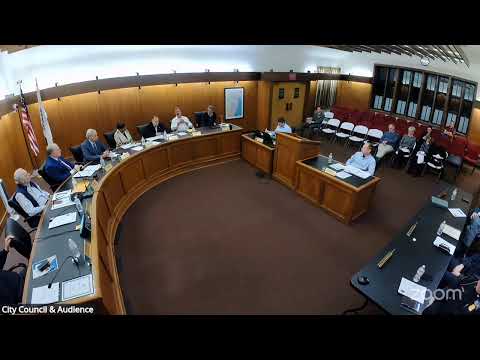
GROSSE POINTE FARMS — The Grosse Pointe Farms City Council on March 9 approved two construction contracts and authorized bond financing to complete the Inland District sewer-separation program, a multi-year effort aimed at reducing stormwater inflow to the combined sewer system and lowering basement-flooding risk.
City Manager Rieseide told the council the project is designed to “separate and divert about one-third of the wet-weather flow that enters our combined system now,” a change officials say will reduce overflow risk and long-term maintenance costs.
Engineers described two awarded contracts. Contract 2 — a stormwater pump station with five pumps roughly 30 feet below grade, a 48-inch force main and associated site work — was awarded to Sorenson Gross Company Inc. The council approved the contract with a total construction budget (including contingencies and estimated construction engineering) of $18,733,000.
John Bergstrom of Public Rolfe and Clark, the project manager for the pump station design, summarized the technical approach and aesthetics planned for the neighborhood. "The purpose of the pump station is to convey the flows separated from the northwest to the northeast via the repurposed sanitary sewer and the new force main," Bergstrom said.
Contract 3, covering about four miles of gravity storm sewer plus related sanitary-sewer and water-main work in several project divisions, was awarded to Deponio Contracting LLC. The council approved that contract with a total construction budget (including contingencies and estimated construction engineering) of $15,926,949.75.
City and consultant presenters said eight bids were received for Contract 2 and that, after reviewing an alternate pump option submitted as an alternate in the bid package, staff expect the substitution to save roughly $1.2 million while providing the same capacity. Council members pressed staff on the trade-offs; presenters said the alternate was reviewed by the design firm and the water superintendent and that the selected pumps meet capacity needs.
Because one section of the proposed work (Ross Road) is on a Wayne County road, staff said county construction standards raised the estimated cost for that segment by roughly $1.5 million while the segment contributes an estimated 7% of flow to the pump station. Staff indicated it may be sensible to coordinate separation on Ross Road later with Wayne County.
To fund the contracts, the council approved a resolution authorizing the issuance and sale of general obligation unlimited-tax bonds (a principal amount discussed in staff remarks as approximately $33,380,000 to cover the sewer projects). Finance staff told the council the bonds would be structured as Series 2026 and that final terms will be set as bids and market conditions are confirmed.
Both contract votes and the bond resolution passed on voice votes with ayes recorded by council members. Staff said construction for the pump station is expected to begin after contract signing and shop drawings in spring–summer 2026, with substantial completion anticipated in spring 2028.
What happens next: Staff will finalize contract documents and begin pre-construction coordination, including pre-construction meetings that will bring both contractors together to coordinate schedules and minimize overlap in neighborhoods where both contracts will be active.