Get Full Government Meeting Transcripts, Videos, & Alerts Forever!
Get email alerts on the Voter Integrity topic
No spam. Unsubscribe anytime.
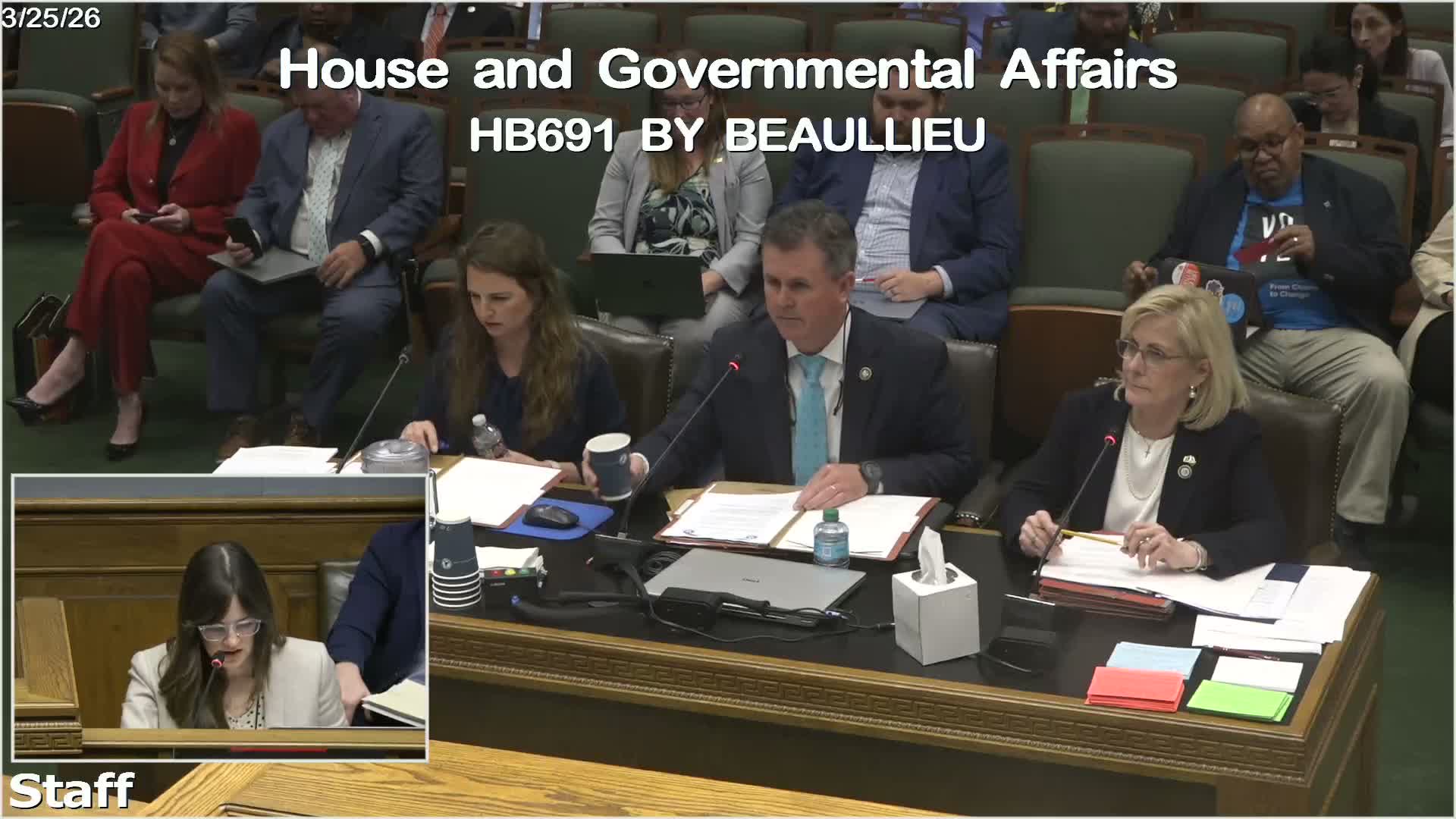
House committee advances bill to codify SAVE database checks of Louisiana voter rolls
Summary
A House committee advanced House Bill 691 to require routine checks of Louisiana’s voter registration list against the federal SAVE database. Supporters said the checks corrected ineligible registrations; opponents and civil-rights groups warned the federal data can produce false positives and risk disenfranchising eligible voters. The committee reported the bill favorably, 9-7.
A House committee voted to report House Bill 691 favorably after a day of testimony and public comment on whether Louisiana should require the secretary of state to run voter registration records through the federal Systematic Alien Verification for Entitlements (SAVE) database.
Chairman Bowyer, the bill’s author, opened the discussion by saying the measure would codify a practice the secretary of state’s office already uses to identify potentially ineligible registrants. Secretary of State Nancy Landry told the committee the office had run the list and "identified 403 noncitizens on our voter rolls," investigated each case, provided a 21-day challenge period and removed those registrants when investigations supported removal. Landry added, "Since 2020, there's been 130 illegal votes," and said the bill would preserve a uniform process for future secretaries.
Supporters framed the bill as a narrow election-integrity measure. Landry and first assistant Katherine Newsom described the state’s follow-up process: investigators first check scanned registration documents, consult parish registrars of voters and, when needed, visit parishes before issuing a 21-day citizenship-status challenge that gives registrants an opportunity to present proof of eligibility.
Newsom also sought to limit confusion about the SAVE system, saying, "SAVE does not have any illegal aliens in their database. They are people who are lawfully present" whose records are used to identify potential noncitizens for further review.
Opponents and civil-rights groups urged the committee to defer or reject the mandate, saying the federal data can be inaccurate and that automated matches risk creating burdensome and error-prone challenges. Melissa Flournoy, board chair of 10,000 Women, asked the panel to "defer House Bill 691" and warned that routing Louisiana’s voter list through national databases could produce matching errors and create new burdens for parish registrars.
Sarah Whittington of the ACLU of Louisiana testified that "SAVE itself is not its own data warehouse. It does not include comprehensive citizenship information," and warned that mandating its use could expose voter data to privacy risk and generate large numbers of non-matches. Max Martin of the Power Coalition cited recent reporting and state experiences showing error rates in SAVE matches and warned, "The shortest path to canceling out a legal vote is using this inaccurate data to remove legal voters from the system." Several faith- and civil-rights groups raised similar concerns about language barriers, mailed notices that go undelivered and the short 21-day window for response.
Immigrant advocates pressed the committee on the potential chilling effect. Community organizer Sarah Louis Ayo said that when she gained citizenship she was "really afraid to vote because of the idea that we do not wanna mess up," and told members she feared the bill would heighten that fear across immigrant communities.
Committee members pressed the secretary's office on safeguards. Committee questions centered on how long the state’s free access to SAVE would continue, how batch searches are handled, how investigators verify matches and what documentation is accepted to reestablish eligibility. Landry said the current federal policy allows states free access; the bill would make the requirement contingent on that availability.
After closing remarks from the bill’s author, the committee took a roll-call vote and recorded 9 yeas and 7 nays. The chair announced that HB 691 will be reported favorably as amended.
What’s next: The committee’s vote reports HB 691 to the next stage of the House process; the committee did not adopt a change to the 21-day due-process period during the hearing. The secretary of state’s office and several advocacy groups said they could provide additional technical information about matching algorithms and safeguards if requested by members.