Get Full Government Meeting Transcripts, Videos, & Alerts Forever!
Get email alerts on the San Jose 311 topic
No spam. Unsubscribe anytime.
San Jose staff walk residents through 311 website, app and phone options
Summary
City of San Jose staff explained how residents can use the San Jose 311 website, mobile app or phone line to report non-emergency problems, how reports are routed, language support and the dashboard for tracking requests.
Chelsea Passage, Public Information Manager for the City of San Jose, opened a public webinar explaining how residents can use the city's 311 service to report non-emergency issues such as illegal dumping, graffiti, potholes, abandoned vehicles, and streetlight outages.
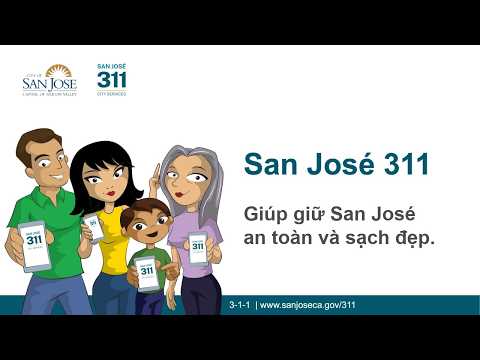
Passage said there are three primary ways to submit requests: the San Jose 311 website and dashboard, the 311 mobile app (App Store/Google Play), or the phone line. "Hai là, có thể tải phần mềm và cái ứng dụng ba trăm mười một trên điện thoại thông minh của anh chị... Thứ ba là có thể gọi ba nghìn tám trăm mười một" (describing web, app and phone options), she said, and encouraged residents to create an account to receive email updates on request progress.
Why it matters: Using the online tools or the app lets residents track a request, view metrics and receive status updates so the city can assign the report to the correct field team. Passage demonstrated the 311 dashboard's neighborhood-level filters, time-to-completion measures and customer satisfaction indicators. She also pointed to a QR code displayed during the webinar that links directly to the dashboard.
The presenter described the highest-volume request types handled by 311: bulk pickup/large-item collection, illegal dumping, graffiti removal, pothole and roadway repairs, streetlight outages and utility or sewer issues. She explained that reports are routed to the appropriate departmental teams for response and that not all requests can be resolved immediately.
Language access and privacy: Passage said the service currently accepts English, Spanish and Vietnamese, and that support for Chinese (Cantonese and Mandarin) is planned for a later fiscal year. She emphasized confidentiality protections for callers: "tất cả những thông tin anh chị đã gọi và cung cấp trong vòng một... được báu mật và được an toàn, chúng tôi không chia sẻ với bất kỳ ai kể cả đối với Cơ quan Điều tra Di trú" (stating that caller information is kept confidential and not shared with immigration enforcement).
How to report evidence: For some enforcement actions, especially abandoned-vehicle removals or certain parking violations, staff said inspectors generally need to see vehicles in person; photos may be helpful but do not always substitute for an on-site inspection. Passage walked users through how to schedule bulk pickups through the app and noted confirmation emails are sent before a pickup is finalized.
The webinar was recorded and will be posted on the city website with materials in English, Spanish, Vietnamese and Chinese, Passage said. She closed by thanking attendees and council members and inviting residents to use the city's 311 resources.