Get Full Government Meeting Transcripts, Videos, & Alerts Forever!
Get email alerts on the Immigration Enforcement Policy topic
No spam. Unsubscribe anytime.
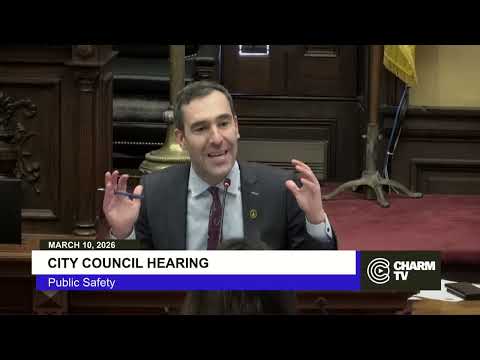
Baltimore committee hears bill to bar city cooperation with ICE; community witnesses describe alleged abuses and health risks
Summary
Baltimore City’s Public Safety Committee held a hearing on council bill 26‑0144, the Safe Spaces and Communities Act, where sponsors described agency duties and amendments and dozens of residents, advocates, professors and health experts urged passage while agencies endorsed the bill report; no vote was taken due to lack of quorum.
The Baltimore City Council Public Safety Committee heard testimony on council bill 26‑0144, the Safe Spaces and Communities Act, which would bar city agencies from assisting federal immigration enforcement except when required by law or a judicial order and would require agency‑specific immigration enforcement response plans coordinated with the Mayor’s Office of Immigrant Affairs and MEMA.
Chair Mark Conway opened the hearing and framed the measure as a local response to what he described as an expanded federal enforcement apparatus. He said the bill “draws a clear line. In the absence of federal reform, the city of Baltimore should provide no support, no coordination, and no assistance to ICE beyond what is explicitly required by federal law or ordered by a federal judge.”
Why it matters
Sponsors and supporters told the committee the bill is intended to preserve trust between residents and local government so people will continue to report crimes, seek medical care and use city services. Councilman Paris Gray argued the measure is not anti‑police but “a reaffirmation of a fundamental agreement that the role of local policing is to serve and protect the people of Baltimore City,” and he said the bill “makes Baltimore safer.” Councilwoman Odette Ramos, a sponsor, detailed amendments that narrow coverage to city agencies (removing prior language about third‑party covered entities), require agency plans and training, and add BPD‑specific procedures for verifying warrants and documenting interactions.
Community and expert testimony
A range of witnesses urged swift passage. Chair Conway read a family’s written testimony describing an asylum seeker—identified in the written submission as Mahad Adnan Roble—who was detained during a routine ICE check‑in, transferred out of state, and later had his asylum case accelerated and denied while lacking an interpreter. A Baltimore teacher, Michael Marinelli, told the committee immigrant students’ attendance and graduation rates have dropped amid enforcement pressure and said that contributed to his support.
Community advocates and service providers urged concrete implementation steps, including multilingual signage, public education on residents’ rights, and budgeted legal services. CASA representatives and other advocates said staff respond daily to arrests, often outside schools and workplaces, and called the bill a necessary guardrail.
Health and detention conditions
Dr. Steven Kane, a public‑health physician with experience in carceral medical systems, described alleged conditions at the Fallon Federal Building and cited two frameworks he said were being violated: the National Commission on Correctional Health Care standards and ICE’s National Detention Standards. He warned overcrowding, lack of intake screening, and limited access to timely medical care can amplify respiratory and other communicable diseases and pose risks to the broader Baltimore community.
Legal and agency perspectives
Professor Eleria Gomez (immigration clinics, University of Baltimore School of Law) and Professor Maureen Sweeney (Chacon Center, University of Maryland School of Law) urged adoption, saying the city has authority under the Tenth Amendment to set local policing priorities and that limiting municipal data sharing with ICE protects due process and public safety.
Agency representatives submitted bill reports and spoke to implementation. Erin Murphy, chief of staff and government affairs for the Baltimore Police Department, said BPD already has a policy limiting cooperation with immigration enforcement and requested some bill language mirror existing policy. The Law Department (Hillary Ruhle) said its review led to suggested edits for legal sufficiency, and the mayor’s Office of Immigrant Affairs stood behind its report. The Law Department also cautioned that a proposed amendment to bar staging on parks could trigger First Amendment concerns because parks are traditional public forums.
Remaining questions and amendments
Sponsors explained their amendment package: strike references to “covered entities” and focus requirements on city agencies; require MEMA coordination for standardized plans and training; clarify reporting, documentation, and de‑escalation language for BPD; and remove a mask‑removal verification requirement that sponsors said may be addressed at the state level. Committee members asked how MEMA will scale technical assistance, how agencies will track impacts, and how task forces and multi‑agency partnerships will be handled in practice.
Next steps
The committee did not take a vote. Chair Conway said the body lacked a quorum to move the bill and recessed the hearing, and sponsors said they will continue to refine the language and seek a vote as soon as possible.
Key quotes
• Chair Mark Conway: “This bill draws a clear line. In the absence of federal reform, the city of Baltimore should provide no support, no coordination, and no assistance to ICE beyond what is explicitly required by federal law or ordered by a federal judge.”
• Councilman Paris Gray: “This bill makes Baltimore safer.”
• Dr. Steven Kane: “What was described at the Fallon Federal Building does not approach these standards. It violates both frameworks categorically.”
• Professor Eleria Gomez: “Public safety is best served when residents trust their local government.”
What the bill would do (as described at the hearing)
• Require each city agency to adopt an immigration enforcement action response plan coordinated with the Mayor’s Office of Immigrant Affairs and MEMA, with provisions for data governance, communications, signage, and training; • Prohibit city agencies from permitting immigration enforcement in city facilities except when required by law or a judicial warrant or order; • Require BPD to verify warrants and law‑enforcement credentials when practicable, document interactions (including on body‑worn camera when possible), and prioritize de‑escalation and life‑safety obligations; • Limit discrimination based on immigration status and restrict municipal data sharing with federal immigration authorities beyond legal obligations.
Limitations and notes
No formal vote was taken at the hearing. Several provisions discussed—particularly anything that would limit use of traditional public forums such as parks—may raise constitutional concerns per the Law Department and so were narrowed or left to policy guidance. Sponsors removed language that would have extended compliance requirements to third‑party contractors and are exploring contract mechanisms and BOE guidance for procurement‑related issues.
The committee record will be updated when sponsors file final amendment language and when a future meeting is scheduled to vote on bill 26‑0144.