Lifetime Citizen Portal Access — AI Briefings, Alerts & Unlimited Follows
Committee advances ban on ranked-choice voting after floor of testimony, 7-4
Loading...
Summary
The Elections and Apportionment Committee passed Senate Bill 12, which would prohibit ranked-choice voting in Indiana, after hearing testimony from election officials and civic groups. Supporters warned of complexity and discarded ballots; opponents urged further study and noted empirical evidence supporting RCV.
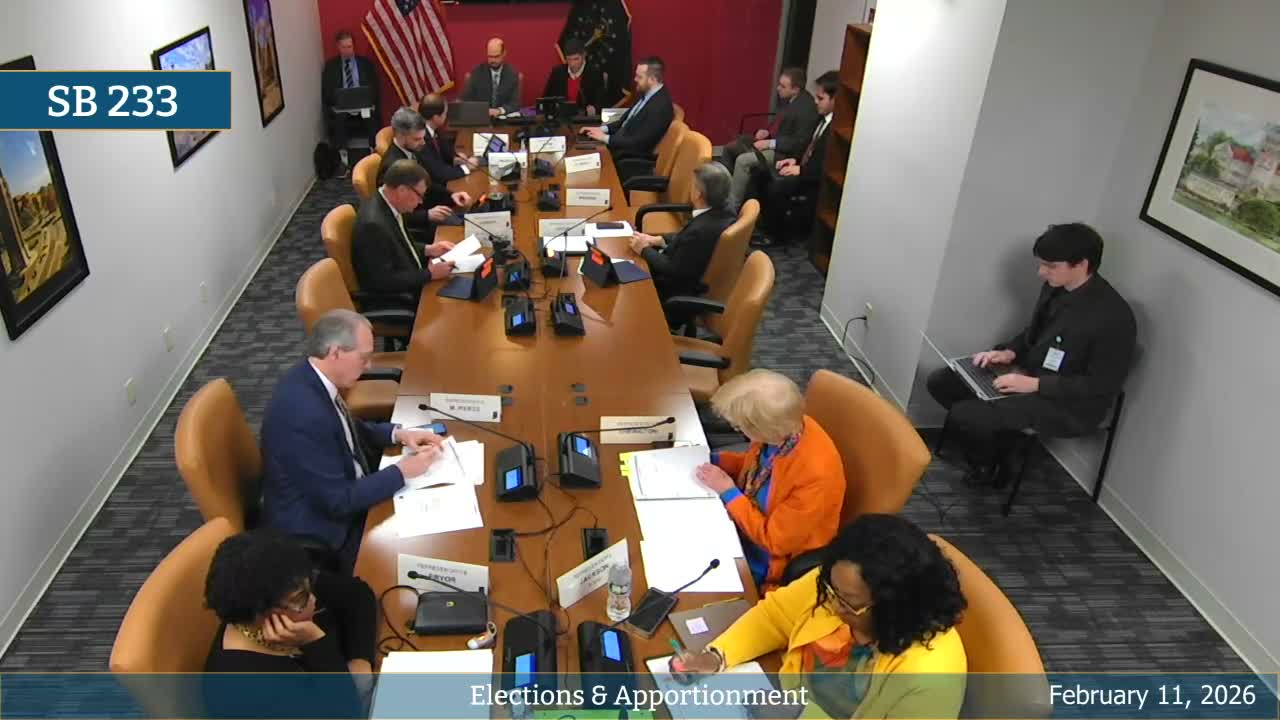
The Elections and Apportionment Committee voted 7-4 to pass Senate Bill 12, a proposal to prohibit ranked-choice voting in all Indiana elections, after more than an hour of testimony and questions.
Senator Dorio, the bill's sponsor, told the committee the measure "will protect Indiana voters by preserving our traditional 1 person, 1 vote electoral system," and argued ranked-choice voting (RCV) has produced confusion and tabulation problems in other states and localities. He cited historical use in Indiana and examples such as Minneapolis and Alaska to underscore his concerns about complexity and delayed results.
"If you do not fill out three choices, your ballot is thrown away," Senator Dorio said, describing cases he said occurred under some RCV implementations. He also showed committee members a 2013 Minneapolis ballot as an example of how voters might be asked to rank multiple candidates.
Dustin Renner of the Indiana Secretary of State's office testified in support, saying the bill "is straightforward and designed to maintain the integrity and simplicity of our current elections" and that prohibiting RCV would avoid multi-round tabulation complexity that could "undermine voter confidence."
Advocates on the other side urged caution. Barbara Tolley of the League of Women Voters of Indiana said RCV "gives voters meaningful choices" and urged the committee to study the reform more thoroughly, citing a November 2025 review that found many academic critiques of RCV rely on flawed methods and that studies using real-world election data show neutral or positive effects. "Banning ranked-choice voting in Indiana is bad public policy," Tolley said.
Julia Vaughn of Common Cause Indiana also urged a no vote, saying a statewide ban "has no practical effect" today because RCV is not in use in Indiana and that the legislature should not preempt potential reforms that could increase turnout and representation.
Witnesses disagreed on how frequently ballots are discarded in RCV systems and whether administrative or voter errors are the primary cause. Paul Logman of Heritage Action and Matt Bell of the Foundation for Government Accountability Action warned of tabulation errors and long delays in some jurisdictions; Brad King of the Indiana Election Division provided legal and historical context, noting Indiana's brief early-20th-century experiment with ranked ballots and suggesting explicit legislative language can deter litigation over local adoptions.
During committee questioning members raised technical points, including whether RCV outcomes are determined by party or top vote-getters, whether jurisdictions requiring multiple rankings discard incomplete ballots uniformly, and whether election night winners would be known in all counties. Brad King said outcomes and timing can vary by county and voting system, and that close races may not be resolved until additional tabulation steps are completed.
Several members who spoke during the roll call said they opposed the ban because they viewed RCV as a possible reform that could increase choice and produce majority winners; others supported the bill because they prioritized simplicity and administrative certainty. On the final roll call three members spoke to explain their no votes and others explained support; the committee recorded a 7-4 passage.
The committee passed SB12 and adjourned. The bill will proceed according to the legislature's established process.