Lifetime Citizen Portal Access — AI Briefings, Alerts & Unlimited Follows
Sponsors push to restore pension portability for law enforcement, cite 'majority service credit' barrier
Loading...
Summary
Representatives Willis and Craig urged the committee to fix a 2015 service‑credit rule that limits transfers between Ohio Police & Fire and OPERS law‑enforcement sections, arguing portability removes career disincentives; members sought actuarial and fiscal specifics and asked LSC/OPERS for data.
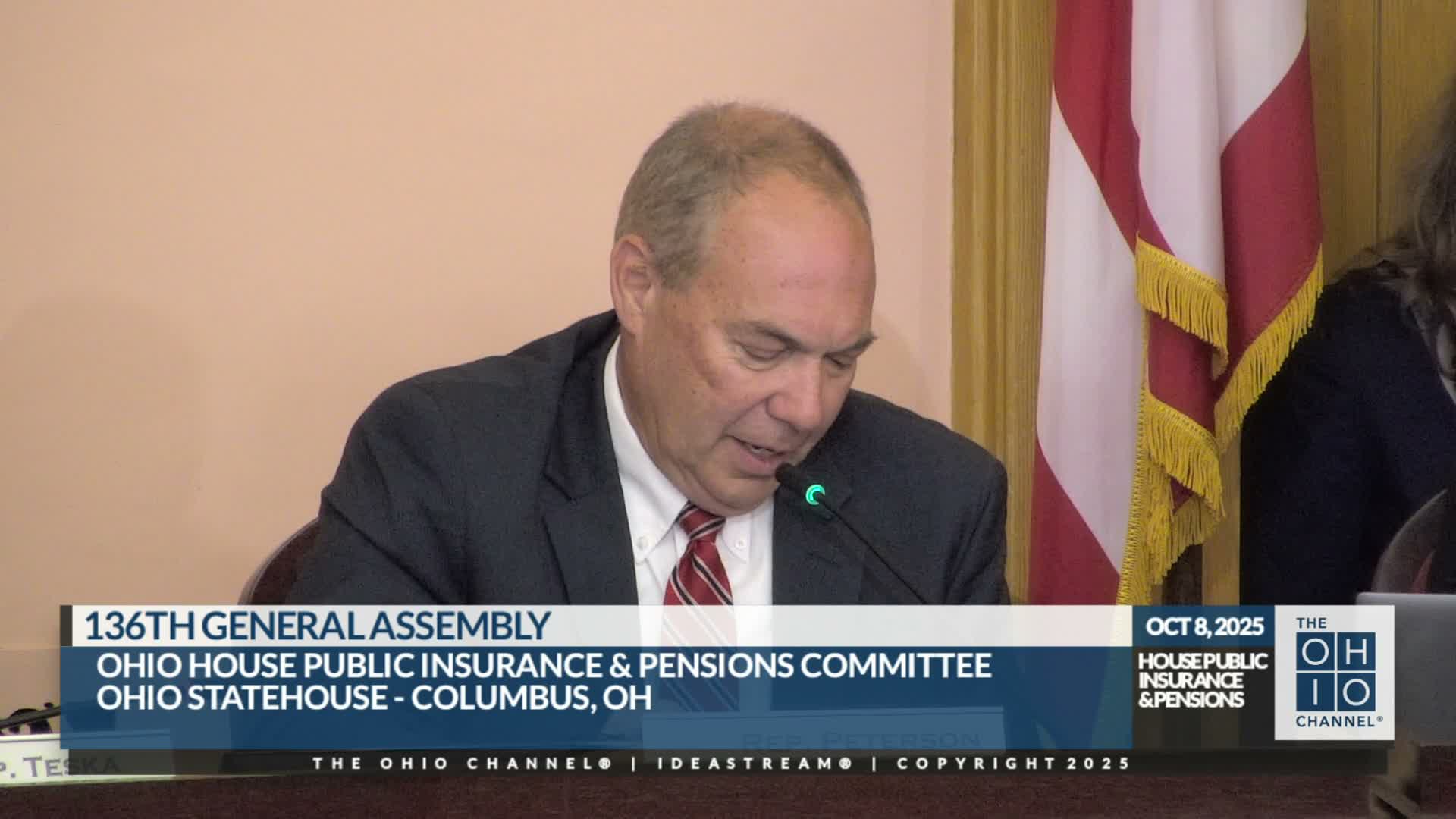
Representatives Willis and Craig presented sponsor testimony on House Bill 424, which would ease portability of retirement service credits between Ohio Police & Fire (OPNF) and the law‑enforcement section of the Ohio Public Employees Retirement System (OPERS). Willis told members the current "majority service credit" requirement, added in 2015, creates a barrier that forces officers who want to make lateral moves or pursue promotions to "serve more years again than you have already served" before being eligible to transfer credits.
Willis said the bill's goal is to make the funds "do the math" so an officer can be told how much service credit in one fund equates to another, rather than requiring an officer to re‑serve long periods. "When an officer comes and says, I'm gonna be retiring I'm going to be moving my retirement over to the other fund, the two funds should be able to talk and do the math and say, your service credit is only this much service credit than the other," he said. Representative Craig, the joint sponsor, added that the portability barrier discourages experienced officers from seeking promotions and hampers staffing in rural communities.
Committee members pressed for numbers and fiscal effects. Willis acknowledged specific counts were not supplied in testimony but said OPERS had provided data privately and that prior transition numbers were "minuscule" compared with overall fund size. Members asked whether portability requires a broad merger or whether targeted actuarial rules could equalize service credits; sponsors recommended a targeted "scalpel" approach to compute equivalent service credits and preserve fund solvency.
Several members emphasized actuarial complexity and the need for precise fiscal analysis. Representative Miller and others asked whether calculations would be individualized or use a generic employee profile; sponsors said the goal is to translate service credit value in a way that is administrable, not to re‑underwrite every individual's health profile. The first hearing ended with sponsors and members acknowledging further work with OPERS, OPNF and LSC would be necessary before drafting binding fiscal language.