Get Full Government Meeting Transcripts, Videos, & Alerts Forever!
Get email alerts on the Performance Based Rate Making topic
No spam. Unsubscribe anytime.
Committee advances PBR bill for electric utilities with consumer protections and billing changes
Summary
The House Utilities, Energy and Telecommunications Committee passed House Bill 1002 as amended to allow limited performance‑based rate making (PBR) for regulated electric utilities, add multiyear rate plans and require levelized billing and consumer protections funded in part by a 0.2% residential revenue charge for low‑income programs.
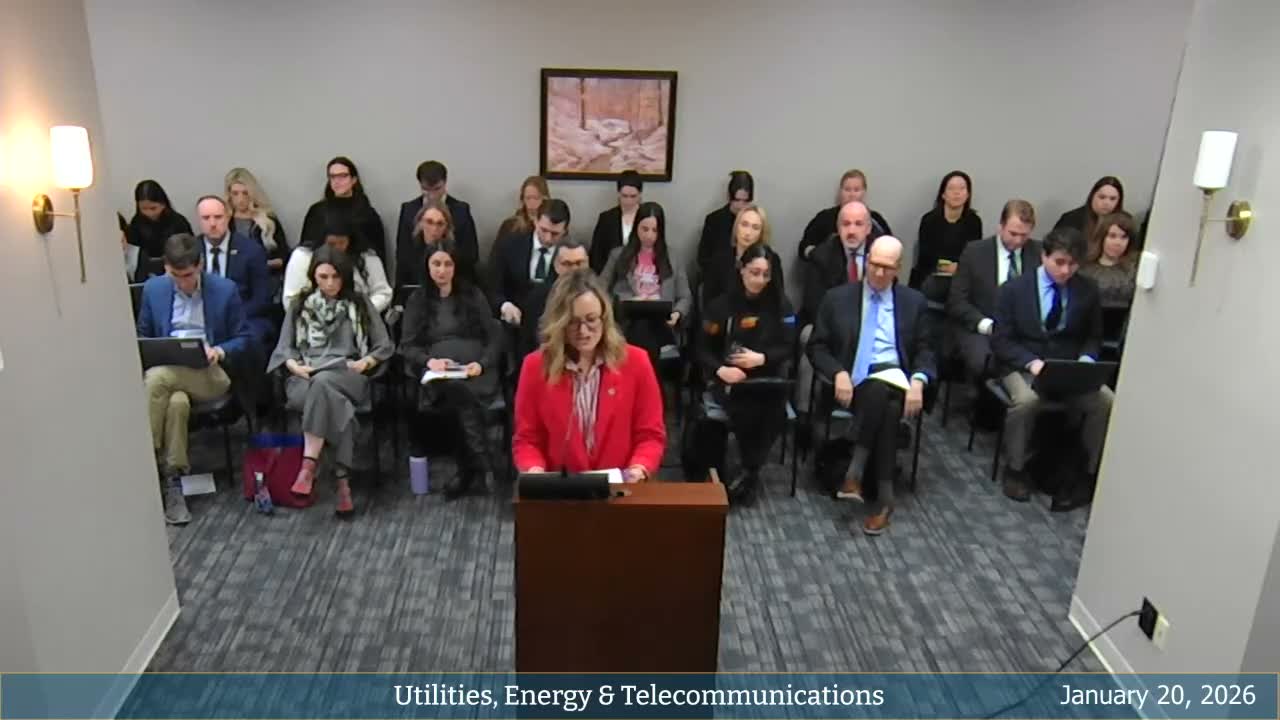
House Bill 1002, which would authorize limited performance‑based rate making for regulated electric utilities, advanced from the House Utilities, Energy and Telecommunications Committee on a 12–0 recorded vote after several amendments were adopted.
Representative Sean Quiler, the bill sponsor, told the committee the measure "introduces performance based rate making in a limited and incremental way, not as a replacement for traditional regulation, but as an evolution to it," explaining that a portion of utility financial outcomes would be tied to performance metrics such as customer affordability and service restoration (including reliability metrics such as SAIDI and major event days).
The committee adopted Amendment 22, which replaces budget‑based billing language with levelized billing similar to REMC practice, requires multiyear plan filings to include the same evidence required in a rate case, and moves several reporting dates from February to March to align with other reporting. The amendment also clarifies that the Office of Utility Consumer Counselor (OUCC) may request hearings during a multiyear rate plan.
Committee members discussed a funding approach for low‑income programs removed from DSM funding and instead funded by a 0.2% residential‑revenue charge. "We've looked at other states and this is to help during the very critical winter and summer months," the chair said while describing the proposed charge. Lawmakers acknowledged the percentage may be revised as calculations continue.
Members also debated how to treat recovery from major event days and agreed to fold MEDs into the applicable performance metric, and they added a procedural amendment (Amendment 23) that narrows a century‑old IURC emergency authority so the commission may recommend an emergency to the governor in narrowly defined circumstances and the legislature must affirm continuation after 90 days.
Representative Matt Pierce, the ranking member, said the bill "is a good start" while noting additional technical work may be needed later; several members urged further vetting of technical rate‑making language on second reading or in the Senate. The committee took a final vote and moved the bill to the next stage with the recorded tally reported at 12–0 (the committee held the roll open briefly for one member to record a vote).
The committee proceedings included multiple votes on secondary amendments (some taken by unanimous consent, others defeated on roll calls) and several items the sponsors said they will continue to refine with LSA, OUCC and utilities. The committee indicated further tweaks could be made before the bill reaches the House floor.