Get Full Government Meeting Transcripts, Videos, & Alerts Forever!
Get email alerts on the Criminal Code Reform topic
No spam. Unsubscribe anytime.
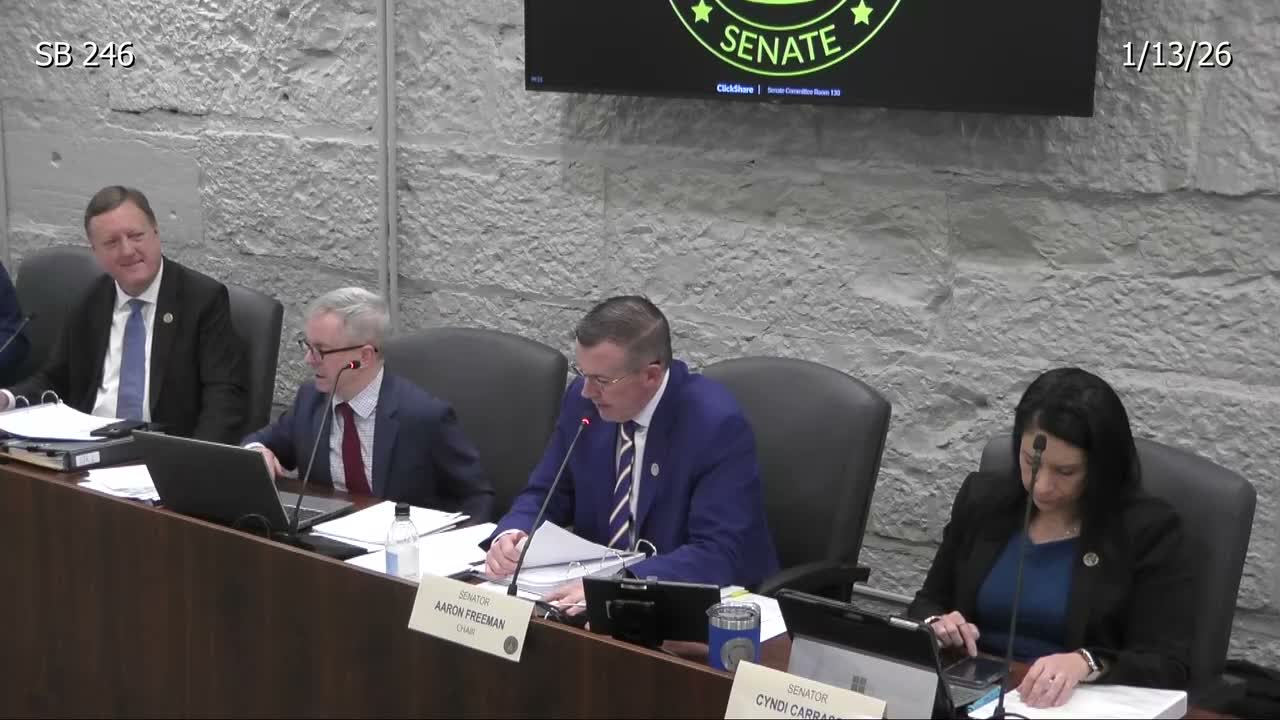
Controversial criminal-law overhaul advances to appropriations after heated debate
Summary
SB 252, a sweeping package of criminal-law changes — including non-suspendable sentencing categories, increased penalties for certain homicide-related offenses and a proposed prosecutor-fee to generate revenue — was advanced to appropriations after proponents and opponents traded testimony about capacity, mandatory-minimum effects and victim protections.
The committee advanced SB 252, a comprehensive criminal-law package that would permit consecutive victim-based charging in some cases, adjust sentencing ranges for certain offenses, limit the suspensibility of sentences in specified circumstances, and create a prosecutor-fee mechanism intended to generate revenue for prosecuting offices.
Courtney Curtis of IPAC testified to several provisions she supported, including clearer authority for consecutive sentencing when multiple victims are involved and reforms to how Department of Correction credits are applied. She described CPCT (program-based time cuts) concerns and urged improved programming to match credits. By contrast, Michael Moore of the Indiana Public Defender Council warned that the bill revives elements of "mandatory minimum" policy and could dramatically increase DOC and jail populations. Moore said the bill's nonsuspendable language and expanded executed-time requirements could sharply raise the number of people sent to state custody.
Other witnesses (ADL, Jewish community groups) supported specific amendments, including a new class A misdemeanor for malicious littering aimed at hate flyers and intimidation. Several senators said the package contained worthwhile and necessary reforms, but some voted against recommitting it because they believed the bill was too broad and needed deeper study; the committee voted to recommit the package to appropriations, 6-3.
Why it matters: SB 252 contains multiple policy changes with fiscal and operational implications for the Department of Correction, local jails and public-defender and prosecutor workloads. Proponents argued it restores accountability for multiple victims and closes gaps; opponents warned of sweeping consequences similar to mandatory-minimum eras.
Provenance: Extensive testimony and amendment votes are recorded in the hearing transcript; committee vote to recommit 6-3 is in the record.