Get Full Government Meeting Transcripts, Videos, & Alerts Forever!
Get email alerts on the Mask Aggravator topic
No spam. Unsubscribe anytime.
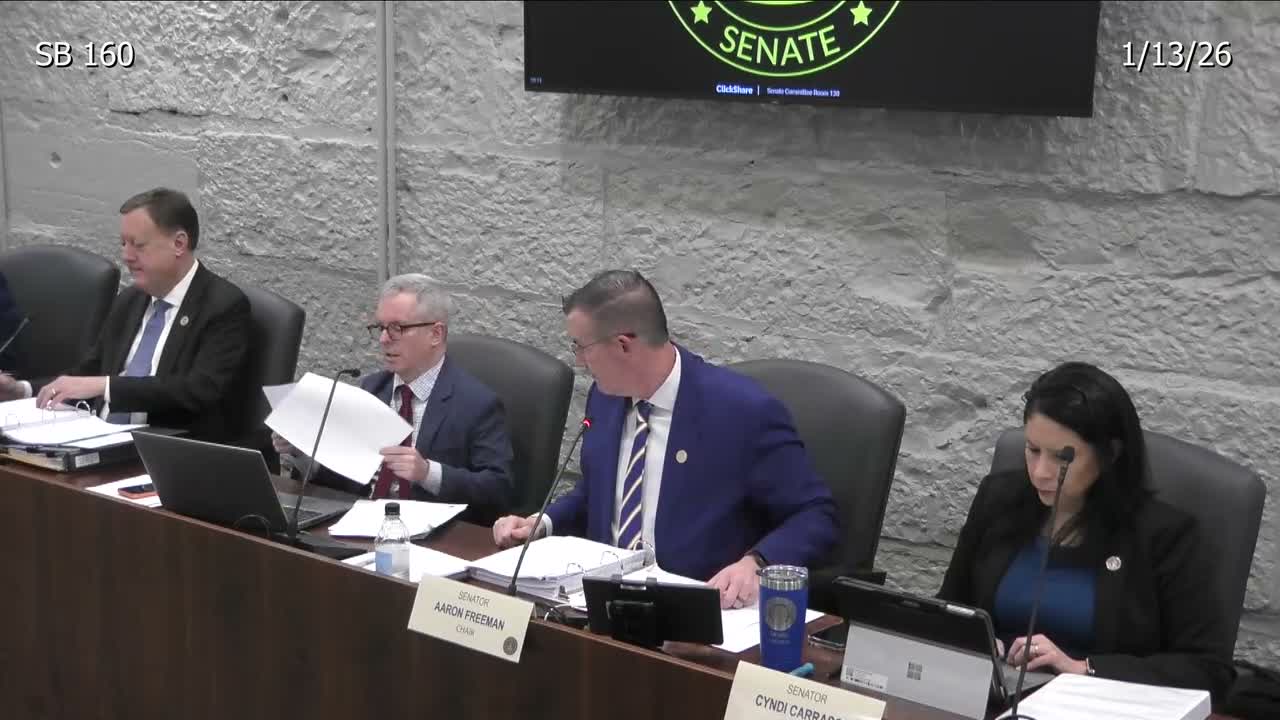
Senate panel narrows and advances mask-related sentencing aggravator after religious, law-enforcement testimony
Summary
The committee approved an amended bill adding a sentencing aggravator when a crime is committed while the perpetrator conceals their identity; Jewish and law-enforcement groups told lawmakers the tool would aid prosecutions of violent and hate crimes.
The Senate Corrections and Criminal Law Committee approved an amended sentencing-aggravator bill that would let judges consider intentional identity concealment at sentencing. The measure, as amended, removes a long exemption list and instead defines a mask as "a device worn over the face for the purpose of concealing or disguising the wearer's identity," keeping the change confined to sentencing aggravators rather than creating a new offense.
David Sklar of the Jewish Community Relations Council testified that antisemitic incidents and violent attacks frequently occur with perpetrators masking their identity, and urged support for the bill. Kyle Pruitt, Plainfield police chief and government-relations chair of the Indiana Association of Chiefs of Police, told the committee that masking often increases victims' terror and that several other states use similar sentencing enhancements. Miriam Dant of the Anti-Defamation League said the language strikes a balance between free speech and criminal intimidation, and praised the sponsor for working with law enforcement.
Senators debated the scope and whether the measure would yield unintended consequences or unfairly erode judicial discretion. The committee adopted an amendment (No. 2) — removing the exemption list and clarifying that the provision functions as a sentencing aggravator — by consent and passed the bill 8-0.
Why it matters: Supporters said the change would help prosecutors pursue crimes in which identity concealment made it harder to identify a suspect and increased victims' fear; opponents cautioned against overbroad aggravators that could duplicate other sentencing factors.
Provenance: Committee testimony, amendment adoption and roll call as recorded in the hearing transcript.