Get Full Government Meeting Transcripts, Videos, & Alerts Forever!
Get email alerts on the Housing Zoning topic
No spam. Unsubscribe anytime.
Council votes to update ADU rules to comply with state law; debate over rural wildfire risk
Summary
Nevada City moved to update its accessory dwelling unit ordinance to match recent state changes, adopting an 18‑foot ADU height recommendation and new parking exceptions. Council unanimously approved a CEQA exemption (Section 15061(b)(3)) and introduced the ordinance for adoption after members debated rural wildfire risks.
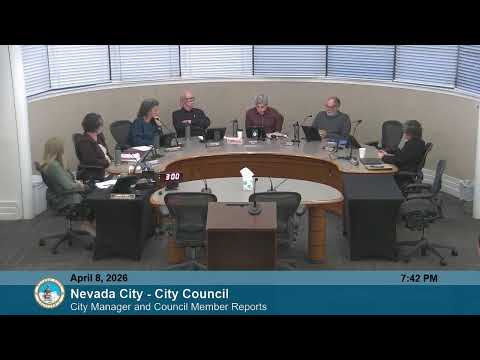
The Nevada City Council on April 8 voted unanimously to find the city’s proposed accessory dwelling unit (ADU) zoning amendment exempt from environmental review under CEQA Section 15061(b)(3) and to introduce and waive first reading of a revised ADU ordinance to conform to state law changes.
City Planner Jessica Hankins told the council the state has changed ADU requirements and the city must update its ordinance. "They have sent us a letter saying that we are out of compliance with our current ordinance," Hankins said, summarizing required changes that increase allowable ADU types (attached, detached and conversion ADUs, plus a junior ADU on single‑family parcels) and allow up to eight detached ADUs on multifamily parcels under the new state rules. Staff recommended raising a local ADU height limit from the state‑minimum 16 feet to 18 feet for design flexibility and adding parking exceptions tied to curb cuts, tree protection and front‑setback landscaping.
A council member raised concerns about applying state density solutions to a small, rural community. "The state does not pay attention to small rural communities," the member said, warning that increased density can raise wildfire risk. Other councilmembers and staff said local topography, housing economics and the ordinance’s details make a dramatic surge in ADUs unlikely and that the changes are required to remain compliant with state housing law. The council debated trade‑offs but moved forward with staff recommendations.
Councilmember Daniella made the two motions — first to find the project exempt from CEQA and then to introduce and waive the first reading of the ordinance — and both motions passed unanimously on roll call. Staff said the ordinance will be forwarded to the California Department of Housing and Community Development (HCD) as part of the compliance and review process.
The ordinance changes affect unit counts, maximum sizes for certain ADUs, local discretion on height and new parking exceptions; the council set an adoption date as part of the motion.