Get Full Government Meeting Transcripts, Videos, & Alerts Forever!
Get email alerts on the Land Use Development topic
No spam. Unsubscribe anytime.
San Diego council delays vote on Carmel Valley assisted‑living project after traffic and process concerns
Summary
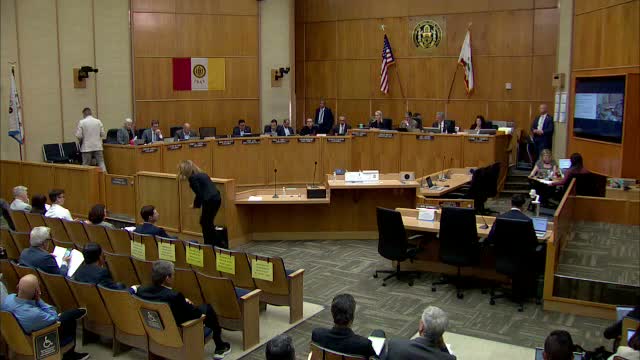
The City Council voted 8–1 Feb. 24 to continue agenda item 203 — a proposed assisted‑living facility in Carmel Valley — to March 17, 2025, after residents raised traffic and design concerns and the applicant warned the delay could cost $50,000–$100,000.
Council President La Cava moved and Council Member Ilo Rivera seconded a motion Feb. 24 to continue agenda item 203 — a proposed assisted‑living development — to Monday, March 17, 2025, at 2 p.m. The motion passed 8–1, with Council Member Campbell voting no.
The continuance came after more than an hour of public comment from residents, community‑planning board members and the project applicant. Marcela Escobar, identified in the record as president and CEO of Atlantis Group Land Use Consultants and representing the applicant, told the council: “This continuance will cost somewhere between 50 and $100,000.” She said her team and hundreds of project supporters had spent five years on the proposal and were prepared to proceed that day.
Opponents and some neighbors urged caution. Jeff Adeane, a North City resident, said the single driveway serving the proposed facility and an adjacent church raised safety and traffic concerns, noting visibility and speeding issues on the nearby roadway. Laurie Saldana, who described herself as a caregiver and urged timely consideration for older adults, said delays can harm prospective residents and their families: “Every day that is delayed, providing housing for these people impacts not only these older adults who need this housing, but ... family members who may be providing care.”
Michelle Strauss, chair of the Carmel Valley Community Planning Board, told the council the board approved the project with four conditions that she said were not reflected in the planning commission’s approval; she asked staff to report back on whether those conditions can be met before the project returns to council.
La Cava said the decision to request a continuance was made that morning after additional questions emerged, and argued the extra time would allow staff, the applicant and neighborhood groups to ensure the record is complete. The council clerk opened the continuance for public comment before the motion and the city confirmed the March 17 date worked for the applicant and staff.
The continuance does not decide the merits of the project; it sets the next public hearing date. The council will revisit Item 203 at the March 17 meeting at 2 p.m., when the record will be reopened for debate and a potential vote.