Get Full Government Meeting Transcripts, Videos, & Alerts Forever!
Get email alerts on the Transportation topic
No spam. Unsubscribe anytime.
Beltrami County reviews draft dust‑control policy that could shift maintenance costs to townships
Summary
County engineer Bruce presented a draft dust‑control policy giving townships three options: choose an alternative product and pay the product difference; stop chloride and pay the calculated additional maintenance (county calculator shows examples); or accept a complete road transfer. Commissioners expressed concern about calculation variability and timing for township budgeting.
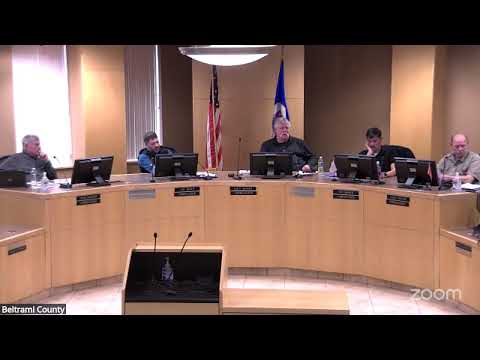
Beltrami County Engineer Bruce presented a draft dust‑control policy and a cost‑calculator tool at the board's work session, offering townships three options if they object to county application of chloride dust control on a road segment.
Bruce described the options: (1) choose an alternative dust‑control product and pay the per‑unit price difference; (2) have the county stop applying chloride and have the township pay the calculated increased maintenance costs (the county's calculator compares blading and gravelling frequencies and costs "with chloride" versus "without chloride"); or (3) the township could accept full jurisdiction of the road and its maintenance.
As an example Bruce showed from 2024 inputs: County Road 301 appeared on the county sample as costing roughly $77,875 per year with chloride versus about $88,900 per year without chloride — a difference on that sample of roughly $11,000. Bruce cautioned the calculator is uniform and approximate; commissioners and staff noted many variables (proximity to gravel pits and past road improvements can make the actual costs higher or lower than the estimate).
Several commissioners raised implementation concerns: townships often set budgets early in the year and might not be able to accept an immediate charge; residual effects of previously applied calcium chloride mean maintenance needs may not spike the first year; and accuracy of PDF‑only spreadsheets hampered detailed review. One commissioner suggested the county implement the policy and then invoice in arrears so any residual chloride effect and actual staffing capacity are reflected in final charges.
Board members also discussed the 2025 dust‑control contract on the consent agenda (alternate bids exist for calcium chloride vs. magnesium chloride). Staff noted the contract quantities can be adjusted if a township timely requests removal of a segment, but the window for that (before the county's June application runs) will be tight if the township must meet and return an agreement.
Bruce said the draft policy was intended for discussion and that he expects to share spreadsheet versions with townships for feedback; the board did not adopt the policy at the work session and treated it as a first reading for comment.