Get Full Government Meeting Transcripts, Videos, & Alerts Forever!
Get email alerts on the Abusive Head Trauma Expert Testimony topic
No spam. Unsubscribe anytime.
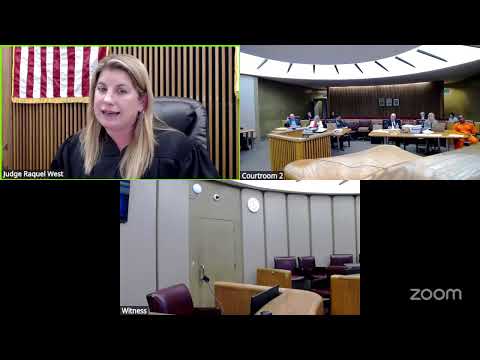
Retired pediatrician testifies injuries to infant Kaylin Garner are consistent with abusive head trauma
Summary
At a hearing in the 252nd District Court, Dr. George A. Edwards, a retired child‑abuse pediatrician, testified after reviewing medical records, imaging and statements that the injuries to infant Kaylin Garner are most consistent with abusive head trauma; Edwards also summarized his 2020 systematic review of caregiver admissions and discussed limits of biomechanical and animal studies.
Dr. George A. Edwards, a retired pediatrician who directed child-abuse consultations at Dell Children's Medical Center and has served on faculty at the University of Texas Dell Medical School, told the 252nd District Court that his review of medical records, imaging and police/CPS reports led him to conclude the injuries sustained by infant Kaylin Garner were caused by physical abuse — specifically, abusive head trauma.
Edwards said the child's course showed an abrupt onset of massive brain swelling with unresponsiveness and breathing problems between the morning and early afternoon on the day in question. He described bilateral, multilayer retinal hemorrhages extending from the central retina to the periphery and characterized that pattern as strongly suggestive of traumatic injury: “retinal hemorrhages with that distribution pattern strongly suggest or or I probably should say indicate trauma,” he said.
The expert testified that imaging (CT) demonstrated widespread anoxic/hypoxic changes and massive cerebral edema. He also noted the records did not show skull fracture, localized contusion or clear external bruising at a site that would explain the degree of brain swelling, and he emphasized the medical record documented a delay in seeking emergency care that, in his experience, raises concern: the child was reportedly normal earlier and later found unresponsive when a CPS worker made an unannounced afternoon visit.
Why it matters: The hearing is part of the court's review of scientific evidence and trial record—defense counsel has argued new‑science critiques of the shaking theory could have affected the jury's assessment. Edwards's testimony places conventional clinical findings (retinal hemorrhages, rapid deterioration and imaging showing hypoxia and swelling) and his clinical judgment at the center of the State's case.
Edwards also summarized a 2020 systematic review he coauthored that compiled 434 admissions from 55 studies across multiple countries. He said the review found shaking alone described in about 64% of admissions, impact alone in about 18% and a combination in 17% and acknowledged limitations in the underlying reports and critiques that some admissions may have been obtained under investigative suggestion or as part of plea negotiations.
On the contested points: During cross-examination, defense counsel pressed Edwards on the quality of admissions in his review, whether some statements qualify as "resuscitative" admissions (caregivers who say they shook a child to revive or calm them) and whether investigative framing could have influenced confessions. Edwards conceded that suggestion by investigators can "taint" a confession and that many case reports in the literature were limited or low quality, but he maintained that the constellation of findings in this case supports his clinical conclusion independent of any particular admission.
Edwards explained limits of extrapolating biomechanical and animal-model work to human infants, noting that many injury thresholds cited in engineering studies are scaled from adult or animal data and that anesthetized animal models cannot capture behaviors such as crying that may affect physiology in real-world interactions. He criticized over-extrapolation while acknowledging biomechanics is an important scientific discipline.
Quotes and attribution: All direct quotations and attributions in this article are to Dr. George A. Edwards unless otherwise noted. Representative quotes include Edwards's description of the retinal findings as indicating trauma and his statement that extrapolation from animal models or adult data to infants has meaningful limits.
What happens next: After cross-examination concluded the court excused Edwards. The hearing continued with procedural matters and scheduling of additional expert testimony; the court later admitted certain defense exhibits for the appellate record (see separate article on scheduling and exhibits).
Sources: Testimony of Dr. George A. Edwards; documents and medical records cited in court; Edwards's 2020 systematic review as discussed in testimony.