Get Full Government Meeting Transcripts, Videos, & Alerts Forever!
Get email alerts on the Recreation Regulation topic
No spam. Unsubscribe anytime.
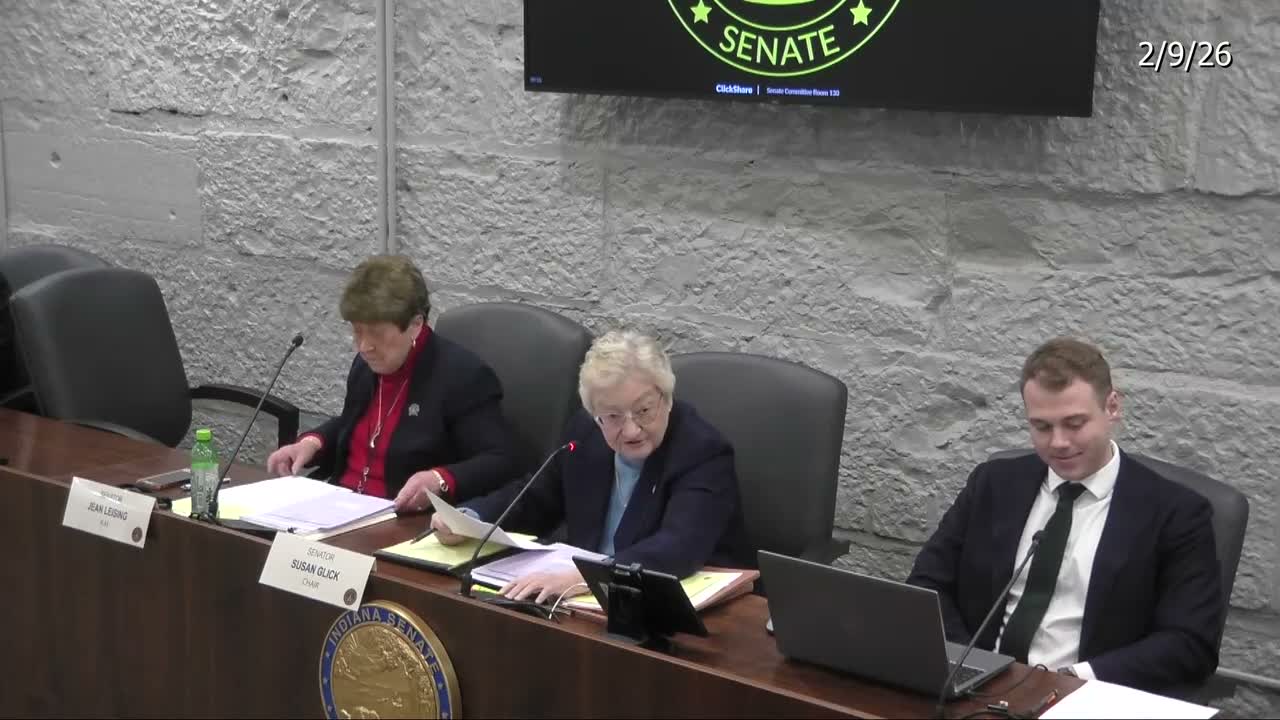
Sen. Sue Glick’s committee advances bill limiting wake‑surfing on small lakes
Summary
The Senate Natural Resources Committee voted to pass House Bill 1062, which would restrict wakeboarding and wake surfing operations on smaller lakes — closing a perceived "10 mph" loophole and limiting nighttime operation — after testimony from lake groups and conservation advocates about shoreline erosion and safety.
The Senate Natural Resources Committee voted to pass House Bill 1062 on April 10, advancing measures that would restrict wakeboarding and wake surfing operations on smaller lakes and close a loophole tied to a 10-mile‑per‑hour speed limit.
"This is a bill that has come before us on previous occasions," Chairwoman Sue Glick said, introducing the measure and saying it would not ban the sport but set operating times to reduce shoreline churning, nighttime disturbance and impacts on neighboring property owners.
Lynn Crichton, director of the Watershed Foundation, told the committee that newer wake‑surf boats are engineered to make large wakes at speeds under 10 mph and that the bill "is a reasonable and measured approach to closing that 10 mile an hour loophole." She said some lakes are large enough to accommodate wake sports without damage, but many smaller natural lakes rely on the existing 10‑mph rule to protect water quality and safety.
Delaney Barber Quan of Indiana Conservation Voters said the bill will "help to prevent shoreline erosion, protect habitat, maintain water quality, and private property" and offered the group's support. Lillian Creighton, a student who grew up on Lake Tippecanoe, said she is "not against wake surfing at all" but described 3–5 foot wakes as a navigation and safety problem on smaller lakes and at night.
Committee members pressed witnesses for details. Sen. Shelley Yoder asked whether the bill's night restrictions would apply universally to public freshwater lakes; witnesses confirmed small lakes would be defined as 200 acres or less and clarified where night limitations would apply.
Some members voiced caution about local impacts. Sen. Scott Alexander said he would vote yes but warned the bill could be a "slippery slope" by telling individual lake communities how they can operate their lakes.
After discussion and a motion to "do pass," the committee recorded a vote: HB 1062 passed by a committee tally of 7 yays, 1 no and 1 excused.
The committee action advances the bill out of the Natural Resources Committee; the transcript records the committee vote but does not specify the next formal floor schedule.