Lifetime Citizen Portal Access — AI Briefings, Alerts & Unlimited Follows
Hacienda La Puente board holds governance workshop, sets priorities and moves to align superintendent evaluation
Loading...
Summary
At a study session facilitator-led by consultant Nicole Anderson, the Hacienda La Puente Unified School District board agreed to use four priority buckets—teaching and learning, staffing, school climate/infrastructure and budget—to guide agenda-setting and to align the superintendent’s evaluation to those priorities.
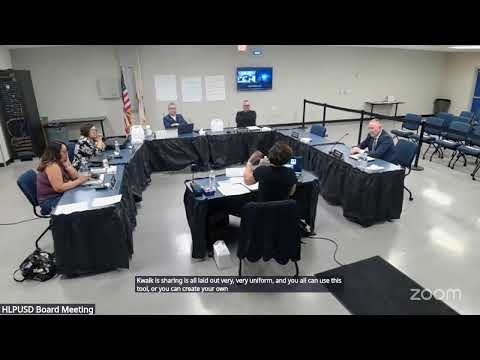
Hacienda La Puente Unified School District — The Hacienda La Puente Unified School District board met in a study session Tuesday evening to clarify governance roles, adopt engagement norms and begin drafting board priorities that will shape the superintendent’s evaluation.
Consultant Nicole Anderson, who ran the workshop, told the board the session was intended as practice time for governing as a team. "So what we're gonna do is we're gonna focus it on governance, effective governance," she said, asking trustees to accept some "discomfort" as they worked through exercises to identify the district's priorities and expectations.
Why it matters: Board priorities determine the questions trustees ask staff, how the superintendent’s goals are set and the yardsticks used to measure success. Anderson walked trustees through a template that divides priorities into four buckets — teaching and learning, staffing, school climate/infrastructure and budget — and asked each member to propose concrete focus areas the board could adopt.
What happened: Trustees completed a set of short exercises and shared top expectations of one another, the president and the superintendent. Common themes included treating colleagues respectfully, arriving prepared for meetings, maintaining fiscal responsibility and centering decisions on student outcomes. Superintendent John Roach said the board's collective priorities would give him clearer direction for operations and for crafting measurable goals tied to the district's agenda.
"Trust the authority that has been given by the board," Roach said when outlining his top expectations, adding that he would operate through the superintendent's executive team and ask the board to route urgent or confidential matters to him first.
The group also discussed meeting practice: several trustees said questions in public meetings are important for transparency but should be focused on agenda priorities to keep sessions efficient and avoid drifting into operational detail that belongs to staff.
Public comment: Commenters raised concerns about board conduct and communications. A member of the public alleged attendance at a private parent meeting on Sept. 22 that referenced a local activist; the chair cautioned speakers to keep remarks relevant to the study-session topic and reminded them of the established time limits.
Next steps and formal actions: The board and superintendent agreed to align the superintendent evaluation tool with the priorities developed in the session. Anderson outlined a next step in which trustees would adopt an evaluation instrument and then hold the formal evaluation in closed session in accordance with confidentiality rules and the superintendent’s contract timetable. The meeting opened with adoption of the night's agenda by unanimous vote and concluded with a unanimous vote to adjourn.
What officials said: Anderson told trustees the priorities would help them craft measurable goals and that the evaluation process should flow from the board's chosen areas of focus. Roach said aligning goals to those priorities would allow staff recommendations to match the board’s direction and reduce follow-up requests for additional information.
The board did not adopt final, binding priorities at the session; trustees filled in the facilitator's template and asked staff to compile the results for future public discussion and a follow-up vote. The superintendent and consultant will return proposed timelines and a draft evaluation tool for board consideration.
Procedural notes: The clerk read the public-comment rules and relevant state law before public comment. Trustees were instructed to direct complaints through established district procedures and to avoid administratively directing staff.
The study session concluded with a motion to adjourn that passed unanimously. The board will continue working on a proposed priorities list and a timeline for the superintendent evaluation in upcoming meetings.