Lifetime Citizen Portal Access — AI Briefings, Alerts & Unlimited Follows
Reparations Washington launches statewide study, invites descendants to take survey
Loading...
Summary
Project principal Dr. Ashley Gardner and community engagement lead Ariel Davis used a Good Friday webinar to launch a community survey that will feed research and genealogical work into legislative reparations recommendations; the team emphasized respondent protections, a selection process for advisory panels, statewide listening sessions and upcoming town halls.
Dr. Ashley Gardner, project principal for the Reparations Washington study, said the team has launched a statewide community survey to gather input that will inform legislative and policy recommendations on reparations for descendants of victims of U.S. chattel slavery.
"This survey is critical to the work," Dr. Gardner told attendees during a Good Friday webinar introducing the project and its research teams. She described a two-part study: to quantify historical harms in Washington and to develop data-driven reparations recommendations informed by archival research, scholarship, genealogy and community insight.
Ariel Davis, the project's community engagement lead, urged residents, community-based organizations and nonprofits to participate and to invite the team to local events. Davis provided a direct contact email (ariel.davis@trueclusion.com) and said updates will appear on the project landing page and social channels.
The survey covers preferences for the form of reparations, eligibility questions, genealogy information and community goals; Dr. Gardner estimated it will take about five to 12 minutes to complete. She said the survey is one of multiple data sources — scholars' analysis, archival records and lived experience — that will shape draft recommendations.
To gather further input, the team plans listening sessions across Washington this summer to present survey findings and ask clarifying questions, and larger town halls in 2027 to inform the final report. The team also announced a regular webinar schedule; the next webinar is set for the second Friday of the month, May 8, from 12:00 to 12:30 p.m.
On data protections, Dr. Gardner said the survey intentionally avoids collecting names or email addresses and that the research protocol was reviewed by an institutional review board to ensure participant safeguards. "We don't ask for you to provide your name," she said, adding that the team has platform-level safeguards and additional data-cleaning steps to reduce fraud and trolling.
Dr. Gardner outlined the project's governance and selection process for public participation: job postings will list qualifications for community advisory roles, a community-based selection board (not Trueclusion) will select panelists, and applicants not selected may serve on a lower-intensity community insights board. She said the team intends to compensate advisory participants "as fairly as the budget will allow."
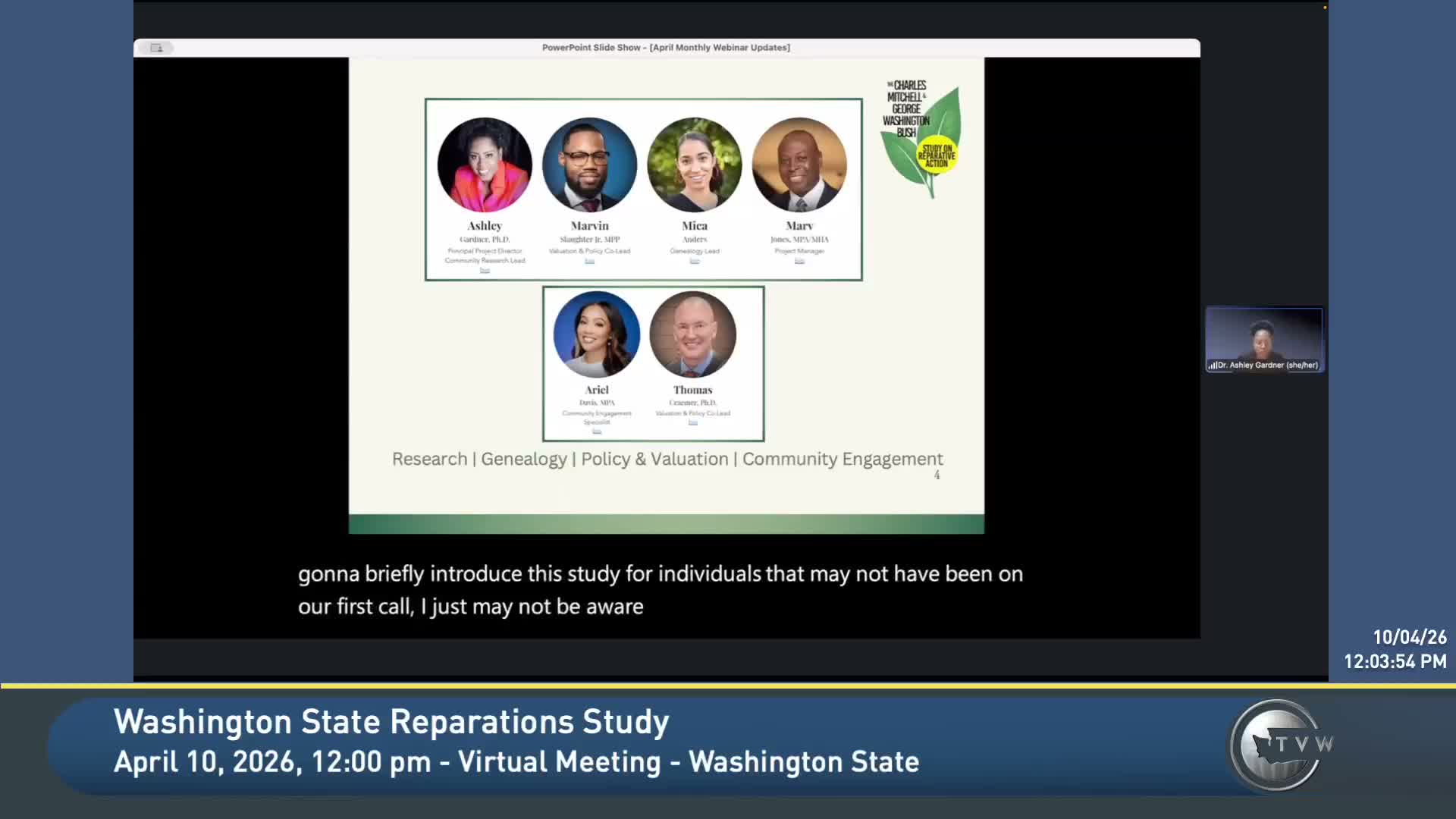
The study team includes a genealogy lead (Micah Anders), a policy evaluation team led by Marvin Slaughter and Dr. Thomas Kramer, and scholars supported by eight universities across the state. Dr. Gardner encouraged attendees to consult scholar profiles on Google Scholar and materials on the project website for more detail.
The recording and posted Q&A responses will be available on the Department of Commerce website, Dr. Gardner said. The team asked attendees to share the survey and to apply or nominate community members for advisory roles; Ariel Davis closed the webinar with thanks and a promise to publish unanswered questions online.
Next steps: take the short survey, share it with community members who may be descendants of victims of chattel slavery, and watch for the statewide listening sessions this summer and town halls in 2027.