Get Full Government Meeting Transcripts, Videos, & Alerts Forever!
Get email alerts on the Statutory Interpretation Tolling topic
No spam. Unsubscribe anytime.
State supreme court hears arguments over whether Waltz v. Wise wrongly curtailed notice-of-intent tolling
Summary
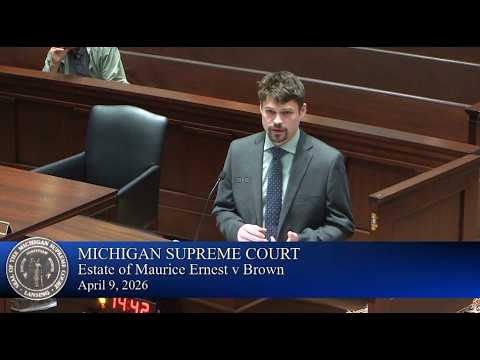
In Ernest v. Brown, advocates told the court that Waltz v. Wise improperly limited notice-of-intent tolling under section 5856(c), while defense counsel urged the court to retain Waltz as a workable, textually grounded rule; the court submitted the case for decision.
The court heard oral argument in Ernest v. Brown on whether Waltz v. Wise was incorrectly decided and whether notice-of-intent tolling under section 5856(c) applies to the wrongful-death savings provision in section 5852. Paul Matuca, counsel for the appellant estate of Ernest Morris, told the court the panel had directed supplemental briefing on two questions: whether Waltz was wrongly decided, and if so whether stare decisis nonetheless required retaining it. "Waltz was incorrectly decided," Matuca said, arguing the court in Waltz "failed to read the statutes in pari materia" and unduly narrowed the tolling statute’s scope.
Why it matters: The dispute turns on whether the legislature’s statutory scheme promotes settlement while preserving plaintiffs’ access to court. Matuca and amicus Mark Rainszio argued that section 5856(c) prevents a defendant from asserting a statute-of-limitations defense during the mandatory notice period and that Waltz’s label-focused approach produces doctrinal uncertainty across chapter 57, potentially trapping plaintiffs who rely on the literal text of the statutes.
Defense counsel for Dr. Paul Brown and McLaren Healthcare, Tim Diemer, countered that Waltz rests on a straightforward textual reading. "The statute says it tolls only the applicable statute of limitations or repose," Diemer argued, saying section 5852 is not a statute of limitations and that treating it as one would be circular and risk unpredictability. Diemer urged the court to deny leave to appeal or to proceed only after full briefing because overturning Waltz could have wide ramifications beyond medical-malpractice cases.
Practice context and procedural points: Karen Beach, counsel for Dr. Syed, told the court it is common for notices of intent to be filed before letters of authority are issued and that most medical-malpractice claims are brought by counsel aware of the court’s precedents. Simone Capadia, representing Cypress Cardiology, raised a procedural issue: because Dr. Bilal is not a named appellee, a reversal on remand could affect vicarious-liability claims against Cypress.
What happened next: After questioning by the bench about workability and reliance, the court submitted the case for decision and adjourned. No ruling was announced at argument.
Points of contention and evidence: Appellant counsel emphasized that in this case the malpractice occurred in July 2020 and that the statute of limitations ran on 06/08/2023 — 118 days after the notice of intent was mailed — which counsel said demonstrates the tolling issue at hand. Defense counsel emphasized controlling precedent and warned that deeming many "savings" provisions as limitations could destabilize established distinctions in the law.
Next steps: The court took the case under submission; counsel will be notified when the court issues its decision.