Lifetime Citizen Portal Access — AI Briefings, Alerts & Unlimited Follows
Subcommittee hears experts urge sustained funding for maternal, infant programs; members ask for outcomes data
Loading...
Summary
At a House Appropriations Subcommittee on Public Health hearing, maternal health advocates and clinicians detailed how state investments — from doula reimbursement to perinatal collaboratives and home visiting — are being used and urged lawmakers to preserve funding while providing data tying dollars to outcomes.
Lansing — At a meeting of the House Appropriations Subcommittee on Public Health, experts told lawmakers that recent state investments in maternal and infant health have expanded access to services but that continued funding is needed to preserve gains and draw down federal dollars.
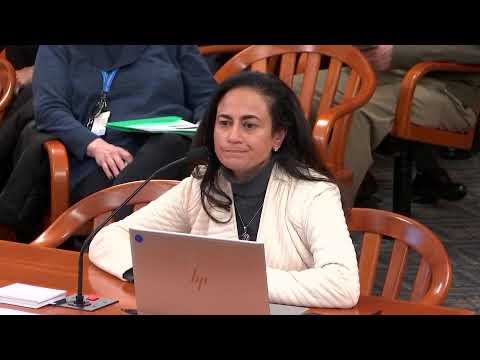
Amy Zagman, executive director of the Michigan Council for Maternal and Child Health, told the committee Michigan now has 1,000 registered doulas — surpassing an earlier goal — with about 700 enrolled as Medicaid providers. “With a small state investment over the last few years, we've seen a huge increase in the number of doulas,” Zagman said, stressing that Medicaid reimbursement and continued state support are critical to sustaining access.
Zagman described a voluntary maternal quality payments program funded at about $10 million that requires hospitals to implement safety bundles and pursue maternal levels-of-care verification. “Maternal quality payments are designed to go directly back to the birthing units to fund the cost of additional equipment, training, and staff,” she said; she added that 68 of 72 birthing hospitals are prepared to accept the FY26 payment once conditions are met.
Nut graf: Presenters outlined several targeted investments — including a $5 million Perinatal Quality Collaborative, $2.5 million for group prenatal 'centering' implementation, and home visiting programs that serve roughly 20,000 families — and warned that gaps in state support could put federal funds and local services at risk. Lawmakers pressed presenters for more granular epidemiological and budget-to-outcome data before making funding decisions.
Hospital and local public-health officials described how those dollars are used in practice. Renee Gaillard, chief nursing officer at Trinity Health Oakland, joining by Zoom, said state payments allowed her system to run multidisciplinary simulations, improve emergency-department coordination with obstetrics, and hire staff to manage quality data. “Because of this support we've had through the state and these dollars, we really have started to make moves in improving maternal and infant mortality rates across our state,” Gaillard said.
Sally Meyer, director of the maternal and child health division at the Ingham County Health Department, described the Region 7 Perinatal Quality Collaborative's cross-county work (Eaton, Clinton and Ingham) and local programs including doula trainings, Indigenous-mother surveys and WIC-integrated services. Meyer noted the WIC caseload is about 7,373 and cautioned that many county programs rely on multiple streams of Medicaid and grant funding: “If there's a stream that's cut off, it can put a program in peril.”
Presenters also highlighted clinical interventions aimed at preventing severe outcomes. Dr. Sonia Hassan, of the SOS maternity network, outlined low-cost, evidence-based measures — low-dose aspirin to reduce preeclampsia risk, transvaginal mid-pregnancy ultrasound to detect preterm-birth risk, and progesterone treatment when indicated — and described the network's supports such as transportation and patient navigators. Dr. Hassan cited a large study suggesting that universal use of targeted screening and treatments can produce sizable savings and better outcomes.
Centering group prenatal care drew separate testimony. Isadora Martinez, centering advisor for Michigan for the Centering Healthcare Institute, said MDHHS allotted $2.5 million in FY25 to expand centering sites; she reported 816 participants attended one or more centering groups in 2024 and that 52.8% of those participants were Medicaid recipients. Martinez urged lawmakers to consider pending bills to codify enhanced reimbursement for commercial insurers so that centering sites have sustainable funding.
Committee members repeatedly asked for more detailed data linking investments to outcomes. Zagman pointed members to regional reports and offered the maternal mortality review committee's report and underlying epidemiological analyses; she also told the panel the governor's proposed budget includes roughly $116 million in cumulative increased investments tied to the Healthy Moms, Healthy Babies initiative.
Lawmakers pressed on data classification and scope. Representative Steele asked whether trauma (for example, a pregnant woman in a car accident) appears on the safety-bundle charts — Zagman clarified those are tracked separately as pregnancy-associated versus pregnancy-related causes and offered to provide the underlying reports. Members also asked for cost analyses comparing prevention investments to the costs of NICU stays and maternal complications; presenters said those studies exist and offered to supply them.
The hearing included direct discussion of racial disparities. Zagman noted a persistent gap in outcomes between Black and white infants. Representative O'Neil recounted a family example to emphasize concerns that Black women are not always heard by providers; presenters acknowledged systemic issues and pointed to training and patient-education efforts underway.
The subcommittee took no legislative votes on policy measures at the hearing. Representative Steele moved to excuse absent members by unanimous consent and Chair Green adjourned the meeting after presenters offered to return with requested reports and data.
What happens next: Presenters committed to provide the maternal mortality review committee report, regional perinatal analyses and budget-to-outcomes information; lawmakers said they would review those materials as they consider appropriations.
Sources: Testimony from Amy Zagman (Michigan Council for Maternal and Child Health), Renee Gaillard (Trinity Health Oakland), Sally Meyer (Ingham County Health Department), Isadora Martinez (Centering Healthcare Institute) and Dr. Sonia Hassan (SOS maternity network).