Lifetime Citizen Portal Access — AI Briefings, Alerts & Unlimited Follows
Puerto Rico committee probes use of domestic‑violence law against minors; agencies urge prevention and data
Loading...
Summary
The House Committee on Legal Affairs continued a legislative review of Resolution 504 on March 18, 2026, examining whether Law 54 (domestic‑violence statute) should apply to minors. Agency witnesses urged prioritizing preventive and rehabilitative measures, cited gaps in school protocols and counselor staffing, and the committee ordered agencies to supply statistics within 10 days.
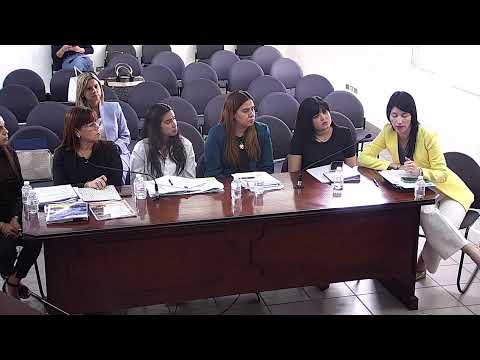
The House Committee on Legal Affairs on March 18 opened a public hearing ordered by Resolution 504 to examine how Law 54 (the 1989 domestic‑violence statute) has been applied in cases involving minors and whether that practice aligns with the rehabilitative design of Puerto Rico’s juvenile statute (Law 88).
Nicole Báez, director of legal advisory for the Department of the Family, told the committee that Law 54’s punitive components can expose minors to adult‑style criminal consequences and that any interpretation permitting orders of protection against minors must be reconciled with Law 88’s rehabilitative framework. “La protección contra la violencia es un imperativo incuestionable,” Báez said, while stressing the need to ensure measures affecting minors “sean consistentes con el marco legal que privilegia su rehabilitación y desarrollo integral.”
Anette Solís Alarcón, operations manager for the Department of Education’s school counseling program, described the department’s prevention efforts and school‑level protocols. She said most public schools have interdisciplinary socioemotional teams but that elementary schools often lack professional counselors, and that a dated and still‑developing manual and protocols for dating‑violence response are being integrated into crisis procedures. “La prevención de la violencia en el noviazgo constituye una tarea educativa esencial,” Solís told the panel, noting coordination with the Department of the Family and the police.
Representatives of Sociedad para Asistencia Legal urged the committee to limit Law 54’s application to adults and to require exhaustion of administrative and rehabilitative remedies before court referral. Paola Llabona and Jessica Meléndez described case examples in which the use of Law 54 against minors produced adverse educational and mental‑health outcomes. “Un caso de ley 54 constituye una falta tipo 2 y esa falta pudiera llevar un menor a una institución juvenil,” Meléndez said, warning of the disproportionate consequences for youth.
Witnesses and members debated options: amending Law 54 to exclude minors explicitly, adding a clarifying article, or creating mandatory procedures to exhaust administrative remedies and expand access to mediation or interagency prevention programs where appropriate. Legal witnesses pointed to a November 4, 2025 Supreme Court decision that affirmed a protection order under Law 54 against a 16‑year‑old, and noted a dissent by Judge Estrella Martínez arguing the statute was not designed to address juvenile conduct.
Committee members pressed agencies for data and operational detail. Law‑enforcement and department figures cited in testimony included a reference that the Department of Justice had 17 cases under review with only three victims who were minors; legal‑aid representatives said regional offices reported very few Law‑54 cases each year. The Department of Education described ongoing training for facilitators and noted recruitment difficulties for certified counselors in elementary schools.
The Department of Education also highlighted ongoing youth‑engagement initiatives: Michelle Tirado, who manages the school health program, described youth‑promoter projects that reach middle and high‑school students and said the department recently recognized 85 students with $400 scholarships for prevention work.
To advance the inquiry, the committee required the Department of the Family and the Department of Education to provide the requested statistics and copies of relevant protocols; the chair set a 10‑day deadline for delivery. No vote or legislative amendment was taken at the hearing. The committee closed the session with members reiterating a shared emphasis on prevention, data collection and ensuring that minors be treated under a rehabilitative, not purely punitive, framework.
What’s next: The committee will review the agencies’ submissions and may consider drafting statutory language or procedural rules to clarify whether and how Law 54 should apply to minors.