Lifetime Citizen Portal Access — AI Briefings, Alerts & Unlimited Follows
Board approves septic‑system upgrades and loan assistance for three properties
Loading...
Summary
The Board of Health approved local upgrade approvals for two Arkansas Avenue lots and funded septic‑system loans: 50% loan for a nonresident at 2 West Way and full loans for 11 H Street and 113 Hammock Pond Road, with staff noting higher costs where perched water tables require deep removal and replacement.
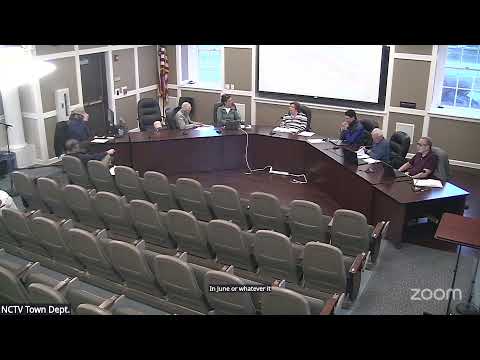
The Nantucket Board of Health on March 19 approved a series of septic‑system actions intended to address technical failures in sensitive watersheds and to support homeowners in replacing malfunctioning systems.
John Bracken (speaker 12) summarized local upgrade approvals for narrow lots on Arkansas Avenue (42 and 66 Arkansas), noting that the skinny lots cannot meet the standard property‑line setback and that the proposed upgrades improve separation and wastewater performance. The board voted to approve both local upgrade approvals by voice vote.
Bracken then presented three septic‑loan requests. For 2 West Way the owner is a non‑permanent resident; consistent with Board practice, members approved a loan covering 50% of eventual cost. Bracken recommended 100% loan approval for 11 H Street after the applicant documented that the property is the owner’s primary residence, and the board approved that request. For 113 Hammock Pond Road, engineers proposed a remove‑and‑replace design because of a perched water table that requires excavation of 9–10 feet and replacement with sand; Bracken recommended full loan approval and the board granted it.
Engineer Don (speaker 5) explained that the 113 Hammock Pond proposal is costlier than typical installations because of the need to remove silty clay and import clean sand; an estimate in the packet showed a loan amount around $153,005.57.
Why it matters: these approvals allow property owners in sensitive watersheds to replace failing septic systems and, in some cases, receive financial assistance. Board members noted the importance of tying loan amounts to actual final costs rather than a fixed dollar amount because prices can change.
What’s next: staff will process loan paperwork and implement upgrades under the Board’s usual loan terms and monitoring requirements.