Get Full Government Meeting Transcripts, Videos, & Alerts Forever!
Get email alerts on the Rules Of Order topic
No spam. Unsubscribe anytime.
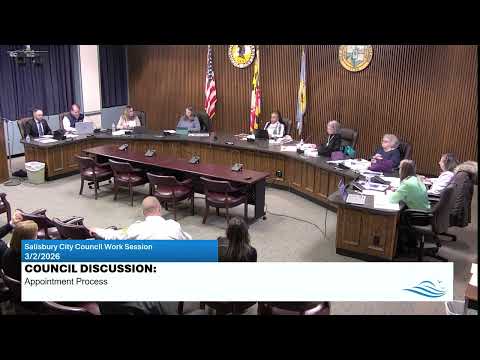
Council weighs clearer rules of order and cautions on sharing staff emails to social media
Summary
Salisbury councilors reviewed proposed language defining disruptive conduct, debated work‑session cadence and whether the code of conduct should bar posting staff emails on social media, and asked staff to consolidate rules and draft suggested changes.
Council members reviewed proposed updates to rules of order and a separate code of conduct, focusing on clearer definitions of disruptive behavior and how council members should use social media for city business.
Melissa (S2) urged replacing vague terms such as "impertinent" or "slanderous" with concrete standards: speakers should be limited to allotted times, warned for conduct that "materially disrupts, disturbs or impedes" the meeting, and removed only for disruptive behaviors rather than viewpoint. "Let them say whatever as long as it's not threatening," she said, while noting posts that include staff emails and names can look unprofessional.
Members debated whether restrictions on sharing internal staff emails belong in the code of conduct or a separate social‑media policy. One councilor noted that while city emails are public record, posts that reproduce staff email headers or direct contact information risk harassment and argued for a requirement that such communications be cleared through public‑information procedures or summarized rather than reposted verbatim.
The council discussed removing a rigid four‑minute per‑member limit in the rules, with some saying the rule was historically useful to prevent repetition and others noting it may be unnecessary if meetings are run more efficiently. Members asked staff to consolidate rules of order and code of conduct language into one document where practicable and to circulate suggested redactions and clarifications for future approval.
No ordinance or formal disciplinary mechanism was adopted at the session; councilors noted that any penalties ("teeth") for code violations would need clear definition and a lawful basis before inclusion.