Lifetime Citizen Portal Access — AI Briefings, Alerts & Unlimited Follows
Advisory committee backs stricter septic setbacks, bonding and oversight; asks staff to consolidate recommendations
Loading...
Summary
A Bedford County advisory group recommended tighter setbacks for wastewater systems, bonding and escrow requirements and creation of an oversight board to approve management firms and enforce rules; the panel asked staff to consolidate the draft for the planning commission.
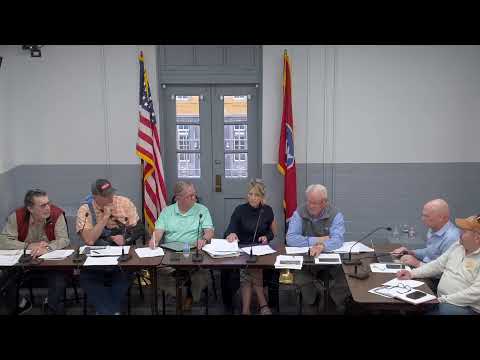
Bedford County’s planning advisory committee spent its meeting reviewing proposed local rules for private and decentralized wastewater systems and agreed to sharpen several protections before sending a consolidated recommendation to the planning commission.
The committee’s chair opened discussion by noting recent state legislation and a charge to review Tennessee Department of Environment and Conservation (TDEC) standards. Multiple members said the county can adopt rules that are at least as strict as the state’s and, where appropriate, more stringent.
A committee member who identified himself as a developer and circulated a draft emphasized enforcement and funding mechanisms. “If you don’t have an arm of enforcement, you don’t have anything,” the presenter said, arguing for mechanisms that would ensure compliance and long-term maintenance rather than shifting liability to the county.
Staff and an outside consultant joined the discussion. Chris, a county staff member, offered help preparing a planning-commission presentation when the committee’s recommendations are finalized. The committee also called in a consultant, Matt Taylor, to clarify terminology; Taylor said the “treatment area” refers to bio-clear filters and control buildings and explained his reasoning for some smaller setback recommendations to avoid creating unusable lots.
On technical standards, the committee debated numeric setbacks and operating limits. Members voiced support for larger buffers between residences and treatment facilities to address potential odor and nuisance risks; opinions ranged from 50 to 100 feet, with several members citing 75 feet as a possible compromise. For wells and springs the group generally supported a 100-foot setback to protect potable sources.
The committee reviewed a reading of draft numeric standards that included: a 50-foot setback to dwellings (with discussion of 75–100 feet around treatment structures), 100 feet to potable water sources, 10 feet to underground utilities, a 50% land-application reserve area, and effluent targets such as biochemical oxygen demand (BOD) ≤45 mg/L and total suspended solids (TSS) ≤40 mg/L. Soil loading and percolation rates drew technical debate: participants discussed values described in the materials as 25 GPD per square foot (TDEC’s table) and alternate, more stringent figures that appeared in the draft as decimals (0.2, 0.15, 0.10) — committee members agreed those numbers require soil-scientist verification and site-specific evaluation.
On finance and enforcement, members proposed developer-funded mechanisms: 30-year bonds or escrows audited annually, county-held escrow accounts, and fees levied by a locally appointed oversight board. Chris outlined a longer-term option for a wastewater authority that could collect a small fee and create a “super fund” to support repairs of failed systems, saying such a fund would protect homeowners if utilities or systems fail over decades.
Committee members also recommended that the county require qualified, county-retained soil scientists to validate soils before approvals — with the cost borne by the owner or developer — and that oversight board rules include appellate procedures and financial controls for escrows.
After discussing individual provisions (setbacks, drip-field spacing, reserve areas, effluent targets, bonding, inspection and oversight), the committee voted to have staff consolidate the draft language. Speaker 4 moved that Chris prepare the draft in formal form and bring it back for full approval; the motion was seconded and passed by voice vote. The committee expects staff to return a consolidated document suitable for the planning commission agenda.
The committee adjourned after approving the motion. Next steps identified: staff consolidation of the committee’s recommended standards, followed by review and likely a planning-commission hearing prior to any county-commission action.