Lifetime Citizen Portal Access — AI Briefings, Alerts & Unlimited Follows
Vernon board hears 2026-27 budget presentation; tentative budget recommended with 5.81% levy increase
Loading...
Summary
Superintendent Ebony Dominguez and business administrator Raymond Slam presented the Vernon Township School District’s 2026-27 preliminary budget, citing rising health-care costs and a state aid cap; the board moved and carried approval of the district’s tentative 2026-27 budget and related consent items.
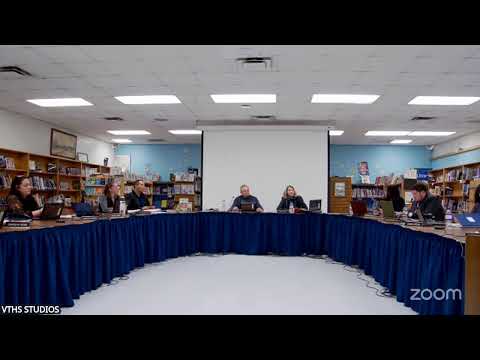
The Vernon Township Board of Education received a presentation on the district’s 2026–27 preliminary budget from Superintendent Ebony Dominguez and Business Administrator Raymond Slam and subsequently approved the board’s recommended tentative budget and multiple consent items.
Dominguez opened the presentation by saying the budget was shaped by the district’s strategic plan and community input, and that the district serves 3,102 students across six schools. “Every priority in this budget came from this community,” she said, adding the budget aims to protect preschool class caps, reduce kindergarten class size from 21 to 19 by adding a teacher, and expand preschool access.
Slam laid out the district’s financial picture and major cost drivers, reporting that health-care costs had risen sharply last year and that contractual and transportation costs also increased. He told the board the district received an increase in state aid but that a 6% state cap limited the total award; based on the state formula the district would have received about $22.2 million but instead received about $19.6 million, leaving roughly a $2.6 million shortfall attributable to the cap. The recommended tax levy for FY 2026–27 is $55,165,220, a $3,029,468 increase (5.81% over the prior levy). The presentation translated that on the average assessed Vernon home value of $320,700 to an estimated tax impact of about $234.16 per year ($19.51 per month).
Administrators stressed steps taken to narrow an initial projected gap of over $1,000,000 by realigning resources and containing costs; they said that review reduced the initial shortfall to about $200,000 through internal realignments and conservative use of the health-care cost adjustment. The administration also described programmatic priorities funded in the budget: preschool expansion (projected 366 preschool students), three additional special education teachers to comply with mandated class-size requirements, investments in reading and mathematics instructional materials, and targeted staffing to address oversized high school world-language classes and elementary specials classes.
Dominguez and Slam addressed committee reports and answered board questions about the energy-savings (ESIP) project, a pending cell-tower revenue stream (permitting still required), and items in the capital and technology plans, including a Chromebook refresh and equipment purchases covered in the finance report.
After discussion, the board moved and carried approval of multiple consent items including personnel actions, curriculum and evaluation model adoption, technology and vendor purchases, special-services agreements, and the recommendation to adopt the tentative 2026–27 budget as presented. Several individual motions were approved by roll-call vote; the meeting record shows the motions carried.
The board did not take a final budget adoption (appropriation) vote in this segment of the agenda; the meeting materials and motions approved put the district’s tentative budget in place and set the next procedural steps for formal adoption in accordance with board and state timelines.
What this means: the budget presentation frames the district’s priorities (preschool expansion, reducing kindergarten class size, special-education staffing) and ties spending choices to the strategic plan; the levy increase and the state aid cap are the principal fiscal levers driving this year’s proposal. The administration emphasized multi-year recovery from prior cuts and a multi-budget strategy to reach longer-term class-size and program goals.