Get Full Government Meeting Transcripts, Videos, & Alerts Forever!
Get email alerts on the Public Transit topic
No spam. Unsubscribe anytime.
Spokane Transit Authority highlights transit’s role in cutting emissions, electric fleet and BRT funding
Summary
STA reported 10.4 million rides in 2025, estimated replacement of roughly 7 million car trips, a 25% battery-electric bus share (40 buses), and federal identification of $82 million in CIG funding for the Division BRT project (projected for 2027 funding); STA also approved a $2 million TOD pilot at a South Hill Park & Ride.
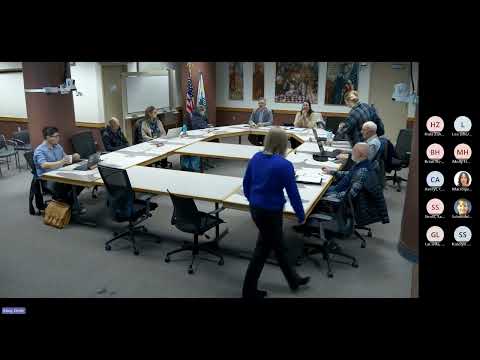
Emily Poole, chief planning and development officer at Spokane Transit Authority, briefed the board on April 1 about how public transit supports the city's greenhouse-gas reduction goals. STA reported 10.4 million passenger trips in 2025 and estimated that those rides replaced roughly 7 million car trips across the region when measured against a 1.5-occupant-per-vehicle national average.
Poole outlined fleet and route performance measures, noting STA's approach of measuring energy use per passenger mile and explaining that a bus needs roughly five passengers to be as energy-efficient per passenger as a single-occupancy vehicle. She said STA operates 40 battery-electric buses (about 25% of the fleet) and described Route 4 as a fully electric, high-ridership route that carried more than one million rides in 2024.
Poole also briefed members on a planned Division bus rapid transit (BRT) upgrade (Route 25) and said the federal Consolidated Infrastructure Grant (CIG) identified $82,000,000 for the Division BRT project in federal appropriations tied to a 2027 project timeline; the project would add zero-emission buses and identify funding for charging infrastructure. She said STA's board has approved $2,000,000 for a transit-oriented development (TOD) pilot at an STA-owned South Hill Park & Ride to study market readiness and feasibility.
Members asked about how BRT service and bus lanes improve reliability and about trade-offs between bus energy type (battery electric vs. renewable diesel) and greenhouse-gas metrics; STA staff noted that metrics vary with energy source and fleet mix and that further engineering analysis can provide exact greenhouse-gas comparisons.