Get Full Government Meeting Transcripts, Videos, & Alerts Forever!
Get email alerts on the Parking Policy topic
No spam. Unsubscribe anytime.
Council tables ordinance to let staff temporarily lift no-parking signs after resident safety concerns
Summary
After a long public hearing, the council tabled proposed code changes that would allow the town engineer and police chief to temporarily suspend posted no-parking restrictions for special events. Residents near Calle Buena Vista urged retaining the no-parking restrictions because of narrow lanes, darkness and pedestrian safety; council asked staff to tighten criteria and return with revisions.
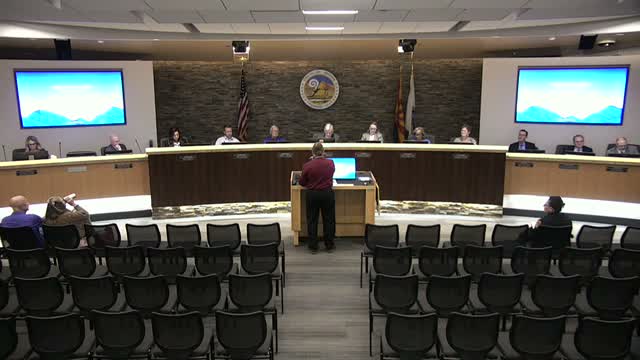
The Oro Valley Town Council on April 8 heard extended public testimony about a proposed ordinance that would formalize a long-standing town practice of temporarily “bagging” no-parking signs for special or other “special-circumstance” events. After questions from multiple councilmembers about safety, resident notification and how to define eligible events, the council voted unanimously to table the ordinance for further revision and return with a date-specific follow-up.
Town Engineer Paul Keesler said staff discovered the current practice — used informally for 20 years at locations near schools, churches and event venues — lacked explicit code authority and therefore proposed an amendment to the town code to create a transparent review process. The draft would allow bagging within a 1,000-foot radius of an event where available off-site parking had been denied, subject to staff review by the town engineer and the police chief and to any required safety conditions.
Multiple residents from the Calle Buena Vista area strongly objected, citing narrow roadside widths, poor lighting and safety hazards when vehicles park in the right of way. Patricia Tozier, who lives on Calle Buena Vista, described measured roadside widths and said parked cars would leave insufficient room for traffic and pedestrians: “It’s dark... There should be no parking. Anytime it’s not safe.” Deborah Patrick said vandalism and real threats against local residents had arisen in the wake of past disputes over the signs and urged the council to protect neighbors.
Vice Mayor Barrett and several council members pressed staff for clearer limits, stronger safety requirements, and mandatory resident notice. Barrett suggested a revised definition that would limit the code to “a unique, non-recurring event that is anticipated to significantly increase vehicular and pedestrian traffic,” and said he wanted explicit, codified traffic-control and safety measures attached to any permit.
Chief Riley confirmed the town’s special-events staff and police prepare traffic-control plans when required and that off-duty officers or other traffic measures could be required and paid for by applicants. Keesler said applicants currently pay for required notifications and any off-duty officer costs when needed, and staff would incorporate notification and safety conditions into the draft ordinance.
After council discussion, the mayor moved to table the item to allow staff and the town attorney to draft clearer code language, include a notification process and evaluate whether a pilot or reporting requirement should be added. The council voted to table the ordinance to a later meeting date and asked staff to return with the revised language and implementation proposals.
Next steps: staff will work with the town attorney and police to tighten definitions and add required safety measures and resident-notification language before bringing a revised ordinance back to the council for further consideration.