Get Full Government Meeting Transcripts, Videos, & Alerts Forever!
Get email alerts on the Long Term Care topic
No spam. Unsubscribe anytime.
Providers urge Assembly to bridge funding gap for congregate living and boost HCBA capacity
Summary
Congregate living health facility operators and patient witnesses warned that CLIFs face closure without short‑term bridge funding; DHCS told lawmakers it will transition CLIFs into a managed‑care benefit by 01/01/2028 to remove slot caps, while officials cautioned workforce limits constrain near‑term enrollment growth.
Providers and patients from California congregate living health facilities (CLIFs) and state officials told the Assembly Budget Subcommittee that immediate, limited bridge funding and longer‑term managed‑care changes are needed to protect medically complex residents.
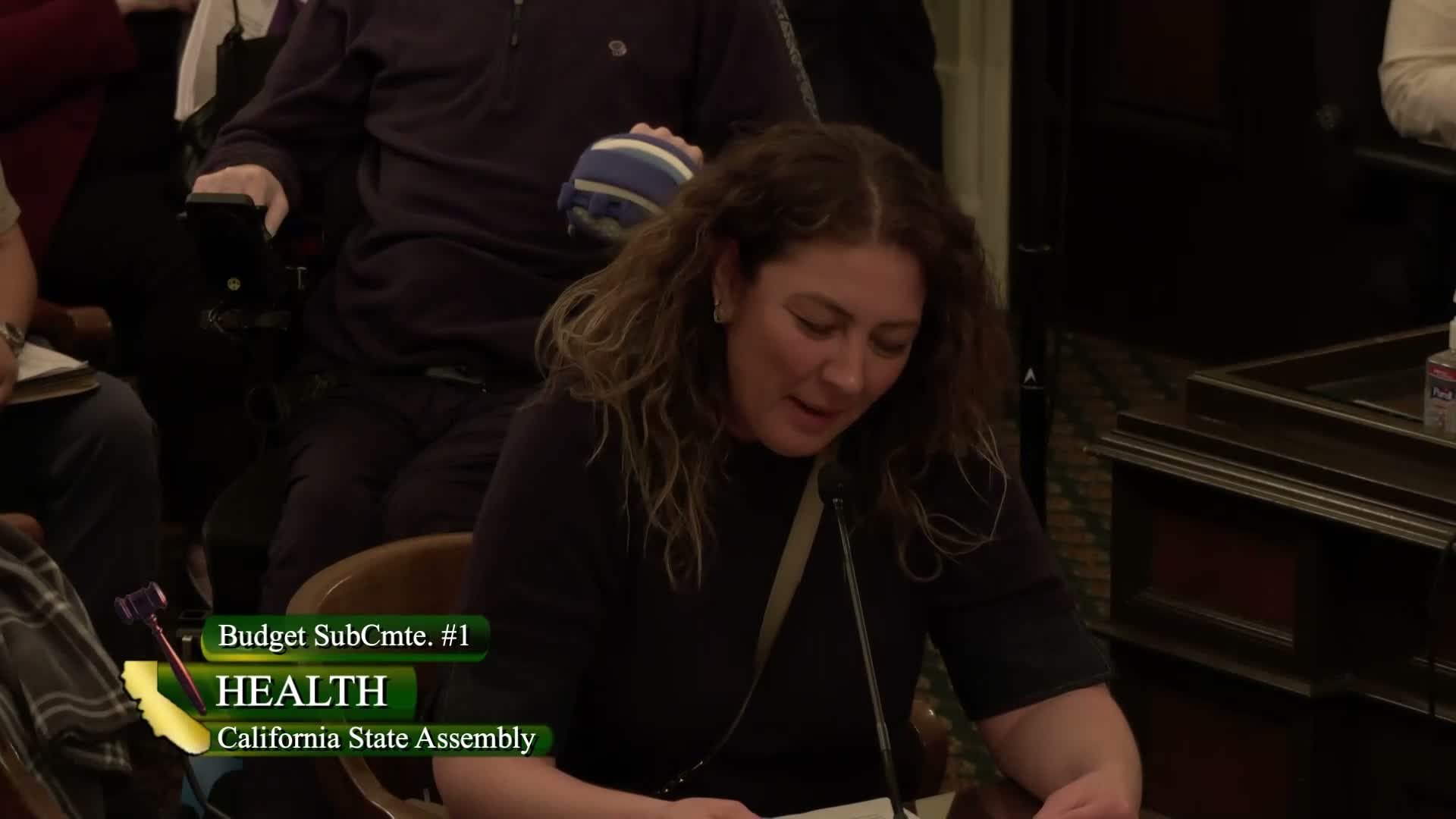
Mary Anne Bosconian, a registered nurse who leads the Congregate Living Health Facility Association, told the committee CLIFs care for young people with catastrophic injuries and complex medical needs and receive a daily Medi‑Cal reimbursement of $490. "Our daily reimbursement rate is $490. It has not increased by even $1 since the 1980s," she said, and requested a one‑time, two‑year emergency bridge fund of less than $8,000,000 from the general fund to maintain operations until DHCS completes the planned waiver transition.
A patient witness, Trevor, and his mother described how CLIF care enabled recovery and community reintegration after a catastrophic injury, arguing closure of these homes would push medically complex younger adults into inappropriate nursing facilities.
DHCS Director Michelle Boss said the department proposes to transition congregate living health facilities into a Medi‑Cal managed‑care benefit (a 1915(i)‑type carve‑in), effective 01/01/2028. Boss said the managed‑care carve‑in would remove enrollment caps and allow plans to negotiate rates and contract terms directly with providers. "We are proposing to transition congregate living health facilities from an HCA‑authorized benefit into a Medi‑Cal managed care plan benefit," Boss said, adding that the transition would be statewide and intended to increase access.
Members pressed DHCS and county representatives about timing and whether bridge funding would align with the transition timeline. DHCS confirmed it currently has no proposal for bridge funding; the department expects the policy change to be implemented by 01/01/2028 and said rate negotiations and plan readiness remain critical tasks.
Why it matters: CLIFs serve a highly vulnerable group—many residents are ventilator‑dependent or quadriplegic—and testimony illustrated both large per‑case cost differences with inpatient hospital care and the human consequences of closure. Witnesses and members framed modest bridge funding as a near‑term life‑safety and continuity issue while the state works on a longer‑term managed‑care solution.
Next steps: Members requested DHCS provide timelines and explore short‑term funding options; CLIF stakeholders seek allocation to maintain operations through the managed‑care transition.