Lifetime Citizen Portal Access — AI Briefings, Alerts & Unlimited Follows
Panel Q&A wrestles with hatcheries, dam removals and marine-mammal trade-offs
Loading...
Summary
In audience questioning at the D.C. panel, fishery managers, industry and tribal speakers debated trade-offs among hatchery production, dam removal costs and protections for marine mammals and endangered salmon, noting management complexity and competing priorities.
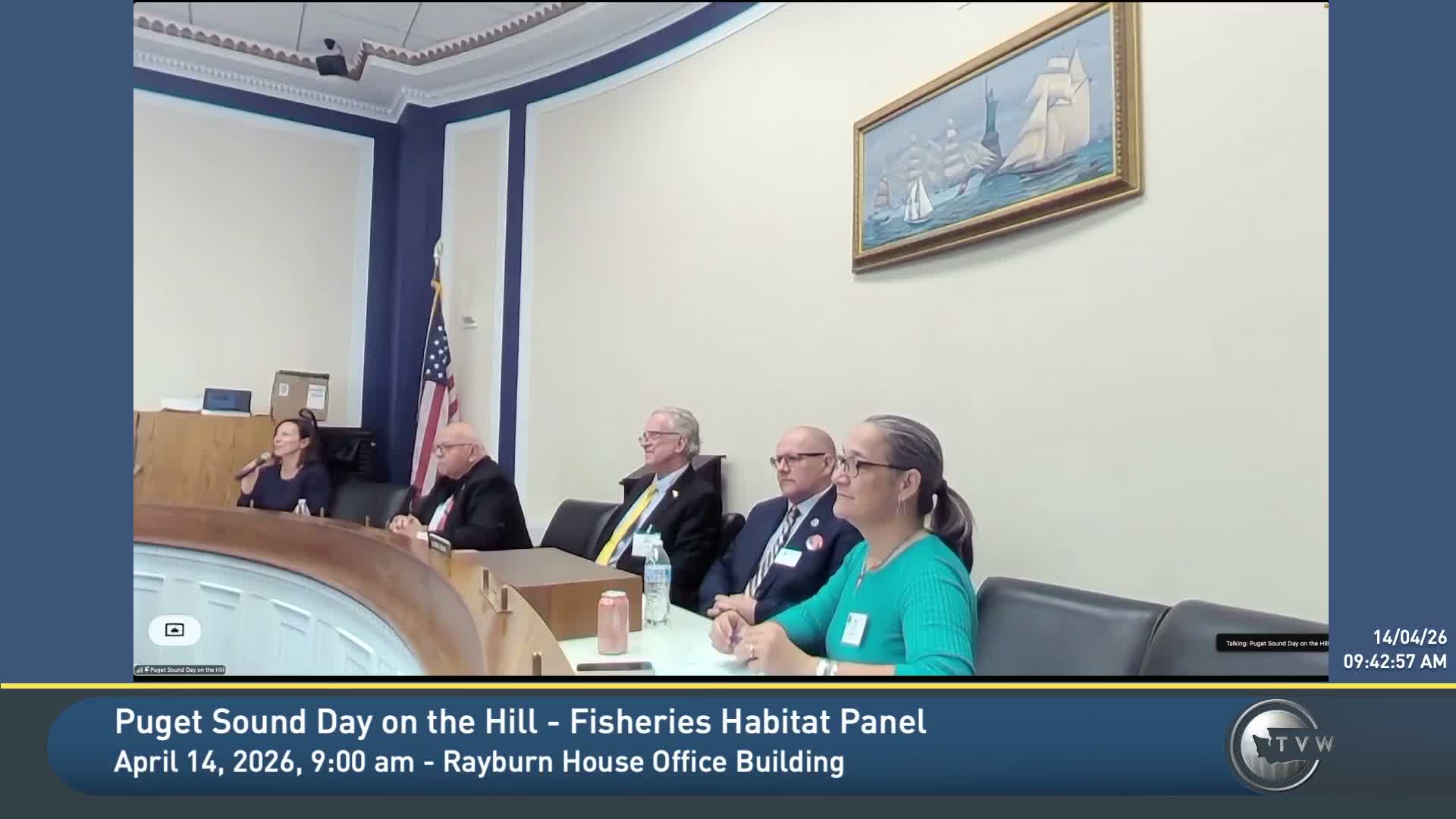
Audience questions during the Washington, D.C. panel shifted the conversation from economic value to management trade-offs for recovering salmon and sustaining fisheries.
Gabe Miller asked how managers balance the needs of Southern Resident killer whales, which rely on Chinook salmon, with protections for Chinook and other federally protected species. Ron Allen responded that managers must "find a balance," and said hatcheries play an important role in supplementing harvest while natural stocks recover. "Hatcheries play a big role in that," Allen said, noting hatchery production may be necessary to sustain fisheries and provide Chinook for both commercial and recreational users.
Larry Phillips added that many parts of the ecosystem remain out of balance and warned that increases in marine-mammal populations complicate the benefits expected from habitat investments. He cited California sea lion population increases and described the challenge of aligning Endangered Species Act protections with restoration spending.
Ray Machin asked about hydroelectric dams and their impact on salmon production. Panelists acknowledged the difficulty of dam removal—both because of energy needs and the high cost of large removal projects. Ron Allen referenced long, expensive projects and used a working example of a 25-year, $20 billion initiative for two dams to illustrate scale and political complexity.
Commissioner Fred Bellaman raised bycatch concerns and asked whether current accounting systems and bycatch-reduction devices have been adequately considered. Panelists explained that bycatch depends on gear type and location, that in-season closures and management tools are used when thresholds are met, and that managers still must account for incidental mortalities across commercial, recreational and tribal fisheries.
Panelists did not announce new management actions; instead they called for continued investment in science, monitoring and coordinated regional approaches (including tribal co-management) to align habitat restoration, hatchery programs and species protections more effectively.
The session concluded with moderator Elizabeth summarizing themes and thanking participants; no votes or formal policy directions were recorded.