Get Full Government Meeting Transcripts, Videos, & Alerts Forever!
Get email alerts on the Housing Regulation topic
No spam. Unsubscribe anytime.
Whittier council sends short‑term rental ordinance back to staff for rewrite, flags buffer and enforcement issues
Summary
After multiple public comments from hosts and neighbors, the council directed staff to return the STR ordinance as a new first reading to address the 500‑foot buffer, parking and high‑fire‑zone exceptions and to clarify enforcement and fines.
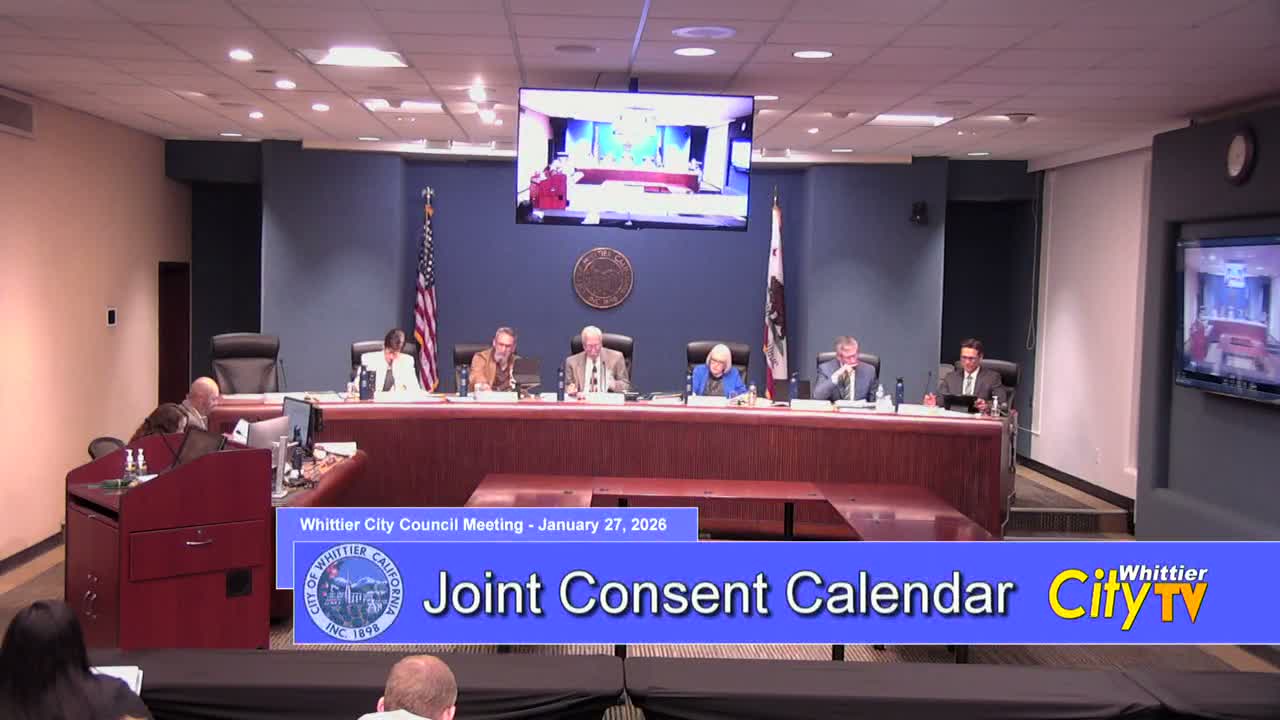
The Whittier City Council voted Jan. 27 to send the proposed short-term rental (STR) ordinance back to staff for further revision, responding to concerns from hosts, neighborhood residents and council members about buffer distances, parking requirements and enforcement.
Council member Mary Anne Pacheco moved that staff be directed to return with a new first reading addressing the issues raised at the meeting; the motion was seconded and carried unanimously among the four members present. Staff said the revised item could be noticed quickly and returned at the council's first meeting in February for another public hearing.
Speakers at public comment urged a range of adjustments: Fabio (an Uptown Whittier business owner) asked the council to "make minor adjustments to that second reading," recommending changes to the 500‑foot buffer, an exception for owner‑occupied hosts in the high‑fire zone, and more practical parking rules for century-old homes. Several STR owners described relying on rental income and asked for grandfathering of existing hosts and clearer rules for multiunit properties.
Staff explained enforcement and penalty structures in the draft ordinance. Ben Pongetti, director of community development, said the ordinance allows an owner to designate a local property manager who must be able to respond within 30 minutes, and that platforms could be subject to administrative fines of $200 per day per listing for violations, while property‑owner penalties could include higher administrative fines. Pongetti noted that owners who live on-site and self-manage would not need to provide third‑party property-manager contact information.
Council members debated the buffer rule. Pacheco said she was open to reducing the buffer to 300 feet and asked staff to include options that protect hosts who operate more than one rental on the same property (treating multiple units on one parcel as a single operation). Another council member proposed eliminating the buffer entirely; others asked staff to present a matrix of options.
Next steps: staff will prepare a noticed first-reading package that focuses on the specific issues identified by the council (buffer distance and related exemptions, parking standards, enforcement mechanics, and host exceptions in high‑fire areas) and return to council for a new public hearing.