Get Full Government Meeting Transcripts, Videos, & Alerts Forever!
Get email alerts on the Code Enforcement topic
No spam. Unsubscribe anytime.
Dorchester County adopts code amendments converting violations to civil infractions with higher maximum fines
Summary
The Dorchester County Council approved a package of code changes that convert certain building, plumbing, zoning and property-maintenance violations into county infractions with a maximum fine of $5,000, while staff emphasized progressive enforcement and councilors said fines would be used as a last resort.
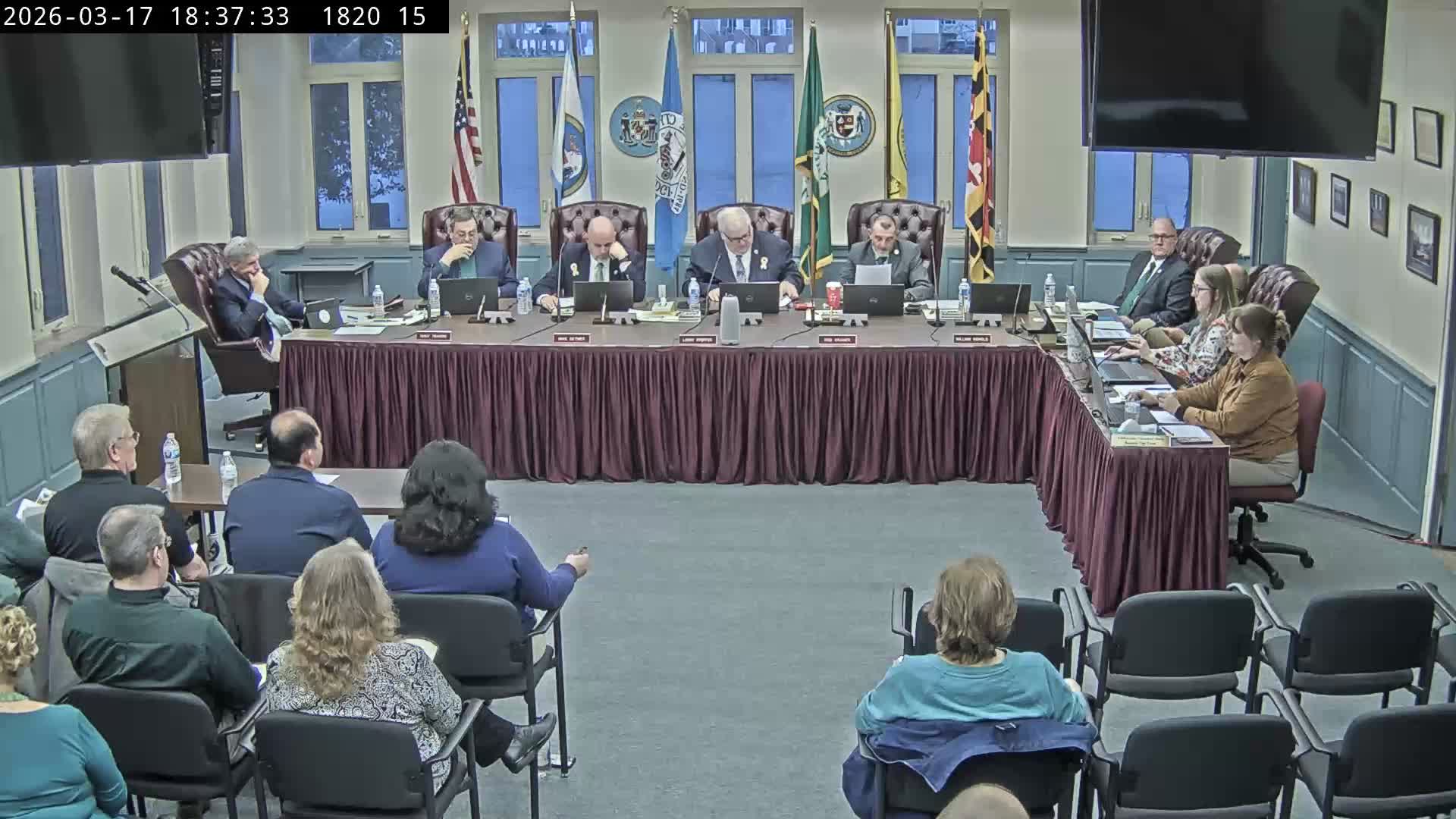
Dorchester County Council on March 17 approved four related code amendments that convert a range of local building, plumbing, zoning and property-maintenance violations into civil county infractions and set a maximum penalty of $5,000.
The changes, filed as bills 2026-1 through 2026-4, update county language to align with state standards, County staff said. A public hearing on the first bill attracted questions about the jump from a previous $1,000 cap to $5,000; resident Sharon Smith asked whether the increase was intended to match state penalties. Director Webb replied that the amendment makes county penalties consistent with state law and emphasized the county’s “progressive approach” to enforcement, including warnings and discussion before any monetary fine is pursued.
The largest public exchange came during the property-maintenance hearing when David Beverly raised constitutional concerns about administrative search warrants and warned that higher fines could disproportionately harm low-income residents. Beverly argued fines and swift enforcement could worsen hardship for people already living in unsafe or marginal housing. Director Webb, and other staff, replied that the county already has right-of-entry provisions, that the IPMC adoption updates antiquated language and that enforcement typically involves social-service partners (child or adult protective services) in sensitive cases. Webb said: “We would never issue fines unless it was our last ditch effort.”
Council members who spoke in favor framed the measures as tools to address public-safety problems — from unsafe dwellings to open dumps — and to preserve the county’s ability to enforce consistently. One councilor noted the county’s compliance with state audits affects residents’ property-insurance discounts and urged alignment with current codes to avoid losing a 25% discount.
All four bills were approved by roll-call vote. Councilors and staff said the higher $5,000 figure represents a statutory maximum for the most serious, repeated or willful violations; it does not mean every violation will carry that fine. The council’s stated enforcement process includes warnings, written notices and court action only after progressive steps fail.
The council also converted some offenses from criminal misdemeanors to civil violations to streamline enforcement, which supporters said allows problems that threaten neighborhoods to be addressed more quickly. Opponents at the hearings asked the council to preserve safeguards for vulnerable residents; the council and staff said these concerns would inform implementation and that penalties would be applied with discretion.
The ordinance package takes effect following the council’s required adoption steps; staff said more detailed enforcement guidelines and the precise administrative procedures will remain subject to existing code and court processes.