Get Full Government Meeting Transcripts, Videos, & Alerts Forever!
Get email alerts on the Community Center topic
No spam. Unsubscribe anytime.
Council president urges action on long‑delayed Jackson/Mann community center for Alston‑Brighton
Summary
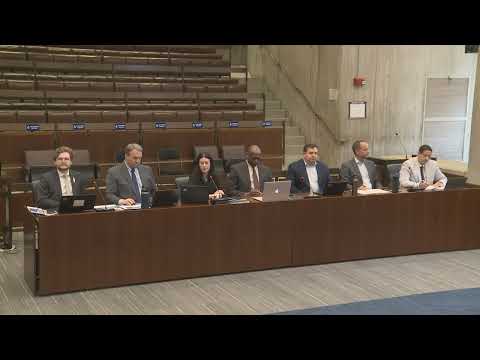
Council President Braden told the Ways and Means Committee the Jackson/Mann community center project has been repeatedly delayed and pressed the administration for a firm start‑to‑finish timeline and stronger commitments to equity; city staff said a study and community engagement are near completion.
Council President Braden on April 14 pressed the city to move beyond studies and deliver a new Jackson/Mann community center for Alston‑Brighton, calling decades of delay unacceptable and framing the issue as an equity concern.
Braden said the neighborhood — which she described as roughly 80,000 residents and having higher poverty and linguistic diversity — has waited decades for a new community center and that repeated pauses in the project have eroded trust. "We desperately need a new community center," Braden said, adding that prior analyses (programming studies, siting studies and test fits) have not translated into a clear construction timeline.
Administration response
Chief of Operations Dion Irish acknowledged the community’s frustration and told the committee the administration remains committed to a new center. He said the city recently completed studies requested by residents and expects a report in the next one to two weeks that will inform community engagement. "I can assure you that there is a commitment to the center. That's why it's in the plan," Irish said.
Why it matters
Council President Braden framed Jackson/Mann as a core equity issue, noting the district’s scale, demographic diversity and lack of facilities relative to other neighborhoods. She warned that continued delay will increase construction costs and prolong service gaps for youth and older residents who rely on community‑center programming.
Next steps
Staff said they will share the near‑final study and schedule community meetings before construction decisions. Councilors pressed for a five‑year start‑to‑finish timeline and asked staff to provide specific milestones so the neighborhood can track progress.