Lifetime Citizen Portal Access — AI Briefings, Alerts & Unlimited Follows
Arlington County crime‑scene unit outlines training, tools and courtroom role
Loading...
Summary
A member of the Arlington County Police Department's Crime Scene Unit described the team's training, evidence-collection methods and new 3‑D scanning technology, and said the unit helps investigators identify suspects and provide closure for victims.
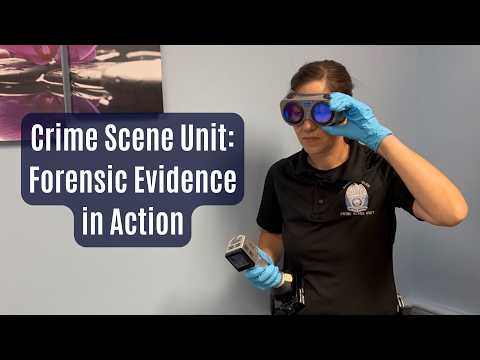
A member of the Arlington County Police Department's Crime Scene Unit described how the team identifies, preserves and analyzes physical evidence and the specialized training and technology that support that work.
The speaker said evidence "helps prove or disprove the facts of a case," and that unit members attend a nine-week Department of Forensic Science Academy before pursuing advanced courses such as crime-scene reconstruction, crash reconstruction and blood-stain pattern analysis. Members may also seek certification through the International Association for Identification, the speaker added.
The unit responds to more serious crime scenes to process and document evidence, the speaker said, and sometimes processes evidence that detectives already collected. The unit also assists detectives with search warrants, serves as a liaison with the Department of Forensic Science, and handles video collection and analysis. In court, members provide testimony and demonstrations and sometimes serve as expert witnesses to explain forensic findings to juries and prosecutors.
Within the patrol section, the speaker said, crime-scene agents respond to less serious calls and the unit trains patrol officers in forensic photography and basic crime-scene procedures so patrol personnel can preserve evidence until specialists arrive. The speaker described the work as complementary to detectives, noting detectives pursue investigative leads and interviews while the crime-scene unit focuses on the forensics needed to reconstruct events.
The speaker highlighted a Ferroscanner device the unit uses to measure scenes. "We use our Ferroscanner scanner to measure our crime scenes," they said, explaining the scanner collects billions of data points that software converts into a 3‑D model. Those models can be used for virtual walkthroughs with juries, judges, detectives and commonwealth attorneys.
Routine materials and methods listed by the speaker included fingerprint powders and lifting materials, swabs for DNA collection, alternate light sources to locate biological substances and casting materials for shoe impressions and tool marks.
The speaker said a highly trained, detail-oriented crime-scene unit is essential to the Arlington County Police Department's mission, helping investigators identify and charge people responsible for crimes while providing answers and closure for victims. Closing the remarks, the speaker said, "I think that I have the best job in the world," and described the work as scientific problem-solving that can be emotionally challenging but rewarding.
No formal actions, votes or policy decisions were recorded in the transcript; the remarks focused on describing unit responsibilities, training and tools.