Geneva planning commission reviews 13‑unit live/work concept for 223 East State Street
Loading...
Summary
At a concept review April 9, the Geneva Planning & Zoning Commission heard a proposal from Altezza for a 13‑unit hybrid live/work development at 223 East State Street. Staff recommended rescinding the 2002 Youngberg PUD and replacing it with a new PUD; commissioners generally supported the concept but raised enforceability, design, signage and historic‑preservation questions.
Geneva’s Planning & Zoning Commission on April 9 heard a concept review for a proposed 13‑unit residential development at 223 East State Street that would pair ground‑floor live/work spaces with upper‑floor housing and preserve an existing historic house on the lot.
City planner Matt Busing told the commission the site is in the D‑CM Commercial Mixed Use District and is still governed by the Youngberg planned unit development (PUD) from 2002, whose site plan has expired. Staff recommended the applicant rescind the old Youngberg PUD and submit a new PUD tailored to the proposed project, which envisions one 6‑unit building, two 3‑unit buildings, subdivision into four lots, conversion of the existing dwelling to a hybrid live/work unit, and a surface parking lot with 21 new spaces plus an existing two‑car garage (23 spaces total). “The proposal would include a subdivision of the subject property into four separate lots,” Busing said, and staff noted the buildings would be under the D‑CM height limit (proposed just under 40 feet).
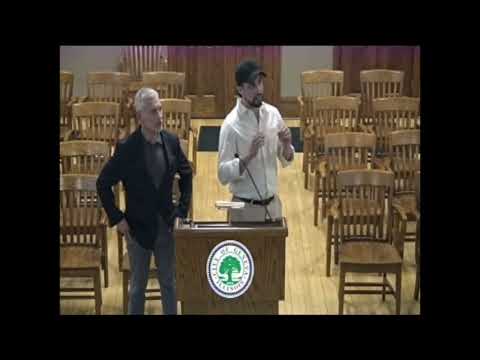
The applicants, represented by Stuart Kravis and Jay Garcia of Altezza, said the hybrid live/work model is intended to reduce storefront vacancy along East State Street by allowing small‑scale service and professional uses that don’t demand heavy parking. “We want to reduce the vacancy risk here,” Garcia said. He and Kravis described ground‑floor units with commercial‑scale ceilings (about 14 feet) and storefront‑style facades to accommodate small practices such as accountants, photographers, artists and other low‑intensity uses.
Commissioners generally expressed support for adding housing and creating flexibility for small businesses, but they pressed the applicant and staff about how to preserve an active commercial presence on the ground floor over time. Several commissioners urged the design and PUD language be tuned so that ground‑floor space can function as a business rather than degrade into purely residential use. “If the goal is to have storefronts, that would be the only way to ensure that it remained a commercial place,” Commissioner Rebecca Holman said, urging measures to favor storefront occupancy.
Applicant and staff responses emphasized practical limits on long‑term enforcement. Garcia said the initial approach would use short‑term (12‑month) leases and market incentives while noting the team expects a long‑term shift toward condominium ownership only “10 years out.” Busing said the PUD could include specific permitted and special uses, signage rules and other standards, but enforcement becomes difficult if units are privately owned and used purely as residences.
Design, massing and compatibility with the existing house were recurring topics. Commissioners recommended breaking up building mass, varying facades and considering materials that better relate to the historic home. Setbacks discussed include a roughly 15‑foot setback for the proposed westerly building versus about 25–28 feet for the existing house; commissioners flagged how those relative positions would affect streetscape character.
On preservation, the applicant said the existing house is structurally sound but needs interior and exterior renovation; the team intends to preserve it and use it as a hybrid live/work unit, or as a short‑term rental if commercial uses prove infeasible. Staff noted the property is not currently landmarked but could be considered for landmarking, which would open financial incentives such as tax credits.
Staff and the applicant outlined next steps: the applicant intends to file a PUD application in May, and, if approvals and market conditions align, could break ground as early as 2027. The commission did not take a vote tonight; members provided feedback and asked the applicants to refine PUD language on permitted uses, signage, and design details before the formal submittal.
The commission also received brief staff updates on other items: the 501 Lark Street day‑care project is nearing final engineering, a solar text amendment and a solar application are under review, and the city’s comprehensive‑plan outreach is beginning with stakeholder interviews and a soon‑to‑launch website. The commission’s next meeting was set for April 23.
No public comments were offered during the meeting.