Get Full Government Meeting Transcripts, Videos, & Alerts Forever!
Get email alerts on the State Legislation topic
No spam. Unsubscribe anytime.
Arizona Senate committee advances bills on AI rules, trade-office funding, development fees and housing disclosures
Summary
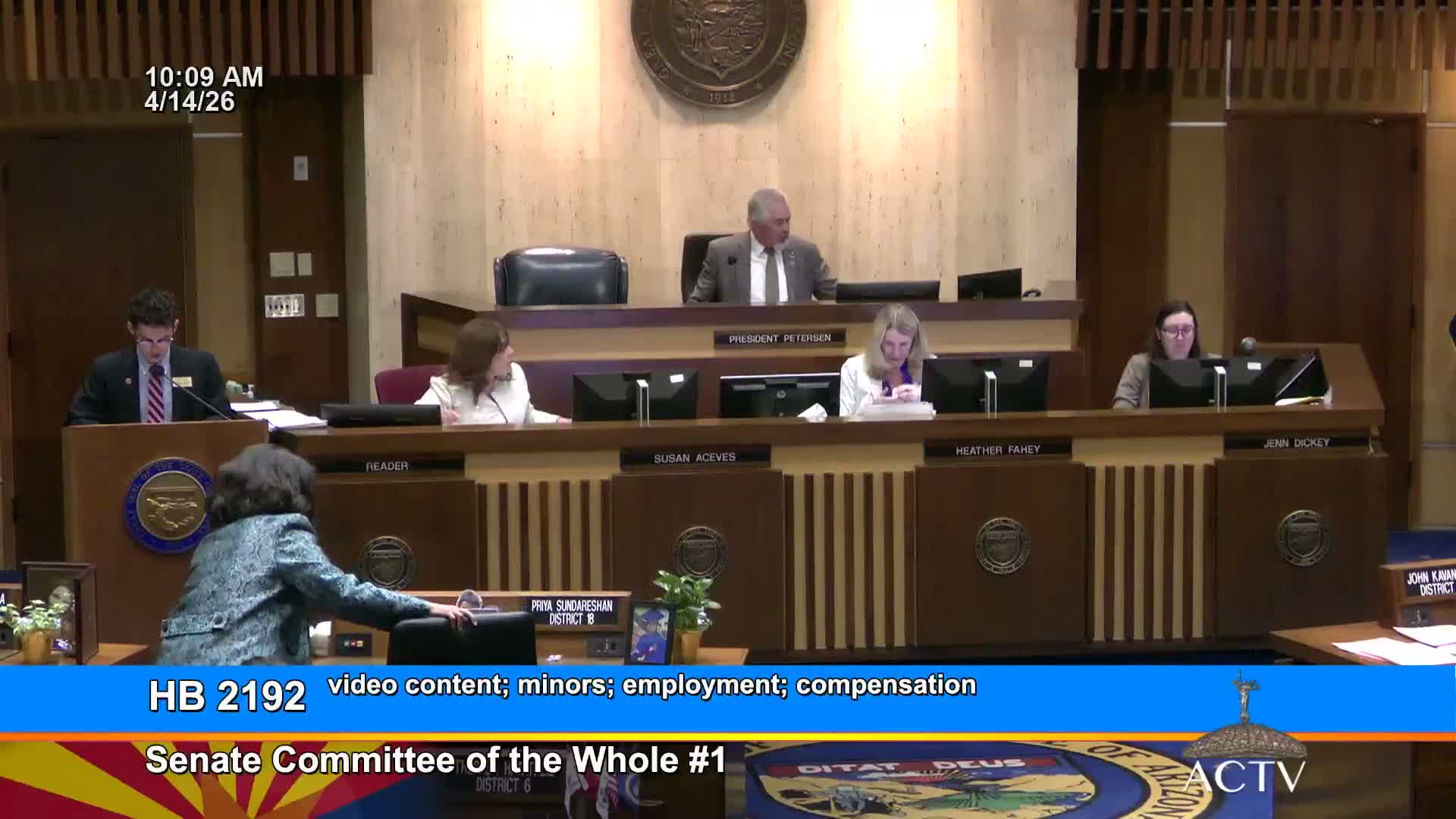
In a Committee of the Whole session April 14, the Arizona Senate advanced multiple House bills, adopting floor amendments on artificial-intelligence rulemaking, commerce authority designations and development fees; one high-profile amendment by Sen. Mitzi Epstein failed on a division call and several measures passed third reading for transmittal to the House.
The Arizona Senate, sitting as the Committee of the Whole on April 14, considered and advanced a package of House bills affecting government information technology and artificial intelligence oversight, Arizona Commerce Authority appointments and trade-office appropriations, development-fee rules, and housing-disclosure requirements. Lawmakers adopted several floor amendments and recorded final passage on multiple measures.
The session moved quickly through calendar business after opening prayer and the pledge. Senator David C. Farnsworth explained and won adoption of a floor amendment to House Bill 25-92, which removes a requirement that the Legislature approve any emergency or temporary rule that specifically regulates artificial intelligence systems or computational resources. "Removes the requirement that the legislature approve any emergency or temporary rule that specifically regulates artificial intelligence systems or computational resources," Farnsworth said while explaining the amendment, adding that it makes conforming changes to the bill. The Senate gave HB 25-92 a do-pass recommendation as amended.
The Senate also considered House Bill 27-52, which would modify certain Arizona Commerce Authority procedures and include provisions tied to establishing trade offices. Senator Mitzi Epstein offered a floor amendment that would require objective research by the Commerce Authority before the Legislature appropriates funds to establish a trade office overseas. Epstein described the change as a safeguard: "There should be some data, some evidence, some research to show this would be a good place for a trade office," she said, urging colleagues to support the amendment. Opponents, including the bill sponsor, expressed concern about the amendment's effect on the underlying bill. On a division call the chair reported the count and the amendment failed by recorded heads: the tally on the division was announced in the chamber as 9 ayes and 14 noes; the amendment therefore failed and the bill was retained on the calendar for further consideration.
On development fees, the Senate adopted a Bullock floor amendment to House Bill 29-46 that restricts municipalities from distinguishing single-family development fees by dwelling-unit size or bedroom count unless such distinctions were adopted before the bill's effective date. The change also permits municipalities that had adopted such fee distinctions previously to continue using them in subsequent fee updates.
Lawmakers approved a Peterson floor amendment to House Bill 29-16, aligning fingerprint-clearance timing so workers may begin employment while background checks are pending. The Senate recorded do-pass recommendations for that measure as amended.
Votes at a glance
- HB 25-92 (government information technology/AI): Committee amendment adopted; Farnsworth floor amendment adopted; reported do-pass as amended; third-reading passage recorded on the transcript (vote tallies appear in the transcript). - HB 27-52 (Arizona Commerce Authority/trade offices): Meznard amendment adopted; Epstein floor amendment requiring objective research failed on division (division announced as 9 ayes, 14 noes); bill retained on the calendar per motion. - HB 29-16 (fingerprint clearance): Peterson floor amendment adopted; reported do-pass as amended; third-reading passage recorded (transcript recorded a roll-call result of 26 ayes, 1 nay, 3 not voting). - HB 29-46 (development fees): Bullock amendments adopted; reported do-pass as amended; third-reading passage recorded (transcript records passage and a recorded vote). - HB 29-99 (special taxing districts / finance committee amendments): Finance and Meznard amendments adopted in committee; third reading passed; Senator Mitzi Epstein entered a detailed explanation for her no vote, raising concerns about disclosure language and homeowner cost uncertainty.
Sen. Mitzi Epstein, after a roll call on HB 29-99, explained her recorded no vote, saying the bill "requires very specific language about disclosures" and expressed concern that new assessment and tax disclosure language could leave first-time homebuyers uncertain of future costs. "...the disclosure has to state that the actual taxes, assessment, fees, and charges on the property may change over time and may differ from the example provided," she said, adding that the change could shift costs and uncertainty onto homeowners.
What happens next
Most measures advanced in committee were reported out with do-pass recommendations and, where applicable, received final passage on the Senate floor and were directed to be transmitted to the House. Some bills were retained on the calendar for additional consideration after floor amendments failed or sponsors requested further work. The Senate adjourned and will reconvene as scheduled on Wednesday, April 15, at 10:00 a.m.