Get Full Government Meeting Transcripts, Videos, & Alerts Forever!
Get email alerts on the Pavement Management topic
No spam. Unsubscribe anytime.
Upland staff: citywide PCI at 53 with roughly $210 million deferred road backlog; staff urge new revenue and 10 hires
Summary
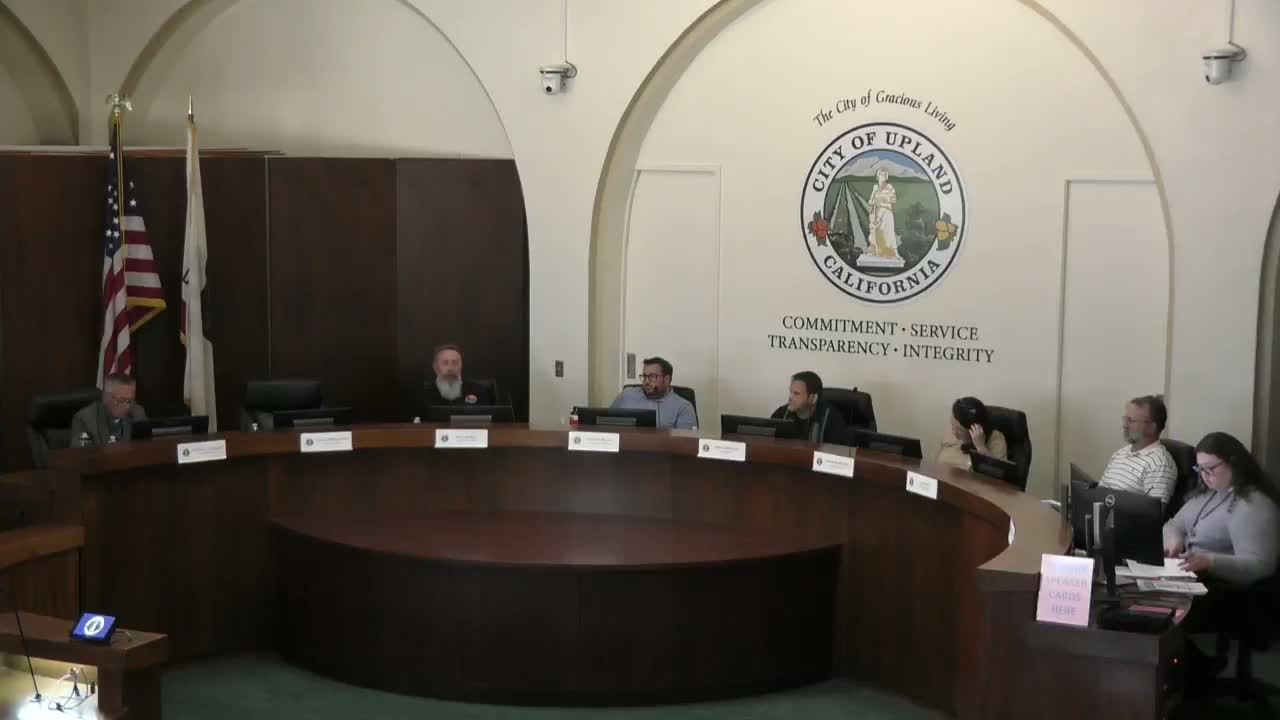
City staff told the Upland Public Works Committee that the city’s Pavement Condition Index is 53 (regional average ~69), that deferred maintenance totals about $210 million, and that maintaining or improving conditions will require new revenue sources and roughly 10 additional engineering‑division staff.
Upland public works staff reported to the city’s Public Works Committee that a new pavement management study found the city’s average Pavement Condition Index (PCI) is 53—well below the regional average of about 69—and that the city faces roughly $210 million in deferred maintenance across streets, alleys and public parking lots.
The presentation, led by associate engineer Kirk Swanner and additional department leadership, said that maintaining the city’s current PCI would require about $16.4 million annually for streets and alleys. Staff identified roughly $6.8 million in current restricted pavement funding, leaving an annual shortfall of about $9.6 million; a budget scenario to reach a PCI of 70 was estimated at about $28.1 million per year.
"Roads are one of the city's most valuable assets," said Kirk Swanner, the associate engineer who presented the pavement-management findings. Staff stressed that early preservation treatments such as slurry seals are far less expensive than later rehabilitation or full reconstruction, and that deterioration accelerates once pavements cross a "point of no return." The presentation also noted that the city’s most recent full scan was done electronically in 2023 (the previous full scan dated from 2009), producing updated PCI calculations and a more precise square‑foot estimate.
Why it matters: staff said the PCI gap reflects both funding and staffing shortfalls and that the public has not previously seen this level of comprehensive pavement data for Upland. City leaders told the committee they will post the PCI map and related slides online for public review and aim to publish a dashboard and an app that shows work‑order metrics and updates.
What staff found and proposed: the report lists a roughly $210 million deferred‑maintenance liability and identified several factors that caused the backlog—rising project costs since 2006, reduced field staff, frozen positions during reorganization, and a lack of administrative analysts on the general‑fund side of CIP engineering. Staff recommended a multi‑pronged response: pursue new revenue options (business‑license reform, a transactions‑use/sales tax, solid‑waste fee cleanup, state/federal earmarks and grants, bonds), use procurement strategies (piggyback contracts, combined CIP bid packages, bench lists of pre‑vetted consultants), and hire roughly 10 additional engineering‑division staff (a mix of project engineers and analysts) to accelerate project delivery.
Committee questions and staff clarifications: committee members pressed staff on the comparability of PCI scores with neighboring cities (some used walking methods; others had more recent scans), on the reported annual revenue figures (members discussed $10.3–$10.4 million vs. the $6.8 million figure staff cited), and on options to contract out more maintenance work. Staff acknowledged some year‑to‑year fluctuation in gas‑tax receipts and said they would confirm the allocation breakdown and the current figures used in the report.
Alley master plan and additional liabilities: the presentation summarized the 2017 Alleyway Improvement Master Plan, a long‑range (48‑year) reconstruction program; staff said about 19.5 alleys (roughly 53% of the alley network) are scheduled for reconstruction under the plan and the remainder for periodic slurry‑sealing. Staff also noted an estimated sidewalk backlog of about $31 million.
Near‑term steps and schedule: staff said they will continue seeking grants and other revenue, finalize any corrections to revenue figures, and return with updates: a committee update in July 2027 and a full presentation to city council in August 2027, by which time staff hope to have implemented some recommended funding or staffing changes. The presentation concluded with a pledge to publish the full PowerPoint and create narratives and short video excerpts for public clarity.
Ending: committee members thanked staff for the detailed analysis, suggested periodic dashboard updates to keep the issue visible, and closed the meeting with a plan to revisit pavement and sidewalk backlog reporting at future sessions.