Lifetime Citizen Portal Access — AI Briefings, Alerts & Unlimited Follows
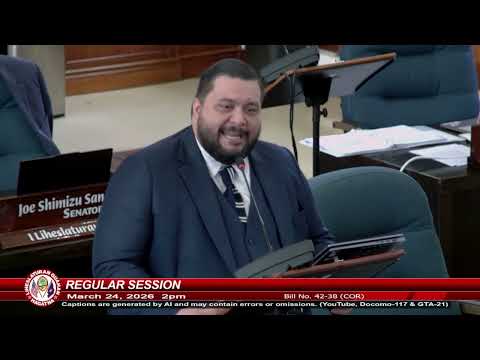
Senator asks Legislature to empower CHamoru Language Commission; colleagues raise legal and governance questions
Loading...
Summary
Senator Parkinson urged passage of bill 42‑38 to strengthen the CHamoru Language Commission’s funding, personnel policy and ability to receive donations; other senators warned the proposal creates a hybrid public‑nonprofit entity without clear procurement, personnel or tax frameworks and asked that the measure be held for more review.
Senator Parkinson asked colleagues to support bill 42‑38, saying the measure would “strengthen the institution we have entrusted with the protection, preservation, and advancement of the Chamorro language, Chamorro history, and the Chamorro way of life.” He said the bill would give the commission tools to seek outside funding and sustain its work “at no additional expense to the general fund.”
Parkinson cited written testimony from Dr. Laura Souder and Ann Annamarie B. Arceo, who urged legal authority for the commission to obtain grants and donations, to standardize orthography, and to serve as a repository for CHamoru materials. “Standardizing our orthography is a vital step,” the sponsor quoted, saying consistency supports teaching, publishing and public signage.
Other senators praised the bill’s cultural aims but pressed its legal and governance implications. One floor member said the measure appears to convert the commission into a “nonstock nonprofit public corporation” while keeping it subject to Title 4 personnel rules, leaving procurement authority, governance structure and independence undefined. That senator warned the change could create a hybrid entity with unclear powers and potential conflicts over board compensation and double‑dipping for members who are government employees.
Senator Parkinson replied that the measure is intended to make the commission “a step closer to making them a more permanent public agency” and that specific legal questions, including tax treatment and nonprofit status, could be determined later or by the commission itself. He said the bill leaves options open rather than mandating federal 501(c)(3) recognition.
After a short recess, a motion to send the bill back to committee was withdrawn to allow more floor collaboration; the sponsor asked that bill 42‑38 be placed at the bottom of the second‑reading calendar so legal concerns can be addressed before final action.
Next steps: lawmakers agreed to hold additional conversations with legal counsel and stakeholders; the measure was moved down the calendar to allow time for that work.