Commissioners direct staff to advertise roads-funding referendum after wide discussion on resurfacing, bonding and sales-tax options
Loading...
Summary
After a detailed briefing on resurfacing backlogs, impact-fee constraints and upcoming debt for major widenings, the board asked staff to prepare and advertise a public-hearing package for a roads-funding referendum. Commissioners discussed short-term millage-shift options and longer-term local sales-tax measures and emphasized voter education.
Hernando County commissioners directed staff on April 14 to prepare public hearing materials and advertise a roads-funding referendum after an extended staff briefing that described the county’s resurfacing backlog, limits of gas-tax funding and the debt service likely to arise from major widening projects.
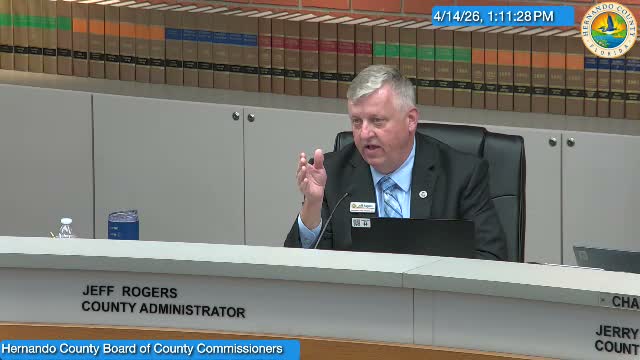
Administrator Rogers and Public Works Director Scott Herring warned the board that the county’s gas-tax-based resurfacing program (about $5.9 million a year) would not sustain a 40–50-year resurfacing cycle for the county’s paved mileage and that planned widening projects (Barclay, Kettering, County Line) will require bonded financing that will reduce annual pay-as-you-go resurfacing capacity. Rogers presented options including a short-term millage-shift (redirecting a small amount of existing millage to roads) and the long-term option of a voter-approved local sales-tax (MSTU-type or half-cent) that would provide material additional bonding capacity.
"Sales tax is a great idea," Rogers told the board while cautioning that past referendums had failed and that successful campaigns require a coordinated outreach effort, including a political-action committee or organized advocacy to explain benefits and tradeoffs to voters. Commissioners emphasized that any referendum needs clear voter education describing who pays (including visitors) and what would be improved — e.g., a visible program to repave lime-rock roads and accelerate resurfacing rather than general budget support.
After discussion about timing and the state’s election deadlines, the board gave staff direction to draft a referendum package and advertise a public hearing for the next meeting. Staff said the county will return with proposed language, an explanatory summary for voters, and an outreach plan; commissioners signaled they would expect a clear plan to show how funds would be allocated across resurfacing, collector widenings and lime-rock-road programs.