Lifetime Citizen Portal Access — AI Briefings, Alerts & Unlimited Follows
Multnomah County discussion centers on countywide economic development, apprenticeship supports and enforcement of library-bond workforce goals
Loading...
Summary
County officials, a City of Gresham representative and community speakers discussed a potential countywide economic development strategy, funding for pre-apprenticeship supports, enforcement of workforce requirements tied to the library bond (about $67,000 assessed in liquidated damages) and workforce barriers such as childcare and psychological safety.
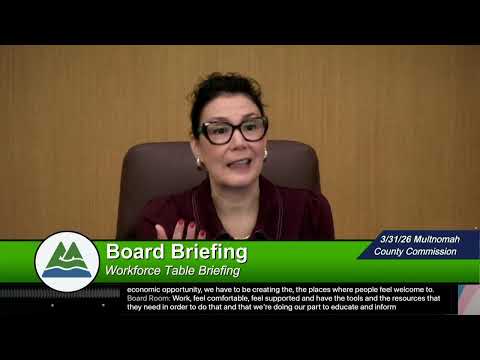
Multnomah County staff, a City of Gresham representative and community members met to discuss a proposed countywide economic development strategy, supports for pre-apprenticeship programs and enforcement of workforce goals tied to the county’s library bond. An agency official said the county—and its regional partners—are pushing from planning into enforcement and accountability.
“A little bit over $67,000 in liquidated damages to date on the library bond,” an agency official said, describing fines assessed to contractors for failing to meet ARIA workforce goals. The official said the ARIA framework is intended “to move the workforce tables recommendations from vision to action” and recommended quarterly check‑ins to ensure accountability.
A City of Gresham official described recent retail investment, including a new Trader Joe’s and other quick-service restaurants, and said those businesses have become “a point of pride” for the city. “We wouldn’t turn down any county financial support if the commission is interested in partnering about a business in our community that may want to leave,” the official said, urging coordination between city and county retention efforts.
Speakers also pressed for funding and services to improve apprenticeship pipelines. A staff member said district staff are researching existing programs and will return with recommendations for flexible funding to support wraparound services—childcare, transportation and other supports that help trainees remain in programs.
Panelists and commenters raised workplace culture and safety concerns. “If a worker is being bullied and harassed or hazed or excluded or isolated, they’re working under duress,” a presenter said, describing psychological harms that lead to depression, sleeplessness and family strain, and urged clearer expectations for acceptable behavior, bystander training and defined consequences.
A participant who identified herself as a social worker said workforce supports also require practical budgeting knowledge for people entering training programs. A resident noted the impact of unpredictable schedules on primary caregivers and said layoffs disproportionately affect women and minorities: “When there are layoffs, women and minorities are the first to go,” she said, urging the county to weigh economic stability in program design.
The meeting included announcements of upcoming events: participants were told of a scheduled session on Thursday, 04/02/2026 at 9:30 a.m. and a proclamation-signing in the boardroom the following day at noon. The chair then adjourned the meeting.
Why it matters: Countywide coordination on economic development and workforce training could align city retention efforts, contract enforcement and funding for supports that help residents complete apprenticeships and remain employed. The ARIA enforcement noted at the meeting signals county willingness to use contract remedies to meet workforce goals, and staff follow-up was pledged.