Lifetime Citizen Portal Access — AI Briefings, Alerts & Unlimited Follows
KIRKWOOD R-VII winter benchmarking: district-wide gains but gaps persist for Black students and students with IEPs
Loading...
Summary
Administrators told the board the district has made steady gains in reading and math over the strategic-plan period but emphasized persistent opportunity gaps for Black students and students with IEPs; trustees pressed for multi-year goals and more frequent progress checks.
Doctors and administrators presenting the winter 2026 strategic-plan benchmarks told the Kirkwood R‑VII board that student performance in both reading and math has improved in many cohorts while notable gaps remain for historically underserved groups.
"There is real progress and at the same time, a clear need to accelerate growth and close gaps so every student experiences that success," Doctor Granite said while introducing cohort and subgroup data that track five years of outcomes. Granite pointed to kindergarten reading rising from 47% at or above benchmark in 2021 to 81% in the most recent winter data and cited cohort growth at upper grades as evidence of sustained progress.
Administrators said the district defines benchmark as the 40th national percentile and cautioned that pandemic-era testing and variable test participation affect comparability for some cohorts. "Because students change over the course of the school year, the fortieth percentile number changes over the course of the school year," Locke explained when asked how the district measures benchmark status.
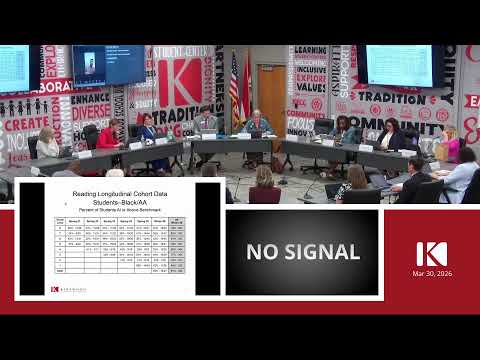
The presentation highlighted improvements for students with IEPs and for Black/African American students in several grade cohorts — for example, one cohort of students with IEPs moved from about 35% at or above benchmark to about 52% — but speakers emphasized those gains are not yet sufficient. "These outcomes are still not where we want them to be and gaps remain when compared to overall student performance," Doctor Granite said.
District leaders described steps to accelerate and sustain growth: strengthen professional learning communities (PLCs), refine MTSS and intervention structures, expand job‑embedded instructional coaching, continue LETRS training for K–2 teachers, and adopt a state-required early-reading assessment next year to align K–3 measurement. They also noted the need for root‑cause analysis before abandoning existing systems: "Before we say, well, MTSS doesn't work... we need to do a deep dive and a root cause analysis," Doctor Bailey said.
Trustees pressed for clearer, multi-year targets and more frequent check-ins to ensure the work is producing measurable results. Trustee Kaffee urged the board to set three‑ and five‑year goals and to review progress at least twice a year. Several trustees raised the need for classroom‑level formative assessments that align with instruction so teachers can act midyear rather than waiting for summative snapshots.
Administrators said they will incorporate the board’s requests into the next strategic-plan development and provide more detailed documentation — including counts alongside percentages — in future benchmarking reports. The board closed the discussion by acknowledging both the progress shown and the work remaining to close long-standing opportunity gaps.