Lifetime Citizen Portal Access — AI Briefings, Alerts & Unlimited Follows
Commission approves PUD to convert 24 Cathedral Place into 120‑room hotel with wrapped parking and streetscape commitments
Loading...
Summary
The City Commission adopted Ordinance 2026‑08 to amend a Planned Unit Development at 24 Cathedral Place, allowing a 120‑room, five‑star hotel with an internal garage (minimum 155 spaces) and private commitments to streetscape work and a regional trash compactor. Commissioners added construction, vibration‑monitoring and lighting safeguards after public debate.
The St. Augustine City Commission voted unanimously on April 13 to approve a Planned Unit Development (PUD) amendment allowing the adaptive reuse of the historic Exchange Bank building at 24 Cathedral Place into a 120‑room, five‑star hotel with an internal, wrapped parking garage and associated public‑benefit commitments.
Under the approved PUD, the developer agreed to provide a minimum of 155 parking spaces (up to 175), an embedded valet‑operated garage, a regional trash compactor, and to contribute $464,640 to city streetscape improvements (to be paid within 90 days of approval). City staff estimated a mobility fee payment of about $350,000 would also be due to the city. The applicant cited historic rehabilitation, private investment in public infrastructure and recurring tax revenue as central public benefits.
John Regan, the applicant’s project representative, summarized the financial commitments to the commission and city staff, saying the Patel family “will make that payment, within 90 days” to support building out Charlotte Street’s streetscape. Regan also presented traffic and economic analyses the team said support the PUD’s design choices.
Supporters at the public hearing — including the St. Johns County Visitors and Convention Bureau, the Chamber of Commerce and local tourism operators — argued the proposal would increase higher‑spending, longer‑stay visitors and create local jobs. The Chamber estimated roughly 40 full‑time and 20 part‑time positions tied to the project and said the hotel would generate substantial visitor‑development tax revenue.
Opponents and several residents raised concerns about scale, historic authenticity, potential use of downtown CRA funds for related public parking projects, and construction impacts on adjacent historic properties. BJ Colady, speaking for herself and referencing earlier staff discussions, said: “This development does not benefit our quality of life. It’s all about money.”
Commissioners pressed the applicant on technical safeguards and on precise, enforceable language in the PUD text. Key modifications the commission required and the applicant agreed to include: - Construction‑method commitments (auger‑cast piles and limiting high‑vibration compaction) plus a requirement that a professional engineer monitor vibration and have authority to halt work in coordination with city staff when accepted, site‑specific thresholds are exceeded; thresholds to reflect current best practices for adjacent building materials and conditions. - Clarification that references to “Anderson Circle” pertain to the Anderson Circle right‑of‑way (not parkland) and that cost sharing or reconfiguration would be coordinated with FDOT and the city when those agencies undertake work. - Downward‑facing or full‑cutoff historic‑style light fixtures (to limit upward light spillconsistent with the city’s dark‑sky goals) and drip irrigation or low‑flow irrigation strategies to reduce water use, with native plantings where feasible without requiring additional HARB review to the degree possible. - Specificity about the public trash compactor and minor typographical corrections in the PUD text.
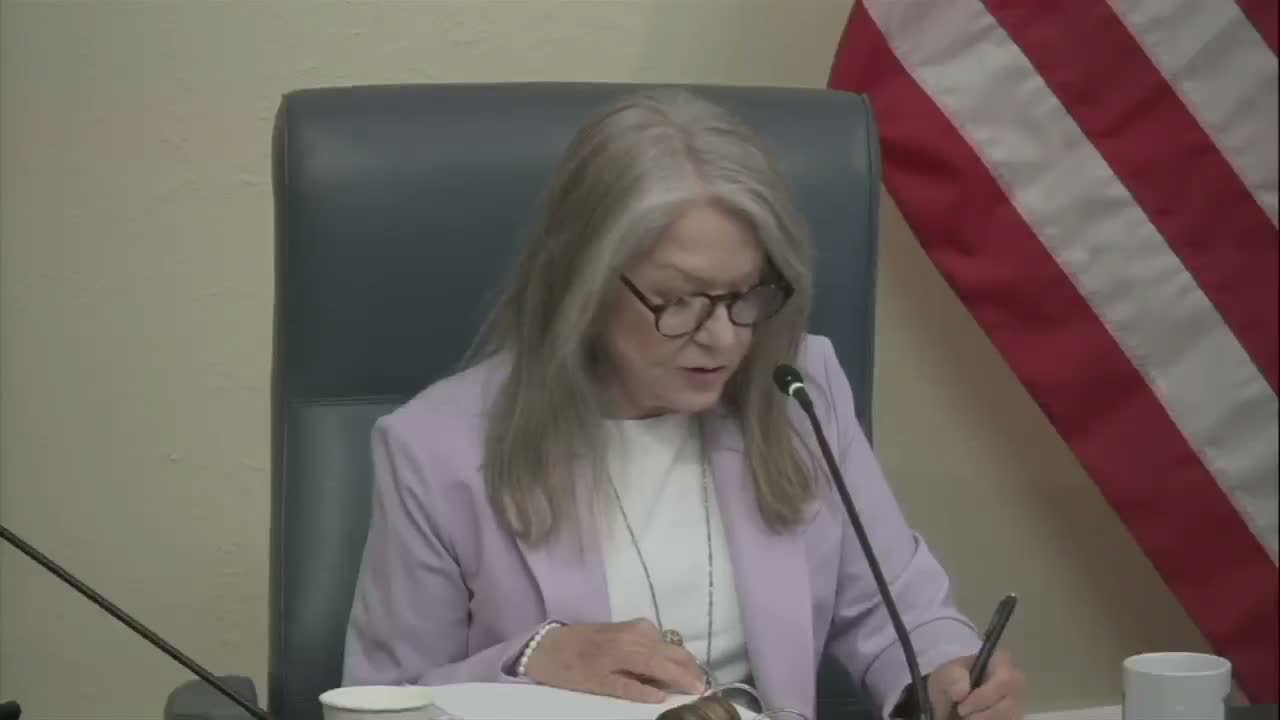
Mayor Nancy Sykes Klein framed the measure as a preservation opportunity, saying it “preserves an important, an important historic structure, in the downtown” while delivering public improvements. After debate, the mayor moved to approve the amended PUD text incorporating the applicant’s changes; a commissioner seconded and the ordinance passed by roll call (all present voted yes).
The project team emphasized that the hotel is being proposed as a luxury flag and that project approvals from HARB and Planning and Zoning had already been secured at earlier stages. The developer committed to additional design controls required by those bodies and to the financial and construction monitoring measures now memorialized in the PUD.
What happens next: the PUD text approved April 13 becomes the city’s governing document for the site; construction will be subject to permitting, the vibration‑monitoring requirements the commission added, and any further applicable state or federal approvals. The commission also directed staff to memorialize the construction monitoring thresholds and enforcement language in the PUD record.
Proper names and authorities referenced: Exchange Bank / 24 Cathedral Place (project site); Ordinance 2026‑08 (PUD amendment); HARB (Historic Architectural Review Board); Patel family / Jalaram Hotel Group (applicant/developer).