Lifetime Citizen Portal Access — AI Briefings, Alerts & Unlimited Follows
Department of Public Health subcommittee on lived maternal-health experience outlines role, recruitment and accountability
Loading...
Summary
At a kickoff meeting called to order at 2:35 p.m., the Department of Public Health's Community and Lived Experiences subcommittee agreed on recruitment priorities, a standing agenda item to track responses to community input, and monthly follow-ups; staff will post minutes and prepare materials for the task force in May.
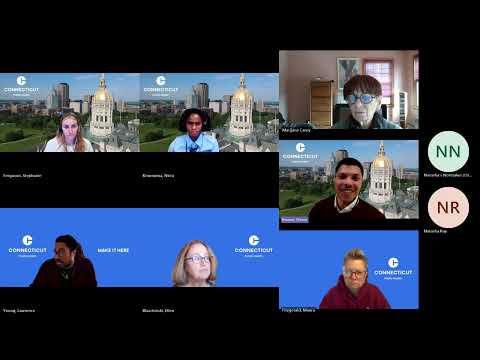
The Department of Public Health's new Community and Lived Experiences subcommittee held a kickoff meeting called to order at 2:35 p.m. and adjourned at 3:20 p.m., during which members agreed on recruitment priorities, a plan to track how community input is used, and next steps for coordinating with other task-force work groups.
Lawrence Young, section chief of the Office of Health Equity, said the group should "not be a place that's exploitive" and emphasized centering lived maternal-health experiences as constructive input rather than only collecting stories. "We actually want to make it a space where people are actively engaged and included in the work," Young said.
Mary Jane Carey, a maternal and child health consultant representing the Reproductive Justice Alliance and the MCH Coalition, described the subcommittee as "the most important group of all the work groups" for ensuring that lived experience is translated into action. Carey urged mechanisms to capture participants' feedback and make sure it is reflected in other groups' work plans.
Members debated whether the subcommittee should have fixed "deliverables" and reached a consensus that, while the group need not have mandatory outputs imposed by the legislature, it should set clear goals and durable practices. The Chair and staff proposed adding a standing agenda item for every meeting that tracks: "Here is what you said; here is what we did; here is what's next," a tool intended to strengthen accountability to community members who provide lived experience.
Participants discussed recruitment and size, noting about 30 to 40 people had expressed interest across committees in recent weeks and that new members will be invited via the DPH Health Equity email and specific staff contacts. The group also considered adapting material from an existing blueprint and related tools such as a maternal-health crosswalk and report card rather than starting from scratch; several speakers recommended inviting the Connecticut Health Foundation to participate or advise.
Mara Fitzgerald, chief marketing officer for the Department of Public Health, and Ellen Blashinsky, a DPH consultant with the community, family health and prevention branch, said communications and trauma-informed facilitation would be important for outreach and for honoring contributors' experiences. Staff offered to draft rubrics and reference documents for co-chairs and other subcommittees to ensure that lived-experience input is reviewed and incorporated when appropriate.
Office of Health Equity staff said they will take minutes, follow up with participants between meetings, and post the meeting notes and recordings publicly on the department's YouTube channel. The team also said it would prepare materials and notes for the broader task-force meeting in May.
The meeting concluded with a set of homework items for staff and co-chairs: refine a recruitment timeline and expectations for members, draft a rubric or scoring guide to document how lived experience is used, and circulate materials for review ahead of the next monthly meeting.