Lifetime Citizen Portal Access — AI Briefings, Alerts & Unlimited Follows
SEPTA outlines FY27 ask, safety gains and $10B state'of'repair backlog in wide-ranging council hearing
Loading...
Summary
SEPTA told a City Council committee the mayor's proposed $134 million city contribution is critical to unlock nearly $1 billion in state operating support; SEPTA leaders highlighted crime reductions, fare-gate progress, the zero-fare expansion, a $10 billion state-of-good-repair backlog and a planned $4.3 billion borrowing program.
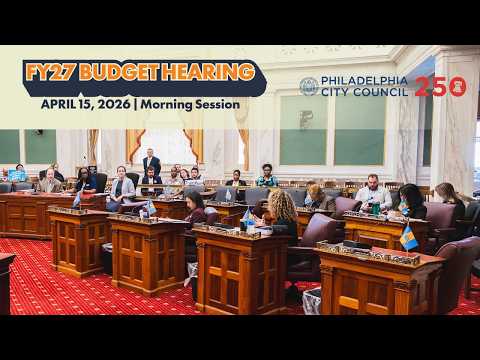
SEPTA leadership told a Philadelphia City Council committee on Wednesday that the transit authority's FY27 operating request and local commitments are essential to stabilize operations, expand fare and workforce programs, and help unlock significant state funding.
Scott Sauer, SEPTA general manager, said the city's proposed $134,000,000 contribution is vital to meeting a legislatively mandated local match that would unlock nearly $1,000,000,000 in state operating support. Sauer described the funding as critical to preserving programs the city values, including participation in SEPTA's Key Advantage employer program and an expanded zero-fare initiative for low-income residents.
Sauer and Charles Lawson, chief of SEPTA Transit Police, highlighted measurable safety and ridership improvements, including long-running year-over-year ridership gains and declines in serious crime. Lawson said transit police staffing has increased and is at about 96.5% of budgeted headcount, and he noted the police engaged with vulnerable riders more than 200,000 times last year while acknowledging that long-term behavioral-health solutions require broader community resources.
Fare-evasion countermeasures were a major focus. SEPTA said it had installed full-height fare gates at 10 stations (including City Hall) and observed fare-evasion reductions at those stations ranging roughly 40'75%; systemwide, SEPTA reported about a 10% reduction in fare evasion. The authority proposed using FY27 funds to install similar gates at 13 additional stations and to harden existing turnstiles where full-height gates are not immediately feasible.
Capital needs and risks: Sauer described a roughly $10,000,000,000 state-of-good-repair backlog and a plan to borrow about $4,300,000,000 over the next 12 years to address fleet replacement and other critical infrastructure. He warned that increased reliance on debt would constrain the authority's future flexibility and that the capital program remains tenuous without a comprehensive funding solution.
Council concerns and exchanges: Members pressed SEPTA on multiple fronts, including:
- Service reliability and the unexpected trolley tunnel emergency: SEPTA said it has submitted plans to reopen evening service to state safety oversight and expected to restore 24/7 operations by month'end, pending approval.
- Bus-operator safety and vehicle modifications: SEPTA described a move to fully encapsulated driver compartments, enhanced communications and silent alarms tied to a central control center, and an emergency egress window; bullet-resistant glass remains under evaluation due to engineering challenges.
- The new bus network: SEPTA said the bus network will be implemented in phases over 18'24 months, that outreach will include depot-level briefings, town halls and targeted engagement for affected routes, and that the plan aims to nearly quadruple high-frequency routes in the system.
- Fare programs and equity: SEPTA said the current funding level for zero-fare would serve about 68,000 eligible recipients and that expansion depends on additional city or external funding. The Key Advantage employer program was described as generating new non-fare revenue (about $22,000,000 in current participation levels) and inducing ridership among partner employees.
- Real-estate and transparency questions: Council members raised concerns about recent SEPTA leases and alleged low-dollar terms on some station buildings; SEPTA explained that some $1 leases covered station buildings (not full parcels), said the properties remain SEPTA assets, and acknowledged shortcomings in community engagement during the leasing process.
Why it matters: SEPTA framed its FY27 request as a funding bridge to secure sustained state support and to preserve service improvements that will be important as Philadelphia hosts a series of large events in 2026 and beyond. Council members repeatedly emphasized the need for clearer metrics, stronger communications with riders and neighborhoods, and more visible progress on cleanliness, station maintenance and outreach.
Next steps and follow-ups: Council members requested written follow-up on operations and capital-repurposing timelines, percentage of capital funds encumbered versus spent, passenger-revenue projections, and data linking safety improvements to enforcement and operations. SEPTA said it would provide requested materials and continue coordination with council offices as hearings proceed.
Representative quotes from the hearing are attributed to speakers listed in the speaker roster. The committee recessed to continue work later in the day.