Lifetime Citizen Portal Access — AI Briefings, Alerts & Unlimited Follows
FBI officials explain legal elements of espionage and how cases are proved
Loading...
Summary
FBI counterintelligence officials outlined the statutory elements of espionage — transmission of national defense information to a foreign power and benefit to that power — and discussed prosecution challenges, including recent economic-espionage and classified-information cases.
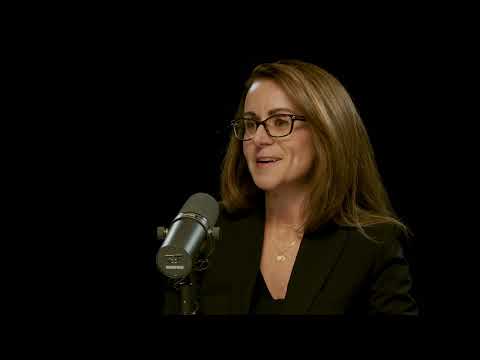
Josh Obstfeld, the FBI's senior executive for external engagement in the Counterintelligence and Espionage Division, and Tiffany, the bureau's senior national intelligence officer for counterintelligence, laid out what the law requires to prove espionage and how investigators build cases.
Tiffany said the Espionage Act of 1917 centers on three elements: transmission of information, the information's relation to national defense (which is not always equivalent to classified material), and that the transmission helped a foreign power or harmed the United States. "Transmission is often the most difficult to prove," she said, noting that modern cases can involve encrypted apps or in-person meetings the government must show occurred.
The FBI officials illustrated those elements with prosecutions. Tiffany cited the Kevin Mallory case, in which phone-encrypted transmissions and voluntarily provided evidence supported a conviction. Obstfeld described a recent economic-espionage prosecution involving an employee who sought to transfer proprietary artificial-intelligence information overseas; that individual was stopped, arrested and convicted, the hosts said. Tiffany emphasized that economic espionage is charged under a different statute but is still handled by the same division.
Investigators stressed that "national defense information" in the statute can include controlled unclassified information that meaningfully aids another power. "It's not specifically that you have to transmit classified information," Tiffany said. The bureau relies on piecing together communications, technical evidence and voluntary disclosures to meet the statutory transmission element.
Officials warned that proving harm is complex; prosecutors do not always need to show a precise, quantifiable loss to the United States, but they generally must demonstrate that the disclosure helped the foreign power. Where helpful, the bureau can rely on contextual evidence that losing control of sensitive information diminishes U.S. security.
Obstfeld and Tiffany urged organizations and individuals with potential concerns to consult their agency or company security office rather than attempting independent enforcement. "You don't need to be paranoid, but be aware," Tiffany said, recommending that suspicious contacts or unexpected approaches be referred to security professionals for evaluation.
The hosts closed by noting the division continues to prioritize both traditional espionage and economic-theft prosecutions and encouraged listeners to explore insider-threat resources and future episodes in the series.