Lifetime Citizen Portal Access — AI Briefings, Alerts & Unlimited Follows
Franklin aldermen debate pedestrian access as state fast-tracks Royal Oaks/Mack Hatcher work
Loading...
Summary
Council members discussed adding pedestrian crossings at the fast‑tracked Royal Oaks and Mack Hatcher intersection; staff said adding crossings now would cost an estimated $300,000–$400,000 and might be replaced when a larger Mack Hatcher widening occurs, and aldermen asked staff to bring design options back to the board.
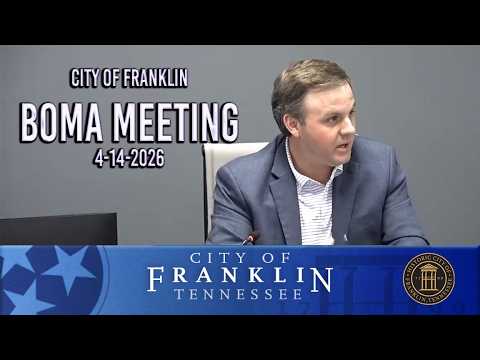
Board members spent substantial time April 14 discussing pedestrian and bicycle access at the intersection of Royal Oaks and Mack Hatcher as the state prepares near-term resurfacing and improvements.
Alderman Caesar said the city should prioritize walkability and crossability where residents need to travel by foot to reach the YMCA, churches and local services. City staff explained that the Tennessee Department of Transportation will handle mainline paving and that the city is responsible for signal modifications and side-road work.
Paul Hols, the staff member leading the project update, told the board that adding pedestrian crossings in the near term would require replacing the signal cabinet, upgrading poles and drainage, and installing ADA landing pads, and he estimated those upgrades at roughly $300,000–$400,000. “The estimate I throw out right now is around $300,000 to $400,000 of upgrades that are ultimately 100% throwaway when Mack Hatcher happens in 2032,” Paul said.
Alderman Potts, whose ward includes the intersection, pressed for staff to design the pedestrian improvements and return with options. “I think it is worth the investment because even though you're saying it may be throw away in 7 to 8 years ... I think it's worth the investment to provide that connectivity that's needed right now,” Potts said.
Staff said the pedestrian work could be scoped and delivered as a separate city project so it would not delay the state’s schedule for pavement work. The board directed staff to return with a more complete estimate, scope and timing and indicated interest in pursuing the work—potentially as a capital improvement project—while continuing to coordinate with TDOT.
There was no formal vote on funding at the meeting; the item was discussed as direction to staff and staff agreed to return with detailed design options and a refined cost estimate at a future meeting.
The city’s planning and engineering staff will present options and cost estimates to the board before any appropriation is made.