Lifetime Citizen Portal Access — AI Briefings, Alerts & Unlimited Follows
Cabarrus County paratransit drivers and riders describe safety, care and daily challenges
Loading...
Summary
Drivers and riders spoke about the emotional and practical aspects of Cabarrus County paratransit service, detailing wheelchair loading procedures, use of tablets and radios for dispatch, and why many find the work rewarding despite weather and stressful moments.
L'oreal McCoy, a meeting participant, said she switched from hotel work to driving after meeting a driver at a gas station and applying for the job; "I love it," she said, adding that getting her truck helped her feel ready for the role.
Jamie Smith, a meeting participant, described the qualities she believes define a good driver: "A good driver is someone that has compassion, that that has care for people, and just love their job and love what they're doing." Several drivers said empathy and patience are as important as technical skill when transporting people with medical or mobility needs.
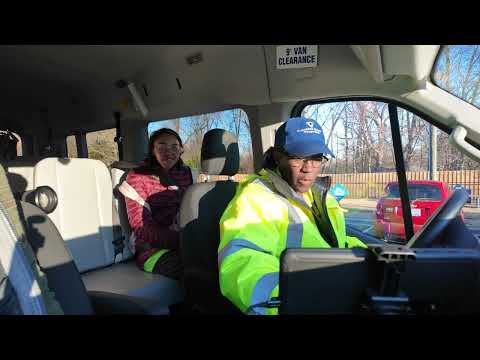
Drivers and a rider shared practical details about daily operations and safety. "On every van, we have a tablet," L'oreal McCoy said, describing how devices provide manifests and show pickups and drop-offs. Drivers also use radios to coordinate with dispatch, she said. Participants described wheelchair procedures in similar terms: load clients using a lift, make safety checks while securing wheelchairs and assist passengers as they board and disembark.
Terry Carroll gave an example of in-route support: when a passenger received a difficult oncology report and said she felt alone, Carroll said he pulled into a hospital lot to sit with and console her, helping her cope until family or other support could be arranged. "I got her loaded up on the van and actually pulled into the lower parking lot of the hospital and ... sat and talked to her," Carroll said, adding that the passenger later reported feeling better than she had expected.
Wally Poole, who identified himself as legally blind, described the assistance drivers provide: "They're very helpful. They make sure I get into the van okay ... and when I get out, they make sure I don't fall down, and they help me step down and grab onto my wheelchair on my merry way." Poole's remarks illustrated how riders rely on drivers for safety and independence.
Several participants pushed back on a common misconception. "Some people don't realize—they think it's like a school bus that you just pull up and pick somebody up and then take them wherever," Depa Wright said. Wright and others emphasized that paratransit work involves individualized care, varying wheelchair types and different passenger needs.
Speakers also offered practical advice for new hires: be flexible, keep an open mind and learn the systems. "I would tell any new hire to keep an open mind," McCoy said. Thomas Davis added that while the work can seem challenging at first, it becomes manageable and necessary after experience: "After you learn it, I mean, it's really needed."
Participants noted the job's strains as well as rewards. McCoy recalled working in severe weather and continuing to serve passengers despite the conditions. Multiple speakers said community thank-yous and riders' positive reactions provide daily motivation: "Just their reaction will be the reward," an unidentified meeting participant said.
The session did not include formal votes, motions or policy decisions. It primarily recorded personal accounts from drivers and a rider about the operations, safety procedures and human aspects of Cabarrus County paratransit service. The conversation closed with participants reiterating that, despite challenges, many find the work meaningful and enjoyable.