Get Full Government Meeting Transcripts, Videos, & Alerts Forever!
Get email alerts on the Downtown Infrastructure topic
No spam. Unsubscribe anytime.
Council approves DDA contracts and first‑reading of COP financing for downtown 'Heart Improvement' project
Summary
After extensive public comment and council discussion, Loveland City Council unanimously approved a $250,000 DDA services contract and the BID budget, and then approved on first reading Ordinance No. 6745 to issue certificates of participation (COPs) to finance the five‑block 4th Street 'Heart Improvement' project, with the DDA pledging TIF revenue to cover lease payments.
Loveland City Council advanced a major downtown revitalization package on Tuesday night, approving a suite of items that move the five‑block Heart Improvement (Hip Streets) project toward construction.
The council unanimously adopted Resolution R‑106‑2024, a services contract that provides $250,000 in city operating support to the Loveland Downtown Development Authority (DDA) and Historic Loveland Business Improvement District (BID) for 2025. The council also approved the BID’s 2025 operating plan and budget, which includes a $255,000 transfer to the DDA to support downtown activities.
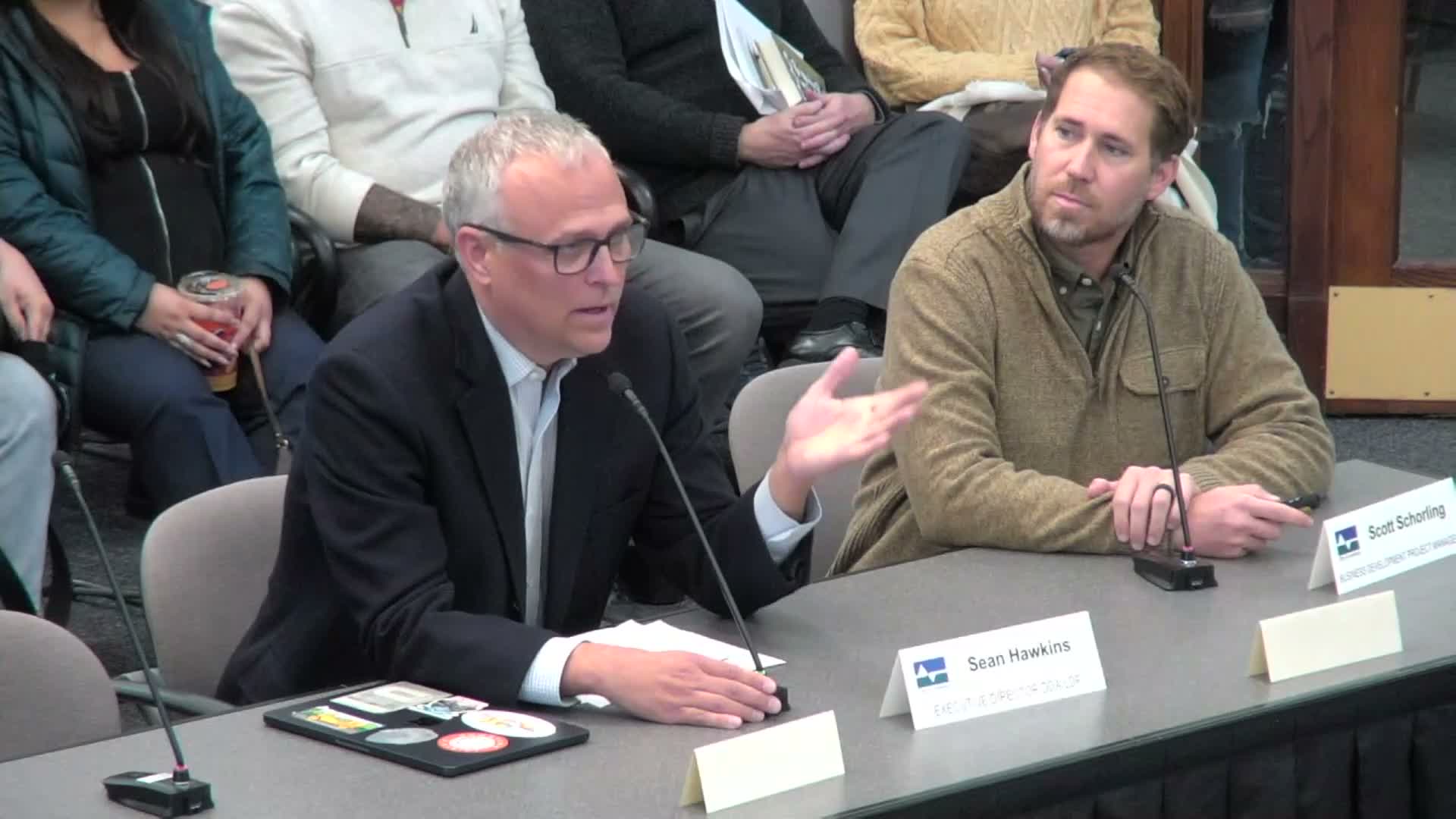
Why it matters: city staff and the DDA said the funding is needed to operate events, provide facade and fire‑suppression grants, and leverage private investment in downtown. Sean Hawkins, the DDA executive director, told council that downtown property owners voted to add a levy and that private investment coupled with city support will sustain the district’s operating work.
“We have the support of our property owners in our downtown district to help cover—we need roughly $500,000 to operate,” Hawkins said. “We hope the city will continue this partnership.”
Council then approved on first reading Ordinance No. 6745 authorizing a lease/leaseback structure and certificates of participation (COPs) to generate approximately $12.5 million in capital for the streetscape portion of the project. City staff and financial advisers described the transaction as similar to the financing used for the Foundry parking garage: the city retains title to the Public Works Building, while a trustee holds a leasehold interest during the financing term. The DDA will pledge tax‑increment (TIF) revenue to cover annual lease payments.
City finance director Brian Waldis said the financing is structured to avoid use of general‑fund dollars: “This project financing mechanism does not rely on general fund dollars,” he said, while noting the DDA’s projected TIF revenues should cover annual debt service. Staff projected maximum annual debt service under conservative assumptions would not exceed $930,000 and estimated COP proceeds near $12.5 million with total repayment not to exceed $23.25 million under maximum scenarios.
Support and opposition: dozens of downtown business owners, arts groups and developers backed the plan in public comment, citing infrastructure failures (aging water mains, collapsed storm pipes), fire‑suppression needs and economic benefits from events that draw visitors downtown. Several speakers said the project would increase safety, accessibility and tourism.
Opponents raised procedural and financial objections to COP/leaseback financing and the DDA/TIF pledge. Darren Barrett said the structure would divert TIF revenue long used for general‑city services, calling the approach “insanity” and warning of future budget pressure. Linda Rosa, calling in remotely, described leaseback financing as expensive and urged voter approval for long‑term debt measures.
Council response and outcome: councilors asked detailed questions about construction phasing, risk management and business support during construction. Staff said they would start construction in February, run work from both ends of the five‑block corridor, and keep businesses accessible during work. The council approved the ordinance on first reading after discussion; staff said the project team will continue outreach and coordination with businesses throughout construction.
What’s next: if council completes required readings and the DDA executes its cooperation agreement, staff anticipate beginning construction in February and completing the streetscape work in roughly 20 months; water and utility replacements would proceed in coordination with those schedules. The DDA will present the cooperation agreement to its board on Dec. 9 as part of the financing timetable.
Ending: council members flagged continuing debate over financing approach and business supports, but approved the near‑term actions needed to move the Heart Improvement project toward construction.