Lifetime Citizen Portal Access — AI Briefings, Alerts & Unlimited Follows
Committee hears parents and doctors on bill to bar insurer vaccine incentives; measure fails committee vote
Loading...
Summary
Lawmakers heard testimony for and against House Bill 452, which would prohibit insurer payments or penalties tied to provider vaccination rates; after testimony from parents, physicians and insurer representatives the committee voted 4–12 to defeat the measure and then voluntarily deferred it for possible future consideration.
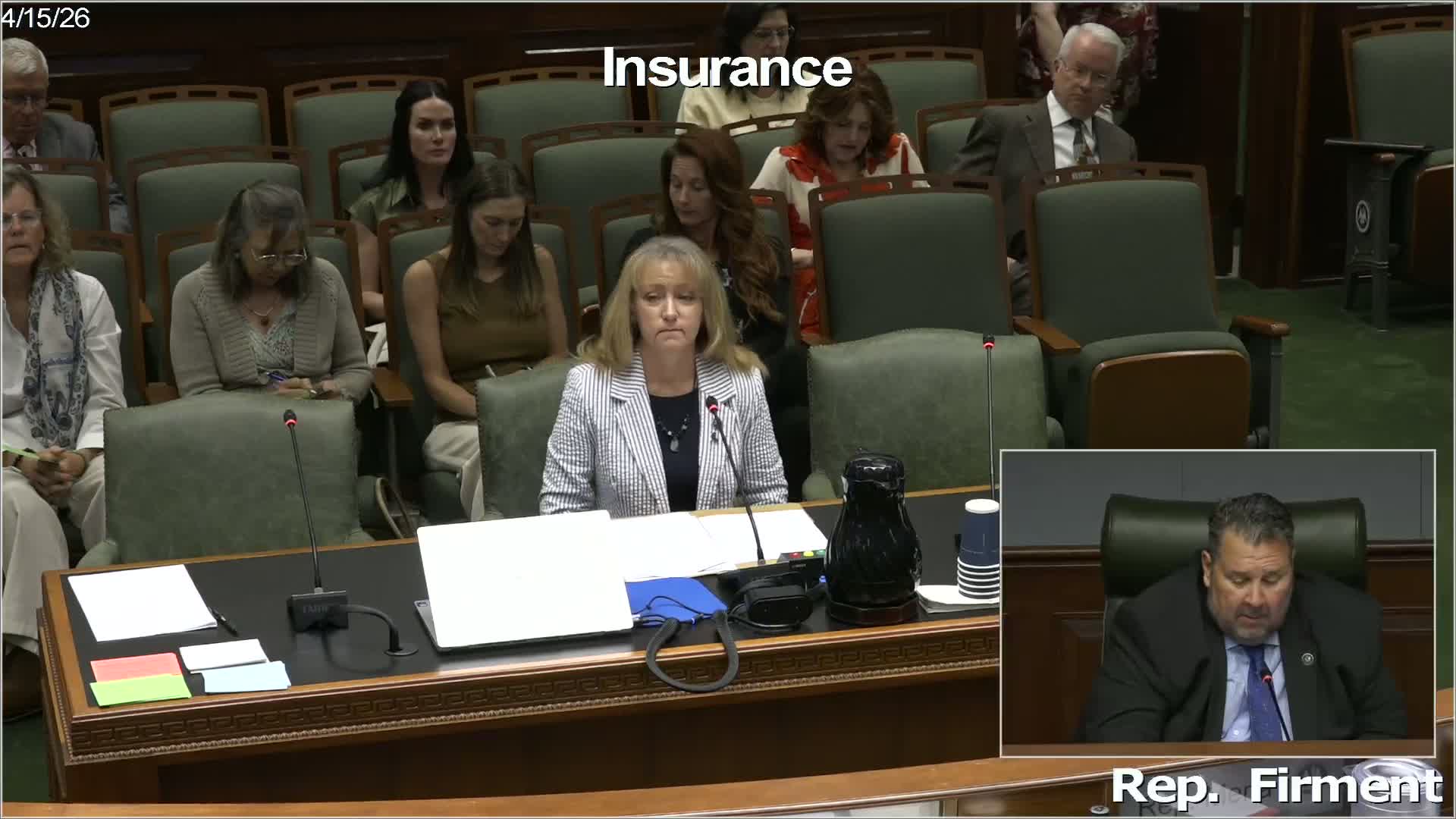
House members heard two hours of testimony and vigorous questioning on House Bill 452, a measure the sponsor said would bar health plans from paying financial rewards or imposing penalties on health care providers based on the vaccination status of their patients.
Representative Amade, the bill’s sponsor, said HB 452 is aimed at protecting access to pediatric care. “By banning these financial incentives and penalties, the bill ensures that vaccination decisions remain where they belong between the doctor and the patient or the parent,” she said, arguing that insurer-driven quality scorecards can lead practices to refuse patients who are not fully vaccinated.
The bill drew a mix of personal testimony and expert statements. Supporters included parents and physicians who described families struggling to find pediatric care after practices instituted policies requiring new patients to be up to date on recommended vaccines. Jill Hines, co-director of Health Freedom Louisiana, told the committee she submitted a physician’s letter she said showed a practice being flagged for low vaccination percentiles under NCQA/HEDIS benchmarks and said removing noncompliant patients can improve a provider’s ratio and bonus eligibility. “That’s where we get the instances where pediatric patients are removed from care,” Hines said.
Parent Kelly Couture recounted her family’s experience with a pediatric practice that later adopted a policy of accepting only fully vaccinated new patients and said the change left some families without a medical home. “I truly believe that their stance changed due to financial motivation given to pediatricians to have all of their patients comply with the vaccine schedule,” Couture testified.
Several physicians speaking in support described professional pressure and what one called a chilling effect. “This financial incentive puts a level of coercion to the physicians,” Dr. Holly Grow said, adding that some clinicians avoid public testimony out of fear of professional consequences.
Opponents included representatives of insurers and pediatric professional organizations. David Laverne of Blue Cross and Blue Shield of Louisiana described the insurer’s “quality blue” program and said it incorporates HEDIS measures, which include a range of pediatric quality indicators. “The only one I’m aware of… would take into account the immunizations that you’re talking about is that there’s incentives to meet what’s called HEDIS standards,” Laverne told the committee.
Dr. Stuart Gordon, representing the Louisiana chapter of the American Academy of Pediatrics, framed the issue more broadly and urged caution. He explained that HEDIS is a national set of quality measures and said incentive programs are intended to improve clinical outcomes. “If we go ahead and stop the incentives for immunizations, are we going to stop them for controlling blood pressure and controlling diabetes?” Dr. Gordon asked, warning lawmakers against a policy that could have unintended consequences for other quality measures.
Committee members pressed both sides for documentation. Several lawmakers asked the sponsor for demonstrable insurer communications showing providers being penalized or dropped from networks because of vaccination measures; the sponsor said she had circulated a 2024 Blue Cross document and invited clinicians to submit redacted insurer notices if they exist.
After closing remarks from the sponsor, Representative Wilder moved to report HB 452 favorably. The committee then recorded a roll-call vote that resulted in 4 yeas and 12 nays, and the motion failed. Members then agreed without objection to the sponsor’s request to voluntarily defer the bill so it can be brought back later.
The committee’s debate centered on competing questions of access and professional standards: supporters described anecdotal cases of families unable to find pediatric care, while insurers and some physician witnesses warned a narrow ban on incentives could remove tools used to promote a range of quality outcomes. The sponsor pointed to a federal CMS policy discouraging use of certain immunization measures in payment arrangements as supporting justification for the bill.
With the committee vote failing, HB 452 will not advance at this time; the sponsor retained the option to reintroduce the measure after gathering additional evidence or revisions.