Get Full Government Meeting Transcripts, Videos, & Alerts Forever!
Get email alerts on the Ice Arena topic
No spam. Unsubscribe anytime.
Frank Southern ice arena closed after ammonia gasket failure; staff outlines repair and replacement options
Summary
Parks staff told the Bloomington Board of Park Commissioners that a March 10 gasket failure caused an ammonia leak and closed Frank Southern Ice Arena for the season; staff estimated immediate repairs at $30,000–$50,000 and outlined three long-term options ranging from a $1.2 million system retrofit to a $12 million-plus new facility. Residents urged an interim plan and broad stakeholder engagement.
Parks staff presented an informational report on the aging Frank Southern Ice Arena and the March 10 gasket failure that set off alarms, forced an evacuation and closed the arena for the season.
“We estimate the cost at approximately $15,000” to address the GAP analysis items, staff said, and described a broader set of repairs they estimate at “somewhere between 30 and $50,000.” Operations and facilities staff described the March 10 incident: “On March 10, a gasket failed, leaking ammonia, setting off the alarm and kicking on the ventilation system,” and later said, “The ammonia was pumped out of the floor back into the tank and the arena was closed for the ice season.” Those observations were part of an informational presentation, not a request for a vote.
Parks staff described three long-term options developed with an international rink consultant: abandon and build a new facility (estimated at “$12 million plus”); replace the direct-ammonia system entirely with a new compressor and design (roughly “3 to 4 million”); or convert the site to an indirect, glycol-based system that would still keep some ammonia onsite but reduce floor exposure (estimated at “1.2 million”). Staff also said the facility’s existing direct-ammonia system contains about 4,125 pounds of ammonia and that the department is voluntarily working to meet IIAR (International Institute of Ammonia Refrigeration) standards, even though those apply to systems with 10,000+ pounds.
Board members and staff emphasized public safety procedures and short-term remediation steps. Staff said they have a monitored alarm and an emergency action plan that directs staff to clear the building, notify Bloomington Fire Department and Police Department and call the certified contractor for ammonia systems. The contractor DEEM has completed a GAP analysis and the department said it has until Dec. 31, 2029, to remediate identified issues or document why they cannot.
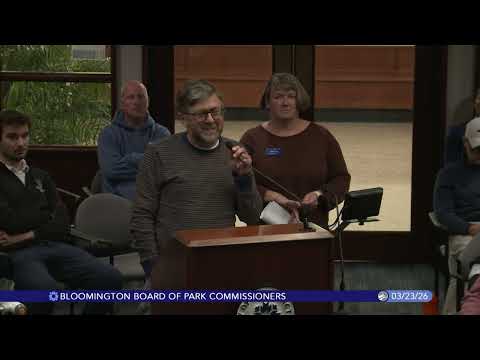
Dozens of users, coaches and parents urged the board to pursue both short-term repairs to reopen the venue and a rapid stakeholder process to explore a new facility. Mark Deutsch, a coach who drove from Fishers to attend, said, “We need this rink badly,” while IU women’s club coach Dylan Frecken and other speakers urged that women’s hockey and the broader skating community be prioritized. Several commenters asked for an interim plan so youth programs and figure skating clubs do not lose momentum if the facility is taken offline.
Staff told the board they will pursue immediate repairs identified in the GAP analysis, continue to work with the rink consultant on cost estimates for alternatives, and convene a stakeholder group that would include user groups, IU representatives and board members to explore options and funding strategies. Staff noted the likely need for external funding sources — private donations, naming rights, partnerships or grants — if the board wants to pursue a major replacement rather than short-term patching.
The presentation was informational only; there was no vote to commit capital funds. Staff asked the public to stay engaged and said the Parks Department will present a draft master plan at the board’s next meeting on April 16 and expects further public outreach to form the stakeholder group and refine funding and timeline options.
Ending: The board did not take action on a capital plan at this meeting; staff said immediate safety items would be completed and the public and stakeholders will be invited into a deliberative process on long-term alternatives.