Lifetime Citizen Portal Access — AI Briefings, Alerts & Unlimited Follows
Author, timber company pitch $1.5 billion biomass-to-jet-fuel plant for Sawyer County
Loading...
Summary
A state lawmaker and Johnson Timber representatives told the Sawyer County Board about legislation and a proposed Syntech Fuels project that company representatives said could bring a $1.5 billion biorefinery to Hayward, create direct facility jobs and restore markets for forest residuals; the bill is headed to the governor.
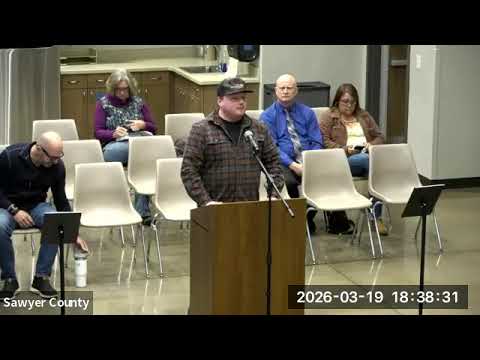
Representative Chance Green and timber-industry representatives told the Sawyer County Board about a proposal tied to the Forest Revitalization Act that they said would bring a Syntech Fuels biomass-to-aviation-fuel plant to Hayward.
Green, who identified himself as the bill’s author in the Assembly, told the board the legislation “has passed both the house and the senate with a ton of bipartisan support,” and that it now goes to the governor. He said the package includes tax-credit incentives being arranged through the Wisconsin Economic Development Corporation (WEDC) and “safeguards” such as clawback provisions if operations fail to meet requirements.
Bill Johnson, who the chair introduced to present, described a partnership with a Switzerland-based company, Syntech Fuels, and said the project would be a “$1,500,000,000 biomass to sustainable aviation fuel” facility based in Hayward. Company representatives said they expect WEDC to offer tax credits to help recruit the project. "If they don't have reoccurring operations for 12 months, we can claw back those tax incentives," Representative Green said in explaining safeguards.
DJ Adderman, president of Futurewood (the wood-procurement arm described during the presentation), and Johnson Timber representatives said the project would draw on residues and low-value material across a wide geography. Adderman described a 150-mile sourcing radius and said company plans require that a large share of feedstock come from Wisconsin; he summarized the plan as returning roughly 900,000 tons of wood to market that otherwise lacks a stable buyer.
Company speakers provided staffing and timing estimates that they framed as illustrative. They described about "185 jobs" created directly at the facility and said broader statewide impacts could be larger; the assembly representative and company materials also cited larger employment multipliers for the region. On timing, company representatives said they expected to pursue financing this year, begin permitting with the Wisconsin Department of Natural Resources, and allow roughly 3½ years of construction after permitting, with an optimistic full-operation target around 2030–31.
Board members pressed the presenters on environmental and operational details. Asked whether charred or storm-damaged wood could be used, company representatives said some damaged material could be tested and verified before acceptance. On environmental review, presenters said they had been in talks with the DNR and expected required permitting and agency review. On logistics, company representatives said finished fuel would be loaded into isotanks, trucked to the Port of Duluth and shipped overseas.
What’s next: the bill author and company representatives said the Forest Revitalization Act is headed to the governor for signature and the company anticipates beginning permitting and testing in the near term. Several board members asked the company to provide additional technical details about feedstock specifications, permitting milestones and housing plans for workers before committing county-level support or agreements.